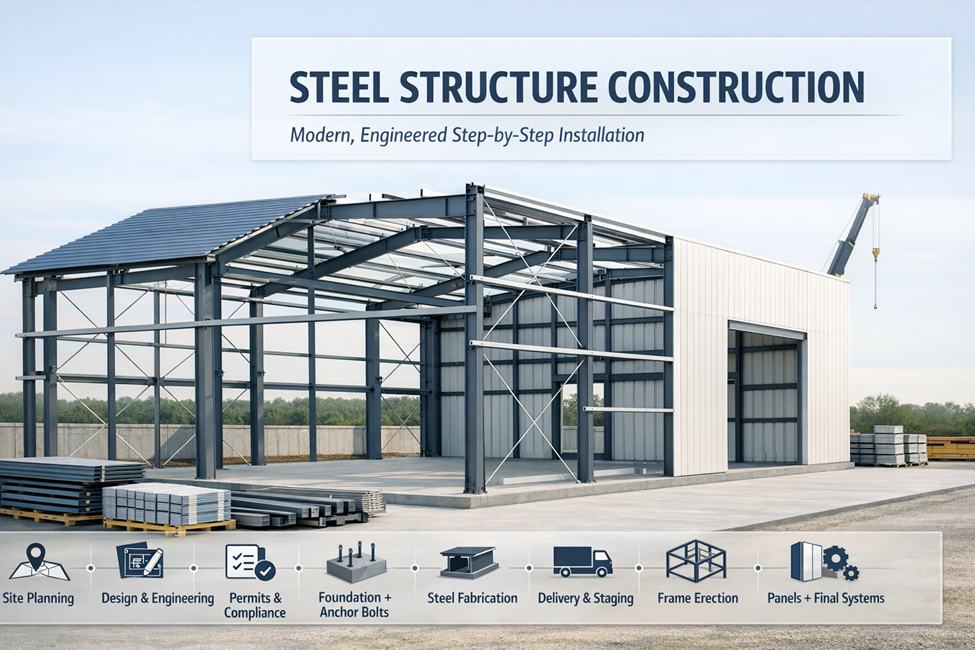
Fully engineered steel structures can be customized to be attractive and energy efficient. They can also be completed in less time than other construction methods. Because of these advantages, engineered steel buildings can be used in a wide range of applications, including warehouses, steel workshops, commercial sites, agricultural structures, and modern steel homes.
During my years working with project planning content and client consultations, I have noticed that customers interested in steel construction want clarity and a step-by-step process explained to them. People want to browse steel building designs and options, an estimate of total expenses, a realistic breakdown of each phase, and a clear expectation of how long the structure will remain useful.
The objective of this document is to assist customers who are planning to install steel construction as part of a modern building project. You will learn about prefabricated steel structures, steel building design options, and the full construction process from early planning to final completion.
Benefits of Steel Structure Construction
The foremost benefits of steel structure construction are strength, predictability, and speed. In conventional construction, weather events can delay an entire schedule. Materials can also vary in quality, creating uncertainty and inconsistency on-site.
Steel construction, especially when using engineered metal building systems, is more predictable. Steel also allows greater design versatility because fewer internal columns are needed to support wide spans. This is valuable for many building types, including manufacturing facilities, distribution centers, showrooms, airplane hangars, and flexible storage buildings.
Flexibility Is Important in Steel Construction
Steel is malleable, durable, and a strong load-bearing construction material. It also delivers predictable structural performance, which makes it easier for growing companies to expand steel buildings in the future compared to many traditional options.
Steel construction can also shorten project timelines. Compared to wood-intensive designs, steel systems generally require less on-site labor and involve fewer complex structural changes during installation.
Steel design projects follow a step-by-step process that helps manage expectations, minimize surprises, and support more accurate budgeting and scheduling.
Step-by-Step Steel Structure Construction Process
Evaluating the Location and Project Planning
Each steel structure begins with a site survey. A site survey includes evaluations such as:
Soil condition, grading, and drainage
Access and space for delivery and crane equipment
Wind zone
During the site survey, the purpose of the structure is also considered, since storage, retail, and heavy industrial uses all have different site requirements.
At this stage, the customer also decides between a custom steel building design and a pre-engineered building (PEB) option. PEBs are often selected because they offer more predictable costs and scheduling.
Drafting and Engineering (The Most Important Step)
Once the project requirements are defined, the next step is drafting the building design. Engineering is included in this phase and typically involves structural analysis, wind and snow load design, and the detailing of major connections and bracing systems.
Modern steel buildings can also include features such as mezzanines, skylights, insulation upgrades, and architectural skins.
When designing a steel building, remember that the design impacts more than aesthetics. It is important to consider ceiling height, bay spacing, roof pitch, roof slope, future expansion plans, and whether the building must accommodate crane operations or heavy equipment.
Compliance, Approvals, and Permitting
The time needed for permits varies by location. Builders must ensure the structure meets applicable building codes, fire codes, and zoning requirements.
Larger developments often require engineered plans, energy compliance documentation, safety standards verification, and proper zoning approvals.
Many first-time builders underestimate this stage, but it is critical. Any delay in permitting or compliance can hold up the entire construction schedule.
Bolt Anchor Layout and Foundation Work
The construction of a steel building depends heavily on the accuracy of the foundation. Anchor bolts must be installed according to the engineered plans, and foundation footers must meet the required depth and structural strength.
If anchor bolts are incorrectly placed, the building may be difficult and time-consuming to erect.
Foundation work typically includes excavation, forming, rebar installation, concrete pouring, curing, and quality assurance checks. If the building will support heavy machinery, slab thickness and reinforcement requirements must be adjusted accordingly.
Real Build Tips
Most steel building problems come from foundation work being rushed. A steel kit cannot fix a poor-quality slab. When foundation issues appear, correcting them is often more expensive and more time-consuming than doing the job properly in the first place.
Steel Prefabrication and Fabrication
In most modern construction projects, steel parts are prefabricated. Using computer-controlled equipment, columns, beams, frames, purlins, girts, and braces are produced with a high degree of accuracy.
This controlled process is one of the biggest advantages of prefabricated steel construction. It reduces waste, minimizes human error, shortens construction time, and improves overall consistency across the build.
In high-humidity and coastal environments, components are often coated with protective compositions to reduce oxidation and extend service life.
After inspection and delivery, materials should be staged in an organized way to support smooth workflow during assembly. Poor staging is a common problem in the industry, and crews often waste time searching for missing items or moving heavy materials repeatedly.
It is essential to confirm that all pieces match the bill of materials before the frame erection begins. Finding out mid-build that a component, panel, or connection plate is missing can cause major delays.
Steel Frame Assembly and Erection
One of the most visually impressive phases is the frame erection process. This stage uses lifts or cranes to position and connect the main frame components.
As columns and rafter framing members are installed and secured, they are positioned to receive bracing. Bracing is essential for maintaining alignment and stability throughout the erection process.
Even before roof and wall panels are installed, the framed structure typically looks impressive and gives a clear sense of the building’s scale and shape.
Installation of Key Primary Components
Primary framing usually follows a predictable sequence:
First, rigid frames are assembled.
Next, column framing is installed and secured.
Lastly, secondary framing is completed to add extra structural support.
Because wind can heavily impact steel erection, lateral bracing systems are often used during assembly to hold alignment and stabilize the structure until the building becomes fully rigid.
Roofing, Insulation Systems, Wall Panels, and Doors
Once the frame is secured, roof and wall panels are installed. Depending on the building specifications, materials may include insulated sandwich panels, ribbed metal panels, or standing seam roofing systems.
Insulation improves building performance by enhancing comfort, reducing energy loss, supporting airflow management, and improving long-term durability. Some builds also include skylights or ventilation features for additional airflow.
Office buildings or structures with sensitive operations often need more insulation than clients expect. In many cases, upgrading insulation slightly can produce a real return on investment through reduced utility costs.
Interior Fit-Out and Final Systems
After the exterior enclosure is complete, the interior system installations can begin. These may include:
Electrical work
Plumbing
HVAC
Fire suppression
Lighting, partitions, and flooring (if required)
Most commercial metal buildings are designed so interior systems can be added without moving structural components.
Finally, the building is tested and inspected to confirm it meets requirements for an occupancy certificate. The project is considered complete once safety recommendations, warranty details, and maintenance expectations are reviewed.
Final Reflections: Finding the Optimal Strategy for Steel Buildings
Steel structures are one of the most effective solutions for modern construction projects. Their versatility, reliability, and speed of assembly make them ideal for everything from simple storage facilities to complex commercial buildings.
Steel offers strong long-term dependability when the project is properly planned and installed to meet real operating needs.
Before starting a project involving steel building solutions, pre-engineered steel building systems, or prefabricated steel buildings, it is critical to focus on thorough planning, quality engineering, and professional installation. This ensures the structure becomes a valuable long-term asset rather than an expensive short-term compromise.
Frequently Asked Questions
How fast can steel buildings be constructed?
Steel buildings can be completed faster than many traditional building types. However, the timeline varies depending on the design and site conditions. Once the foundation is prepared and the design is finalized, off-site fabrication and staged assembly can begin.
Is it safe to use prefabricated steel structures for commercial use?
Yes. Prefabricated steel commercial structures are safe because they are designed to meet engineering and safety standards for warehouses, retail operations, and industrial applications.
What issue is most common in the construction of steel buildings?
The most common issue is rushing the foundation work. Errors in anchor bolt placement or slab preparation can lead to delays and increased costs later in the project.
Can a steel building have a pleasing aesthetic?
Yes. Many design upgrades, colors, architectural finishes, and modern styling elements can be added to meet branding goals and create a visually appealing final result.
Do steel buildings save energy?
Yes, especially when insulation is properly integrated and the design supports good air circulation with sealed panel performance. Better insulation and tighter building envelopes support improved temperature control, retained heat, and long-term comfort.
Read More My Next Mag