Post Preview
Key Takeaways
- Custom lapel pins function as markers of identity, affiliation, and personal expression.
- They are used by diverse sectors, such as business, politics, and fashion, to convey meaning.
- Design details and materials are crucial in shaping a lapel pin’s significance.
Custom lapel pins offer more than just a finishing touch to attire; they embody personal identity, corporate pride, or support for a cause. These small, often intricately designed items have evolved into powerful symbols over centuries. Whether highlighting organizational affiliation or accentuating fashion choices, custom lapel pins are unique and meaningful tools for self-expression. The detailed designs, refined materials, and rich symbolism embedded in lapel pins make each piece much more than a mere accessory.
For businesses, clubs, or communities, a thoughtfully crafted lapel pin can galvanize group identity or reward individual achievement. In everyday life, these pins allow wearers to signal their values, style, or support for important campaigns. Their history and enduring relevance reveal why custom lapel pins are cherished across contexts and generations.
A Brief History of Lapel Pins
Originating as simple functional fasteners, lapel pins have transformed into icons of status and connection. Historically, materials such as bone and metal were crafted into pins used primarily for securing clothing. Over time, these utilitarian objects gained decorative qualities and began to assemble deeper cultural and organizational significance. In the 19th and 20th centuries, societies and military units began to issue distinct pins to members, solidifying their connection to particular groups or values.
Today, custom lapel pins serve a similar purpose, commemorating important events, marking achievements, or fostering loyalty. Whether given as a token of appreciation or worn to honor a cause, they remain significant emblems with roots dating back centuries. For more on the cultural impact of badges and pins, the Smithsonian Magazine article provides insight into the evolving legacy of these adornments.
Design Elements and Their Significance
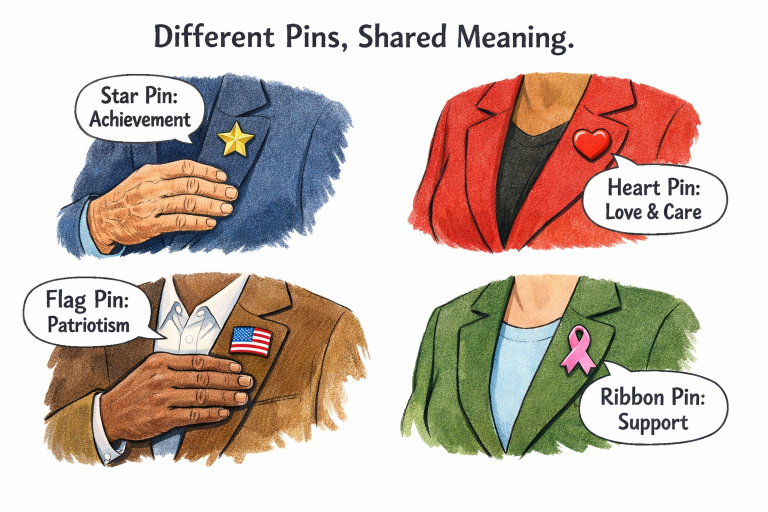
The impact of a lapel pin hinges on its design choices. Color selections, shapes, and visual motifs are thoughtfully curated to communicate clear messages or evoke emotions. For example, a gold star pin is often associated with achievement and excellence, while a specific logo may reinforce membership to a club or organization. Color psychology also plays a role: blue hues suggest trust or loyalty, red conveys passion, and green signals growth or progress.
Material selection further influences perception. Enamel pins, made with vibrant pigments and smooth finishes, are modern favorites for their durability and eye-catching appeal. Traditional metal and die-struck pins, meanwhile, introduce an element of prestige and timelessness to the piece. The symbolism embedded in both the visuals and materials can transform a simple accessory into a cherished keepsake or statement piece.
Applications Across Industries
Custom lapel pins serve pivotal roles in many industries:
- Corporate Sector: Businesses leverage lapel pins to reward loyalty, recognize milestones, or promote company culture. These pins are frequently handed out during ceremonies or proudly displayed on lanyards and jackets in the office.
- Political Arena: Lapel pins symbolize allegiance to a political party, a national cause, or an advocacy group. They provide a subtle yet powerful way for individuals to express support or affiliation in public settings. For more insights into political lapel pins, refer to this article.
- Fashion Industry: Designers use lapel pins as a versatile accessory that can complement formal wear or add flair to casual ensembles. Their flexible form makes them a natural extension of personal style, allowing wearers to swap out pins according to mood or occasion.
The Collectibility of Lapel Pins
Lapel pins have cultivated a dedicated global community of collectors. Scarce designs, especially those associated with historical events or limited-edition runs, can command high interest and value at trading events. Collectors often seek out pins with distinctive artwork, unique manufacturing methods, or compelling backstories.
Pin trading, which gained momentum at occasions such as the Olympic Games and comic conventions, fosters camaraderie and friendly competition. The pursuit of rare pins can create close-knit communities united by shared enthusiasm and appreciation for these miniature works of art.
Creating Your Own Custom Lapel Pin
The process of creating a custom lapel pin involves several thoughtful steps:
- Conceptualization: Identify the core message, goal, or sentiment you wish to express through the lapel pin.
- Design: Work with designers to select shapes, colors, and materials that best reflect the desired message. Mockups or proofs help refine imagery and finalize details before production.
- Production: Choose a reputable manufacturer that uses high-quality materials and reliable methods, such as die-struck fabrication or enamel layering. Clear communication with the production team ensures that the final pins meet the intended standards and requirements.
Well-designed pins not only serve their function but also become lasting symbols that resonate with their audience for years to come.
Conclusion
Custom lapel pins have proven their value as more than decorative items. They offer a compelling blend of artistry, meaning, and utility. By harnessing thoughtful design and strategic application, organizations and individuals alike can communicate identity, celebrate milestones, and foster a sense of connection. Whether new or vintage, lapel pins remain cherished symbols in both professional and personal spheres.