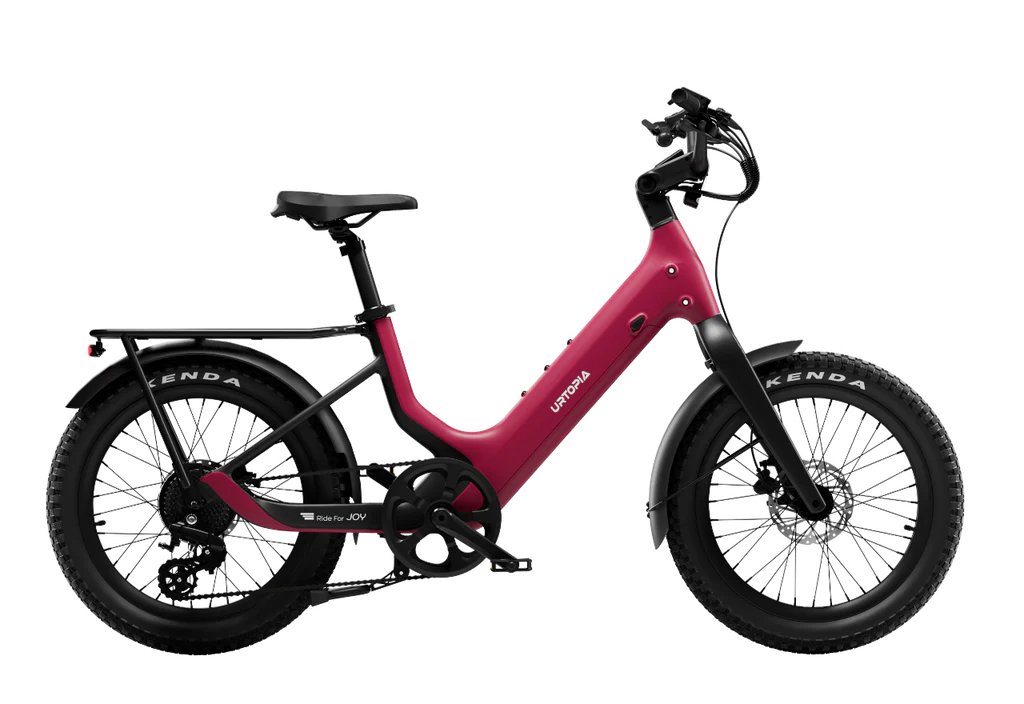
In the early days of electric micromobility, “range anxiety” was the shadow that loomed over every purchase. Riders constantly checked their battery bars, worried that a sudden hill or a stiff headwind would leave them pedaling a 60-pound bike home without assistance. But as we move through 2026, that anxiety is becoming a relic of the past. A quiet but powerful battery revolution has taken hold, transforming the best e-bikes from short-distance commuters into genuine long-range touring machines capable of 100-mile journeys on a single charge. This shift is not merely an incremental improvement; it is a fundamental re-engineering of the chemical “heart” of the bicycle.
The Shift to High-Density 21700 Cells and Voltage Stability
The most visible change in the 2026 landscape is the industry-wide pivot in cell architecture. For years, the 18650 lithium-ion cell was the standard—the same small cylinders found in old laptops. Today, nearly all premium long-range e bikes have transitioned to the larger 21700 cell, a format popularized by the high-performance electric vehicle industry. These cells offer roughly 50% more energy capacity by volume, allowing manufacturers to pack more “juice” into the same downtube space without making the bike look like a bulky motorcycle.
Beyond the physical size, the internal chemistry has matured. In 2026, we are seeing a massive adoption of 52V and even 60V systems over the traditional 36V or 48V standards. This higher voltage is crucial for “long-range” riding because it minimizes “voltage sag”—the phenomenon where a bike feels sluggish as the battery nears 20%. By maintaining a higher electrical pressure, these systems ensure that your last mile feels just as powerful as your first, providing a consistent experience that is essential for riders who treat their bike as a primary vehicle.
The Dawn of Semi-Solid-State Technology

While traditional lithium-ion remains the king of the market, 2026 has introduced a game-changer: the Semi-Solid-State Battery (SSB). Unlike conventional batteries that rely entirely on a liquid electrolyte, these semi-solid cells use a hybrid design—a clay-like conductive material that is significantly more stable. This isn’t just a win for range; it’s a massive leap for safety. These batteries are virtually fireproof and can withstand extreme temperatures, meaning East Coast riders no longer lose half their range when the mercury drops below 32°F.
The energy density of these semi-solid cells is startling. Early production models from pioneers like T&D and Donut Lab have demonstrated densities approaching 350 Wh/kg—a nearly 40% improvement over standard lithium packs. This technology is effectively killing the range-to-weight trade-off. We are now seeing “lightweight” e-bikes that still offer 60 to 80 miles of range, a feat that would have required a battery twice as heavy just three years ago. For the urban dweller who has to carry their bike up a flight of stairs, this weight reduction is just as important as the extra miles.
[Image showing the internal cell structure of a modern long-range e-bike battery]
Smarter Management: The Brains Behind the Power
A battery is only as good as the software that manages it. In 2026, the Battery Management System (BMS) has evolved from a simple safety fuse into a sophisticated AI controller. Modern BMS units now utilize “Predictive Energy Mapping,” which syncs with your GPS to analyze the elevation changes of your route. If the system knows you have a massive hill coming up in five miles, it subtly adjusts the power output in the flats to ensure you have maximum torque when you actually need it.
Furthermore, the implementation of the UL 2849 safety standard has become the mandatory baseline in the US market as of January 2026. This certification ensures that every component—from the charger to the individual cells—communicates through a “handshake” protocol. This prevents the overcharging cycles that used to degrade battery life after just one or year of use. A 2026 battery is designed to last for 1,500 to 2,000 full charge cycles, which for the average rider, represents over a decade of daily use before significant capacity loss occurs.
The Era of Ultra-Fast Charging and Infrastructure
The final piece of the long-range puzzle isn’t just about how far you can go, but how fast you can get back on the road. The “Charge While You Coffee” movement has taken off, with new GaN (Gallium Nitride) chargers becoming standard. These chargers are half the size of old “bricks” but can push a 0-80% charge in under 45 minutes without overheating the battery. This is a far cry from the 6-hour charging times of the previous decade.
We are also seeing the emergence of standardized “E-Bike Charging Hubs” in major metropolitan areas like Denver, Austin, and New York City. These stations allow riders to top off their tanks while they eat lunch, effectively turning a 100-mile bike into a cross-state travel vehicle. For the first time, the “bike road trip” is a viable concept for the electric cyclist, supported by a network of high-speed charging that mimics the convenience of a gas station.
Sustainability and the Second Life of Cells
As we produce more batteries, the conversation in 2026 has naturally shifted to sustainability. The “Battery Revolution” includes a focus on the circular economy. New recycling techniques now allow for the recovery of 95% of the cobalt, nickel, and lithium from old e-bike packs. Many manufacturers are also launching “Second Life” programs, where batteries that have dropped to 70% capacity (no longer ideal for long-range riding) are repurposed as stationary energy storage for homes or solar grids.
This holistic approach to battery tech ensures that the long-range e-bike is not just a tool for personal freedom, but a sustainable part of the global energy transition. By extending the lifecycle of the cells and ensuring they don’t end up in a landfill, the industry is proving that electric mobility can be both powerful and responsible.
Conclusion
The battery revolution of 2026 has fundamentally changed the value proposition of the electric bike. We have moved past the era of “last-mile” gadgets and entered the era of true automotive replacement. With the arrival of high-density 21700 cells, semi-solid-state chemistry, and AI-driven management systems, the limits of where an e-bike can take you have been all but erased.
As these technologies continue to scale and costs decrease, the 100-mile range will soon be the floor, not the ceiling. The electric bike has officially outgrown its “neighborhood” reputation, powered by a revolution that is lighter, safer, and more ambitious than ever before. The future of the road is no longer paved with exhaust—it is paved with high-density ions and the promise of a journey that never has to end early.