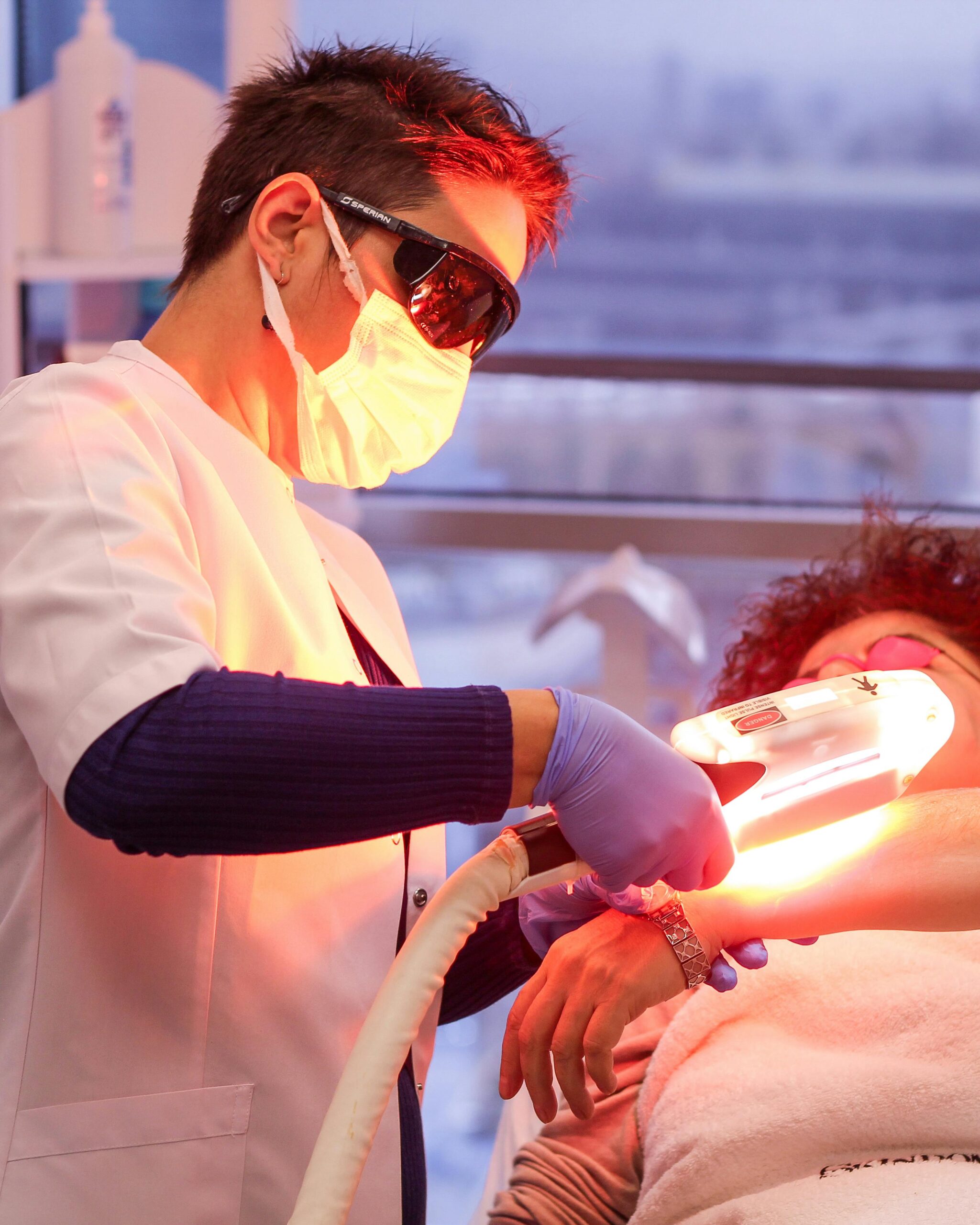
Across clinical environments today, expectations have shifted in a very specific direction. People want outcomes that hold, not temporary fixes, not routines that repeat endlessly without delivering measurable change over time.
Within that shift, choices have narrowed toward medically supervised solutions where consistency is built into the process itself. Many individuals now prefer a laser hair removal clinic where treatment parameters are adjusted per session, energy delivery is controlled, and results develop progressively instead of appearing inconsistent or short-lived.
Understanding the Science Behind Laser Hair Removal
At the core of the process lies targeted light absorption. Melanin within the follicle captures energy, heat builds, structure weakens, and growth slows down over successive sessions, not instantly, not unpredictably.
Over multiple cycles, visible changes begin to layer. Hair becomes finer. The density falls off at an uneven rate, then becomes steady. Since follicles are in various growth stages at one point, sessions are carefully timed, and each stage is covered without overexposure or wastage of treatment periods.
Why Professional Clinics Deliver Better Outcomes
Inside a clinical setup, the difference becomes obvious almost immediately. Devices operate at calibrated intensities, adjusted mid-session if required, based on skin response rather than fixed presets that ignore variation.
Alongside that, practitioners do not rely on surface observation alone. Skin sensitivity, hormonal factors, prior reactions, plus medical history all influence the treatment plan. That combination leads to consistency over time, not guesswork between sessions.
Areas Commonly Treated with Laser Technology
Across treatment plans, area selection varies, though patterns do emerge based on convenience, hygiene, plus long-term maintenance goals rather than arbitrary preference.
Facial Precision Zones
On smaller areas, margins are tight. Upper lip, chin, sideburns. Precision matters more than speed here, since even minor variation in energy delivery can affect visible outcome on sensitive skin.
Underarm and Bikini Regions
In high-friction zones, repeated shaving often leads to irritation along with uneven tone. Laser sessions gradually reduce that cycle, allowing the skin to stabilize while minimizing recurring ingrown concerns.
Full Body Treatments
For broader coverage, structured plans are used instead of isolated sessions. Treatment is distributed over time, ensuring uniform reduction without overloading the skin in any single sitting.
Maintenance and Touch-Up Sessions
After primary cycles, occasional sessions remain part of the process. Shorter. Targeted. Enough to maintain consistency without restarting the entire sequence again.
Comfort and Safety During Treatment Sessions
During sessions, discomfort is managed through integrated cooling systems combined with controlled pulse delivery, reducing surface heat while maintaining effective follicle targeting underneath.
Immediately after, responses vary slightly. Mild redness appears in some cases. Warmth in others. These reactions settle quickly when post-care instructions are followed correctly, including controlled exposure to sunlight plus appropriate hydration.
Benefits That Extend Beyond Hair Removal
Beyond reduction, secondary effects begin to appear over time, not suddenly, but in layers that become noticeable after multiple sessions.
Skin texture improves. Irritation reduces. Repeated abrasion from shaving no longer disrupts the surface, allowing it to recover gradually instead of being reset every few days.
- Less dependency on constant grooming routines
Sessions reduce frequency of maintenance, cutting down repetitive effort while maintaining smoother results over longer intervals. - Noticeable change in how the skin behaves
Without repeated external stress, the surface becomes more stable, less reactive, plus visually more even over time. - Reduction in recurring ingrown hair patterns
By weakening follicle activity at the root level, the chances of trapped hair decrease, especially in areas prone to friction.
The Role of Technology in Modern Aesthetic Clinics
Across newer systems, adaptability has improved in measurable ways. Devices now adjust wavelength alongside pulse duration, allowing safer application across varying skin tones without compromising effectiveness.
Within treatment sessions, monitoring tools track response in real time. Adjustments follow data, not assumption. Why rely on static settings when measurable response offers better control?
Choosing the Right Treatment Plan
Before sessions begin, evaluation becomes the foundation. Skin type, density, prior sensitivity, all reviewed in detail before any energy is applied.
Initial Consultation and Assessment
During consultation, treatment zones are mapped, timelines outlined, expectations clarified without ambiguity or generalization.
Session Scheduling and Frequency
Intervals are structured according to growth cycles. Not random. Not compressed unnecessarily. Each session is placed to maximize impact.
Aftercare and Skin Management
Care would be provided outside the clinic after each session. There is control over the sun exposure, careful choice of products, and hydration aids recovery.
Long-Term Maintenance Strategy
Maintenance sessions are carried out at wider intervals even when the reduction has been seen to stabilize, thus, no reversal is possible without repeating the whole treatment process.
Integrating Aesthetic and Medical Care
In integrated clinical settings, various services are provided under a single system, which enables continuity of treatment rather than fragmented care being provided in isolation. Laser treatment for hair removal in these arrangements is co-located with other medical services and is backed by dermatological supervision coupled with deliberated clinical guidelines, which entailed uniformity in the various varieties of treatments.
Final Thoughts
What actually defines a treatment experience that remains consistent over time, without fluctuation or repeated correction later? The answer sits in structure, clinical oversight, plus systems that adapt based on response rather than assumption.
Within that framework, Queens Medical Center delivers an environment where aesthetic procedures align with broader medical care, allowing patients to move between services without disruption or variation in standards. The presence of offerings such as a dental care clinic Dubai further supports that integrated approach, where multiple requirements are handled within a single, controlled clinical setting.