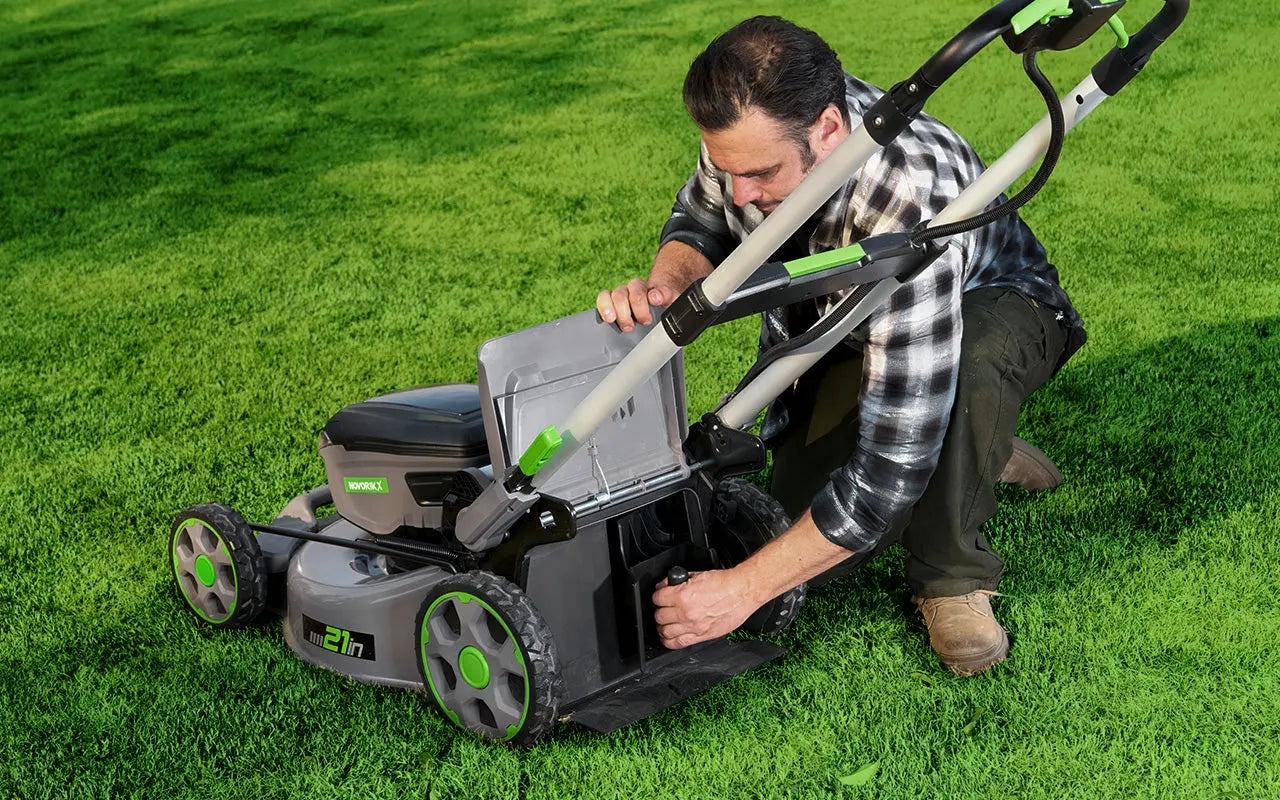
For years, the “gas vs. battery” debate in the landscaping world was fairly one-sided. If you had a small suburban patch of grass, a corded or low-voltage electric mower was fine. But if you had thick brush, wet grass, or an acre of land, you reached for the gas can. That narrative has changed completely.
The shift didn’t happen because we suddenly loved charging batteries more than pulling starter cords; it happened because the “sweet spot” of voltage was finally mastered. When looking at professional-grade cordless gear, the 60 v battery has emerged as the gold standard for homeowners who need raw power without the mechanical headaches of internal combustion engines.
Specifically, a high-capacity 60 v battery provides the necessary discharge rate to maintain high torque, ensuring that your mower or chainsaw doesn’t bog down when the going gets tough.
Understanding the “Sweet Spot” of 60V Power
In the world of cordless tools, voltage is often compared to the size of a vehicle’s engine. A higher voltage allows the tool to draw more power with less current, which reduces heat and increases efficiency.
Why Not 18V or 80V?
While 18V or 20V systems are fantastic for drills and impact drivers, they often struggle with high-resistance tasks like blowing wet leaves or felling small trees. On the other hand, 80V systems can sometimes be overkill—and heavier—for the average residential property.
The 60V platform offers a refined balance. It delivers enough “grunt” to match a 30cc gas engine while keeping the battery weight manageable enough for a handheld leaf blower or hedge trimmer.
Key Advantages of the 60V Platform
If you are considering making the switch from gas to electric, or upgrading from a lower-voltage system, there are several technical and practical reasons why 60V is the ideal choice for high-power outdoor tools.
1. Sustained Torque and Performance
The primary frustration with older electric tools was “fading.” As the battery drained, the tool got weaker. Modern 60V lithium-ion systems use advanced sensors to provide fade-free power. Whether you are at 90% charge or 10%, the blade speed on your mower remains constant.
2. Thermal Management
Heat is the enemy of battery life. Because a 60V system operates more efficiently than a lower-voltage system, it generates less internal heat during high-demand tasks. This means you can work longer without the battery “tripping” a thermal safety switch.
3. Rapid Charging Capabilities
Most high-end 60V batteries are designed for quick turnarounds. It is common to see a 5.0Ah battery reach a full charge in under an hour, meaning that with two batteries, you can essentially work indefinitely by swapping them between the tool and the charger.
What to Look for When Buying a 60 v battery
Not all batteries are created equal. Even within the 60V category, the “Amp-hour” (Ah) rating determines how much work you can actually get done on a single charge.
Understanding Amp-Hours (Ah)
Think of Voltage as the speed and Amp-hours as the fuel tank.
- 2.0Ah to 2.5Ah: Ideal for handheld tools like string trimmers or blowers where weight is a factor.
- 4.0Ah to 5.0Ah: The “sweet spot” for self-propelled mowers and high-performance chainsaws.
- 8.0Ah+: Best for heavy-duty snow blowers or extended mowing sessions.
Build Quality and Weather Resistance
Outdoor work is messy. A high-quality battery should have a reinforced casing to survive the occasional drop on a driveway and some level of moisture resistance for those mornings when the grass is still covered in dew.
How 60V Tools Compare to Gas-Powered Alternatives
Many veterans of the “gas era” are skeptical of cordless tech. Let’s look at a direct comparison of the user experience.
| Feature | 60V Cordless System | Gas-Powered Tools |
| Startup | Instant (Push-button) | Pull-cord (often multiple tries) |
| Maintenance | Zero (Keep it clean/charged) | Oil changes, spark plugs, filters |
| Noise Level | Low (Neighbor-friendly) | High (Requires ear protection) |
| Fueling | Plug into wall | Trip to the gas station |
| Weight | Balanced (Battery is the weight) | Front-heavy (Engine/Fuel tank) |
Common Mistakes to Avoid with High-Voltage Batteries
To get the most out of your investment, you need to treat the lithium cells with a bit of respect. Here are the most common pitfalls I’ve seen in my 15 years of testing power tools:
- Leaving batteries on the charger: While modern chargers have “trickle” shut-offs, it is still best practice to remove the battery once it’s full.
- Storing in extreme temperatures: Never leave your batteries in a freezing shed over winter or a sweltering garage in July. Room temperature is the key to longevity.
- Running to absolute zero: Lithium-ion batteries prefer “shallow” discharges. If you notice the power dipping, swap it out rather than forcing it to die completely.
Best Practices for Maximizing Battery Lifespan
If you want your 60 v battery to last five years or more, follow these simple professional tips:
- The “80/20” Rule: For long-term storage (like over winter), keep the battery at about 40% to 50% charge. Storing it at 100% or 0% for months can degrade the chemistry.
- Cool Down Before Charging: If you just finished mowing a large lawn on a hot day, let the battery sit in the shade for 15 minutes before putting it on the charger.
- Clean the Contacts: Occasionally wipe the metal terminals with a dry cloth to ensure a perfect connection between the tool and the power source.
Is the 60V Investment Worth It?
The upfront cost of a 60V ecosystem is often higher than 18V tools, but the value is found in the versatility. Most modern brands allow you to use the same battery for your mower, leaf blower, chainsaw, and hedge trimmer.
When you factor in the money saved on gas, oil, and professional engine tuning, a 60V system typically pays for itself within the first two seasons of use. More importantly, it saves you the “frustration tax” the time spent wrestling with a tool that won’t start when you only have an hour of daylight left to work.
Frequently Asked Questions
How long will a 60V 5Ah battery last in a lawnmower?
On average, a 5Ah battery can power a 21-inch mower for about 45 to 60 minutes, depending on the height and thickness of the grass. This is usually enough to cover a quarter-acre lot.
Can I use a 60V battery in a 40V or 80V tool?
Generally, no. Most battery platforms are proprietary and voltage-specific. You must match the battery voltage to the tool’s requirements unless the manufacturer explicitly states they have a “cross-voltage” technology.
Do 60V batteries lose power in the cold?
Lithium-ion batteries do experience a temporary drop in efficiency in near-freezing temperatures. If you are using a 60V snow blower, store the battery indoors and only plug it into the tool right before you start working.
Are these batteries safe to leave in the garage?
Yes, as long as the garage is dry and doesn’t reach extreme temperature fluctuations. However, for maximum lifespan, a climate-controlled mudroom or basement is the preferred storage spot.
Final Thoughts
The transition to high-voltage outdoor power equipment is no longer a “future” concept it is the current reality for anyone serious about yard maintenance. By choosing a 60V platform, you are opting for the best balance of weight, runtime, and raw torque available today.