
Key Takeaways
- Data analytics enables precise talent acquisition and management.
- AI and machine learning are transforming recruitment and retention strategies.
- Skills-based approaches foster workforce agility and growth.
Modern businesses face rapidly changing talent demands and fierce competition for skilled employees. To address these challenges, organizations are increasingly integrating data analytics into their talent practices. By leveraging data-driven strategies, companies can make better-informed decisions across all stages of talent management. Leading companies are now turning to advanced talent management solutions that blend analytics and artificial intelligence to gain deeper insights, optimize recruitment, and enhance employee retention.
From optimizing hiring processes to accurately predicting attrition, data-driven talent management gives organizations the necessary tools to remain competitive. With current labor market volatility and ongoing shifts in workforce expectations, there has never been a greater need for transparent, objective, and predictive talent strategies. Data provides critical support for building agile workforces that can adapt and thrive in dynamic environments.
According to a recent McKinsey report, organizations integrating advanced data methods in HR have outperformed their peers in areas like employee satisfaction, speed of hiring, and business productivity. Not only does a data-driven approach enable organizations to respond more quickly to market shifts, but it also promotes greater transparency and fairness in decision-making. As the pace of automation accelerates, organizations must embrace innovation to build resilient and high-performing teams.
Enhancing Recruitment with Data Analytics
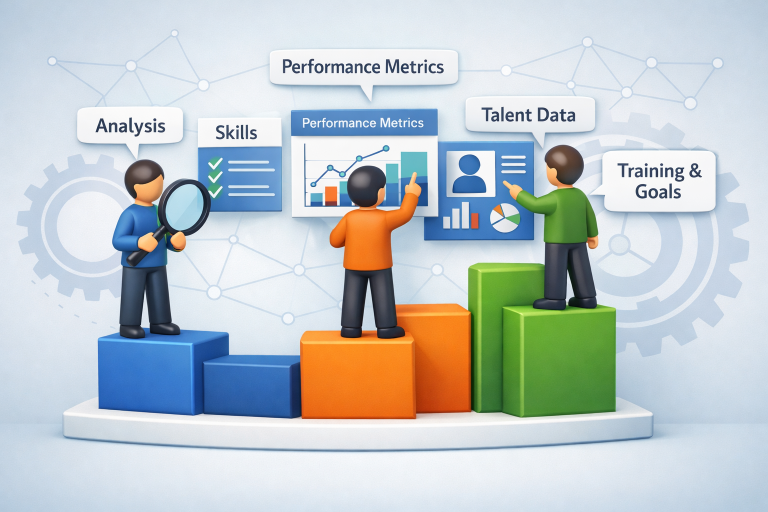
Recruiting the right people is one of the cornerstones of any successful organization. Data analytics revolutionizes recruitment by providing HR teams with detailed patterns and trends that guide decision-making. Companies can analyze the effectiveness of job postings, streamline applicant tracking, and use predictive analytics to estimate time-to-fill for specific roles. These insights help organizations save time, improve candidate fit, and reduce recruitment costs. For example, tracking applicant source data identifies the most effective channels and allows recruiters to allocate resources where they yield the best returns.
Additionally, real-time dashboards give hiring managers and talent teams access to up-to-date metrics, allowing them to adjust strategies quickly. This agility in process management is critical when responding to sudden market demands or unexpected workforce changes. The Society for Human Resource Management highlights that organizations embracing talent analytics are 2.5 times more likely to improve their recruiting efforts and achieve stronger hiring outcomes.
Leveraging AI in Talent Management
Artificial Intelligence continues to disrupt traditional HR practices by automating key functions and generating richer talent insights. AI-powered screening tools process hundreds of resumes in seconds, identifying high-potential candidates and reducing bias through standardized assessments. Routine tasks, such as interview scheduling or responding to applicant queries, can now be automated with chatbots, providing job seekers with instant answers and freeing up HR professionals to focus on strategic decision-making.
Statistics from 2024 show that nearly 94 percent of HR and talent acquisition leaders are either already using or actively exploring AI solutions. AI can also track employee performance and learning progress, alerting managers to opportunities for upskilling or intervention. When organizations responsibly implement these technologies, they not only speed up recruitment but also lay the groundwork for more equitable, inclusive, and engaging workplaces.
Adopting Skills-Based Strategies
Workplace demands are shifting rapidly, and organizations can no longer rely on job titles or academic credentials alone to match talent to roles. A growing number of businesses are transitioning to skills-based strategies, prioritizing an employee’s capabilities rather than traditional job history. This approach is particularly well-suited for industries experiencing digital transformation, as it allows firms to deploy staff flexibly in response to shifting project and market needs.
According to the World Economic Forum, 81 percent of business leaders agree that adopting a skills-based approach accelerates innovation and improves organizational agility. More than half of the surveyed companies have begun shifting away from role-based talent models, with others poised to make the transition soon. This change enables workers to pursue lateral opportunities, discover new career paths, and hone skills that address evolving business goals.
Predicting and Preventing Attrition
Retaining high performers is essential for long-term business success. Employee attrition, when left unchecked, leads to knowledge gaps, increased hiring costs, and diminished morale. By applying machine learning models to HR datasets, organizations can identify employees at risk of leaving and design interventions tailored to their needs. Data from performance reviews, employee engagement surveys, and even communication patterns help create comprehensive risk profiles.
The use of predictive analytics in retention enables HR teams to intervene early with personalized professional development, recognition programs, or benefits changes. Recent studies highlight that companies using advanced analytics can reduce attrition rates by up to 25 percent, saving millions in hiring and training costs over time.
Optimizing Internal Talent Mobility
Encouraging movement within the organization is a highly effective way to retain talent and address skills gaps. Internal talent mobility leverages data analytics to match qualified employees to open positions based on skills, experience, and behavioral markers. By analyzing the content and structure of internal communications, companies can identify candidates who are not only proficient in the required skills but also collaborate well across functions.
Advanced frameworks evaluate both the semantic aspects of an employee’s work and the network of their workplace interactions, creating a multidimensional portrait for internal opportunity matching. This comprehensive approach ensures that top performers are not overlooked for new challenges, minimizing the costs and disruption associated with external hiring.
Conclusion
The future of talent management lies in embracing data and technology. By integrating analytics, artificial intelligence, and skills-based frameworks, organizations empower themselves to make faster, fairer, and more strategic decisions that drive long-term growth. Data-driven talent management is not just a trend. It is fast becoming essential for organizations that wish to compete and win in complex, volatile business landscapes.