Gaming is changing as the pace of everyday life accelerates. Short-format titles, designed for quick sessions, are gaining ground as more people look for ways to play without clearing hours from their schedule. These games fit into commutes, breaks, and unpredictable routines, offering engagement without long commitment.
At the same time, longer story-driven experiences continue to hold their place. Some players still seek games that build over time, with depth, structure, and room to explore. That interest hasn’t faded; it’s adjusting to new patterns of time and attention. So, what we’re seeing is a change in balance, not a complete move in one direction.
Games Are Now Adapted to Everyday Life
Modern life runs fast. Most people divide their day between work, errands, and short breaks, with little room for long, uninterrupted activities. As a result, how we eat, exercise, and communicate has changed.
Entertainment follows the same path; it’s simply adapted to fit short windows of free time instead of long stretches of downtime.
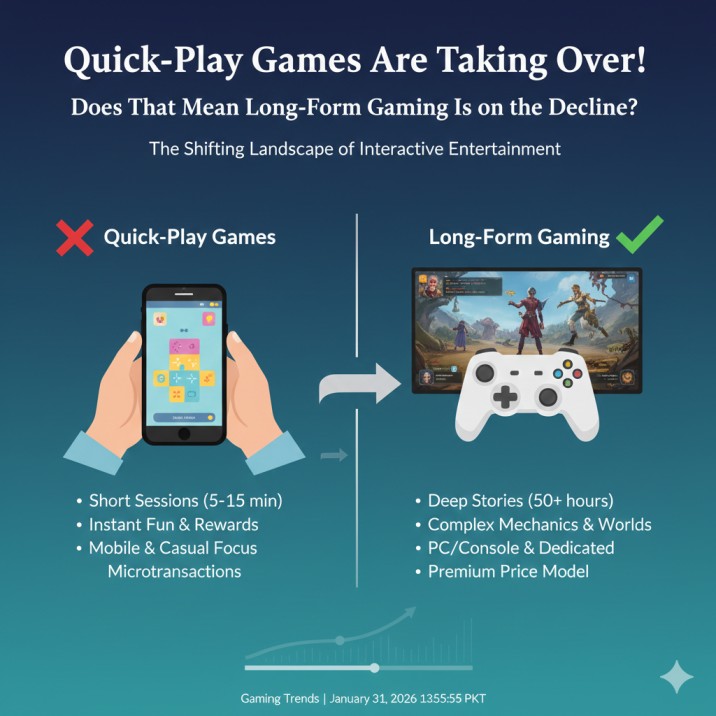
If we’re to talk about gaming, more players are choosing short-form titles that deliver quick engagement. Games like Candy Crush Saga, Among Us, and Clash Royale are built for this rhythm. They load quickly, move fast, and don’t demand extended focus.
On the other hand, titles like The Legend of Zelda: Breath of the Wild or Red Dead Redemption 2 require time, attention, and a sense of continuity, something fewer people can commit to.
A similar trend appears on online casino sites. Since traditional games like poker require longer sessions, many now prefer slot games that are faster and easier to play in short bursts. They require less setup, less focus, and better match the pace of everyday life.
Mobile and Casual Gaming
Mobile devices have redefined how people play games. With a smartphone always nearby, there’s no need for a console or full setup.
Titles like Monopoly GO and Royal Match rely on short bursts of play, mixing randomness and basic strategy. They’re built to attract wide audiences, and the numbers reflect that reach.
And technical infrastructure supports the trend. Faster connections and improved cloud services mean shorter load times and fewer interruptions. Developers build around tap-based controls, instant feedback, and minimal learning curves, focusing on speed and accessibility from the first screen.
This isn’t happening in isolation. It mirrors a wider shift in how people use digital tools: jumping between apps, multitasking, and managing limited attention. Casual gaming fits that pattern by offering something immediate and disposable, without demanding too much focus or time.
Still, There’s Something Unique about Long-Form Games
Even with the rise of short-play formats, long-form games continue to hold ground. These titles offer depth, structure, and experiences that unfold over time.
The appeal lies in the reward structure. Players invest time and effort to explore complex systems, make choices, and follow narratives with weight. Story-driven games build emotional investment. Communities form around these titles, extending interest through shared analysis, guides, and discussions.
Quality is a key factor here. When a long game is well-designed, players stick with it. Modding, expansions, and content updates extend the lifespan. Poorly built titles don’t last, but the ones that do earn loyalty, often far beyond launch windows.
Developers know that long-form games require updates and maintenance. They invest in new content and balance tweaks to keep players engaged, not rushed. It’s less about urgency and more about staying relevant across months or even years.
Impact on Game Development
The way people play games is shifting, and developers are adjusting to match it. With more players choosing short, simple sessions, game studios now focus heavily on how to keep attention without demanding too much time.
For mobile and quick-play games, the priority is speed and ease of use. Games are designed to load quickly, explain themselves quickly, and deliver a reward within minutes.
Features like daily rewards, quick levels, and social challenges help keep players engaged. Tools like Unity make this kind of development faster, so small teams can release games more often and test ideas quickly.
Longer games are still being made, but they take longer and require larger teams. Developers working on story-driven or open-world titles use engines like Unreal to create detailed worlds, but these projects need longer production cycles and larger budgets.
Indie developers work across both styles. Some focus on short, creative games with one strong idea. Others build deeper experiences with limited resources but more creative freedom. Crowdfunding and early access platforms help support these projects without relying on big publishers.
Overall, there’s growing emphasis on simple, focused games, especially for mobile. Quick formats are easier to produce, easier to update, and better suited to how people play today. Long-form games still have a place, but the industry is clearly leaning toward shorter, faster experiences that respect limited time.