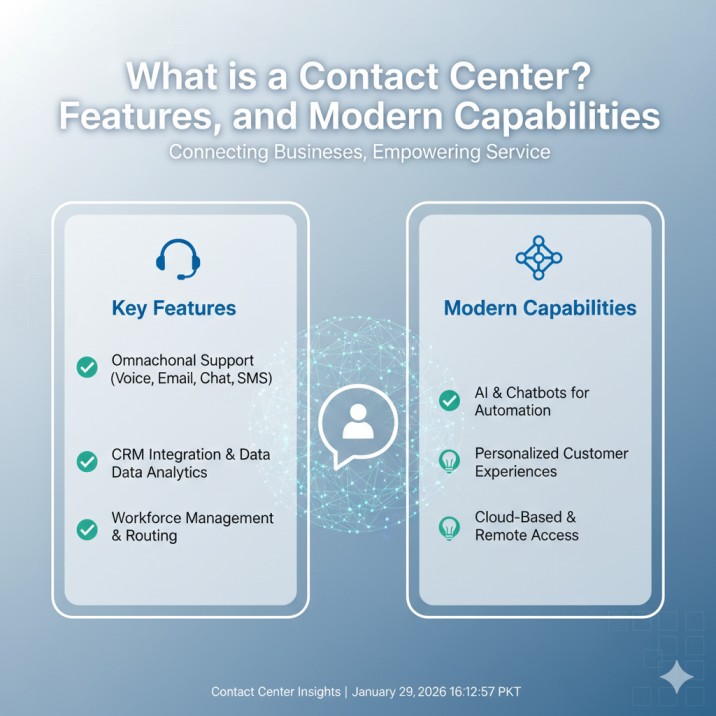
A contact center is a centralized hub, either a team or a software platform, that manages a company’s communications with its customers. While contact centers can sometimes manage employee communications, they are primarily associated with handling customer interactions. Beyond inbound and outbound calls, modern contact centers facilitate communication through multiple channels, including chat, email, instant messaging, SMS, social media, and even traditional methods like fax or physical mail.
Today’s customers expect to interact with businesses on their preferred channels, seek fast responses, and want personalized experiences. Meeting these expectations may seem daunting, but modern contact center technologies are designed to streamline this process and make it manageable.
Types of contact centers
Not all contact centers are the same. They each have a special structure, perks, and challenges. Knowing the differences can help you pick the right one for your business.
1. Outsourcing
Running a contact center yourself can be expensive and take a lot of effort. That’s why many businesses outsource it. You get trained people, tech, and systems to handle people externally. The advantages are often faster response times, sales help, and lower in-house costs.
2. Incoming Calls
These contact centers are all about answering incoming messages. Their main goal is great customer support, answering questions, and keeping customers happy.
3. Making Outgoing Calls
These contact centers are all about reaching out to customers and leads. They do sales calls, telemarketing, and follow-ups, which are really important for getting leads and staying in touch with people.
4. Customer Loyalty
For businesses like retail or telecom, where customer satisfaction is crucial, these contact centers ensure customers are happy, loyal, and feel valued. That’s why companies should start tracking the voice of the customer to refine their services and maintain high satisfaction.
5. Many Platforms, Separate Systems
These contact centers use email, social media, texts, and calls, but they handle each platform on its own. This can make things clunky for customers if they switch channels or talk to different people.
6. All Platforms, One System
Unlike the previous type, these contact centers put all communication channels into one smooth experience. People can switch between channels without having to repeat themselves, which makes them happier and improves service.
7. The Office Setup
These contact centers operate inside a company’s buildings. You get a lot of control, but you have to pay for all the equipment, upkeep, and training.
8. Cloud Power
These contact centers work remotely using the cloud. They’re flexible, scalable, and cheaper because you don’t need as much equipment. You can get to communication channels, customer info, and management tools without big investments.
Must-have features
Modern contact center software comes with lots of features that help improve efficiency, customer happiness, and business results.
1. Matching Skills
Old call centers just sent calls to whoever was available. Now, routing sends people to agents who know the most about the subject, which helps resolve issues faster and more personally.
2. Flexible Payment
Office contact centers have fixed costs, upkeep, and tech staff salaries. Cloud centers have a pay-as-you-go system that lets you change your operations as needed, which lowers financial risk. Tools like Call Center Studio’s Softphone reduce equipment costs and training time, plus they offer 24/7 support.
3. Reports & Insights
Knowing your numbers is key to making things better. Cloud contact center software gives you real-time reports and facts, tracking things like:
- Customer questions and resolution rates
- Agent performance and fast resolutions
- Customer happiness scores
- IVR performance and call abandonment rates
Many companies use these voice of the customer tools to analyze sentiment, gather feedback, and make smarter decisions that benefit both customers and agents.
4. All-in-One Routing
People hate repeating themselves. Routing makes sure things flow smoothly between platforms, keeping everything on one screen. Connecting with CRMs and APIs lets you see all past interactions, which makes customers happier and operations smoother.
5. Smart Voice Menus
Old voice menus can be annoying and impersonal. Smart voice menus use speech recognition, text-to-speech, and Google Dialogflow to give you personalized conversations. Sentiment analysis can even tell how the caller is feeling.
6. Connect to Anything
Connection is super important. Contact center software with Public API access can hook up with CRMs, payment systems, chat tools, and other business apps, allowing for faster work, better automation, and great customer service.
7. Chatbots
Chat is still the most popular way to talk to someone, with billions of messages sent every day. Chatbots handle boring customer questions, free up agents, and improve response times. Using machine learning and tools like Google Dialogflow, chatbots can answer questions across platforms and escalate tough questions to real people.
8. Custom Caller
Outbound campaigns use a predictive dialer, which automatically schedules and makes calls based on agent availability and call length estimates. Connecting with CRM systems allows agents to see contact history, which improves personalization. AI dialers can even run automated campaigns for sending information, collecting payments, or confirmations.
In conclusion
A contact center isn’t just a place to handle calls anymore. Modern contact centers are complex, tech-driven hubs that bring together multiple communication channels, use AI for personalized chats, give real-time data, and ensure hassle-free customer experiences.
Whether you go with an on-site, outsourced, multichannel, or cloud contact center, the goal is the same: make customers happier, improve operations, and get a solution that can grow with your business.
Investing in the right tech and modern features—smart routing, chatbots, customizable dialers, and solid analytics—ensures your business keeps up with customer expectations and stays competitive in a fast market.