Coffee buyers don’t just care about the origin of the coffee. They care about what actually reaches their warehouse.
A lot can change between harvest and roasting. Even if the coffee was grown and processed with care, poor storage can slowly undo all that effort. Green coffee doesn’t just sit there unchanged. It reacts to whatever environment it’s placed in.
If the air is humid, it absorbs that moisture. If there’s too much oxygen around it, the green coffee beans slowly start to change. Even temperature shifts, hot days, and cooler nights affect how the coffee behaves.
The tricky part is that none of this looks dramatic at first. There’s no obvious damage. But over time, the character of the coffee starts to fade. When it reaches the roastery, the sensory profile shifts slightly, with reduced aromatic intensity and less structural clarity in the cup.
That’s why storage matters more than most people realize, and hermetic storage bags play an important role here.
Oxygen and Moisture: The Hidden Risks in Green Coffee Packaging
Oxygen and moisture are usually the main problems. Green coffee still holds natural moisture and oil inside. When it’s exposed to air for long periods, oxidation begins. Aromas aren’t as sharp. Brightness softens. The sweetness isn’t as clean as it was of origin.
Humidity brings its issues. Coffee beans can pull moisture from the surrounding air, and once that balance shifts, stability drops. In certain cases, that can even increase the risk of mold. It doesn’t happen overnight, but it doesn’t take long either.
Traditional jute bags allow air exchange. They’re practical for handling, but they don’t regulate the environment around the coffee beans.
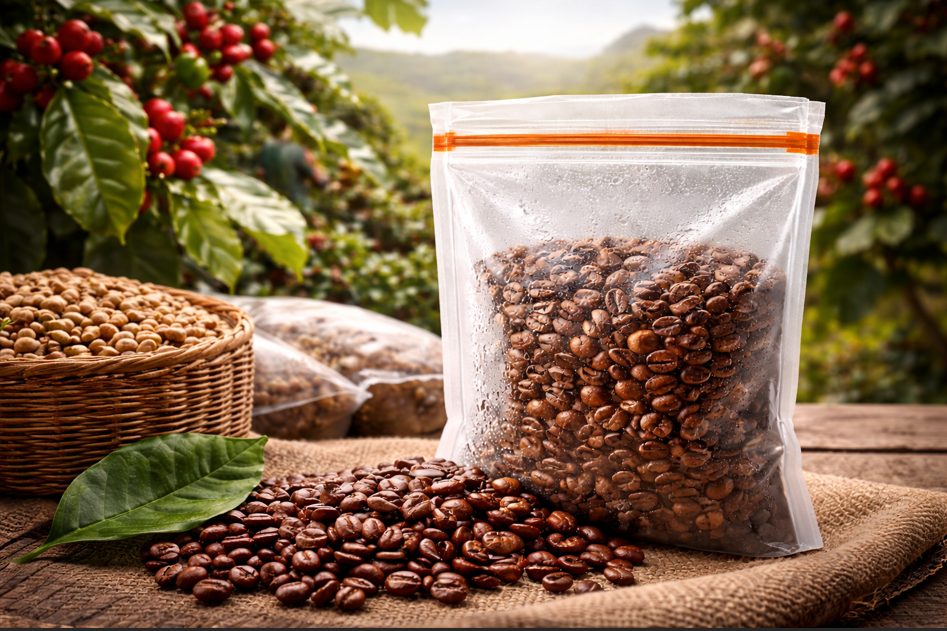
Hermetic liners and barrier-based packaging systems are built to limit oxygen transmission and moisture migration. Instead of letting the environment control coffee, they help stabilize it.
The result isn’t enhanced. It’s a preservation.
Storage Directly Influences Cup Performance
Buyers usually recognize storage problems during cupping rather than during transit.
When green coffee is stored improperly, it slowly loses clarity. Acidity softens, aromas become muted, and sweetness begins to fade.
In contrast, coffee beans kept in controlled barrier systems tend to perform more consistently. Stable moisture levels help preserve volatile compounds, and roasting behavior remains more predictable.
For specialty buyers, that level of consistency is essential.
What Happens During Transport
Green coffee rarely travels in stable conditions. It may move through tropical humidity, dry inland heat, cold storage facilities, or long container shipments.
Temperature fluctuations create pressure differences. Humid ports introduce moisture risk. Containers can hold other goods with strong odors.
Ecotact’s 9-layer Hermetic packaging limits this exchange. By reducing interaction with outside air, it helps protect against moisture shifts and odor contamination during transit.
It doesn’t eliminate environmental stress, but it significantly reduces its impact.
Protecting Sensory Identity
Specialty coffee is valued for nuance: florals, fruit notes, structured sweetness, and balance. These attributes are sensitive. Once oxidized or flattened by humidity changes, they don’t return.
Hermetic storage bags safeguard what was developed at origin. For buyers investing in high-quality lots, preserving that integrity is essential. It helps keep delicate nuances intact, ensuring the coffee expresses the character shaped by soil, climate, and careful processing.
What Buyers Should Realistically Expect
With effective hermetic storage, buyers can expect:
● Reduced oxygen exposure
● Controlled moisture movement
● Lower risk of odor absorption
● More consistent cup performance over time
Final Thoughts
Storage is not simply a logistical step. It is part of quality stewardship.
From farm to roastery, green coffee moves through environments that can gradually influence its stability and commercial value. Packaging significantly influences the management of variables, specifically moisture and air exposure, during transit and warehousing.
Hermetic packaging solutions are used within green coffee supply chains to help maintain stable moisture levels and prevent the entry of oxygen, humidity, and other external gases during storage and long-distance transit. The objective is to maintain a controlled internal atmosphere that prevents external contamination and preserves the coffee’s freshness, aroma, and quality over time.
Storage is no longer treated as a secondary step; it is a critical component of quality assurance for buyers and exporters across the supply chain.