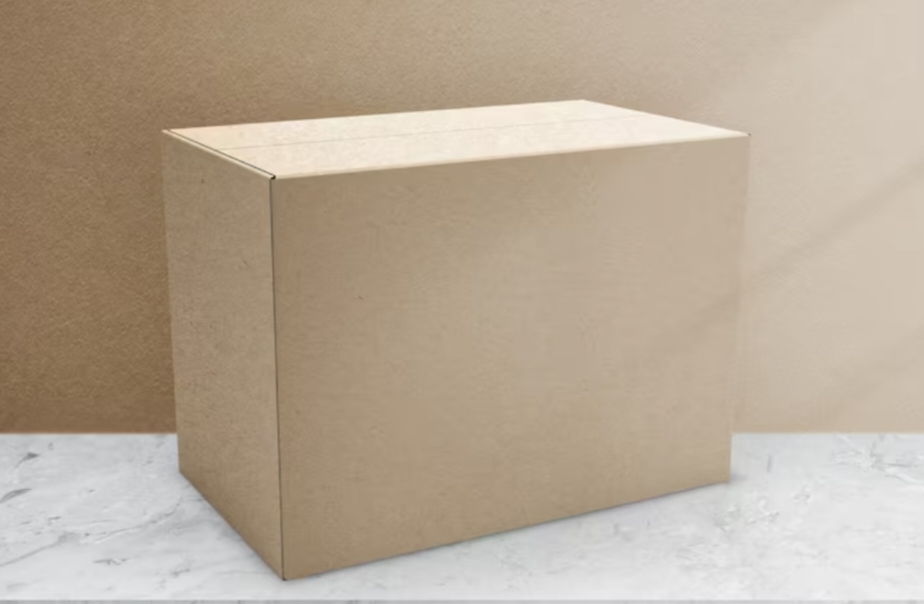
Walk through any large distribution center or manufacturing plant, and you will see them stacked near loading docks, tucked under conveyors, and lined up along warehouse walls. Most people outside of logistics have never heard the name. Inside the industry, they are everywhere.
Gaylord boxes are large, single-use or reusable bulk containers made from corrugated cardboard. They sit on a pallet and hold industrial volumes of product that standard shipping boxes simply cannot handle. If your business moves bulk quantities of anything like agricultural products, auto parts, food ingredients, recycled materials, or industrial components, Gaylord boxes may be one of the most cost-effective packaging solutions you are not fully using.
For businesses sourcing Corrugated Gaylord Boxes Denver CO, this guide is essential. You’ll understand what they are built for, how much weight they hold, what they cost compared to alternatives, and which industries get the most value from them.
What Exactly Is a Gaylord Box?
The term “Gaylord” is technically a brand name that became a generic industry descriptor, similar to how people say “forklift” for any pallet jack brand. Currently, this refers to any large bulk bin box designed to fit on a standard 40×48-inch pallet.
These containers come in three primary configurations:
Single-wall corrugated: Lighter duty, used for low-density materials like foam, textile scraps, or lightweight loose-fill items. Less expensive and easier to dispose of.
Double-wall corrugated: The most common industrial configuration. Handles medium-density bulk materials and is the default choice for most manufacturing and distribution applications.
Triple-wall corrugated: Heavy-duty construction for the most demanding applications. Used for dense materials, sharp-edged components, and situations where the container is handled multiple times.
Standard dimensions run approximately 48 x 40 x 36 inches, though custom sizes are widely available. Many operations also use half-depth Gaylord boxes when vertical stacking space is limited.
Load Capacity: What Can a Gaylord Box Actually Hold?
This is where most purchasing decisions get made. Load capacity varies significantly by construction type, and choosing the wrong grade is both a safety issue and a cost problem.
Single-wall Gaylord boxes typically support 500 to 800 pounds of static load. They are not designed for dense, heavy products and should not be stacked under other loaded pallets.
Double-wall Gaylord boxes support 1,000 to 1,500 pounds, depending on the flute configuration and board grade. This range covers the majority of industrial applications involving granular materials, packaged goods, or medium-density components.
Triple-wall Gaylord boxes are engineered for loads up to 2,000 to 4,000 pounds. Some specialty configurations exceed this range when combined with appropriate pallet support and stacking limitations. These are the right choice for metal parts, dense aggregate materials, and any application where the container will be handled by a forklift multiple times.
A key variable most buyers miss: static load capacity and dynamic load capacity are different numbers. A box rated for 2,000 pounds sitting stationary on a warehouse floor will not necessarily handle 2,000 pounds of shifting material during transport. Your supplier should provide both figures for applications involving road freight or rail.
Pricing Comparison: Gaylord Boxes vs. Alternative Bulk Containers
Understanding cost requires comparing the right options against each other. Gaylord boxes compete primarily against plastic bulk containers (IBCs), wooden crates, and flexible intermediate bulk containers (FIBCs, also called bulk bags).
Corrugated Gaylord Boxes
New single-use Gaylord boxes typically cost between $8 and $30 per unit, depending on wall construction, size, and order volume. Triple-wall configurations with heavy-duty board sit at the higher end of that range.
Reconditioned and used Gaylord boxes are widely available from pallet recyclers and industrial liquidators for $3 to $12 per unit. For non-food-contact applications, used boxes represent significant cost savings at scale.
At an order volume of 500 units, per-unit pricing on new double-wall boxes commonly drops below $15. At 1,000-plus units, national suppliers typically price between $10 and $13 for standard configurations.
Plastic Bulk Containers (IBCs)
Rigid plastic bulk containers range from $150 to $400 per unit. The advantage is reusability over many cycles. The disadvantage is the upfront capital cost, return logistics, and the fact that they are worthless if the recipient has no use for them.
For businesses with closed-loop supply chains where the container comes back, plastic makes financial sense. For one-way shipments, corrugated wins on total cost in almost every scenario.
Flexible Bulk Bags (FIBCs)
Bulk bags cost $3 to $8 per unit for standard configurations. They are lighter, collapse when empty, and work well for free-flowing granular materials. They lack the stacking rigidity of corrugated Gaylord boxes and require a bag-lifting frame for filling and emptying operations, which adds equipment cost.
Wooden Crates
Custom wooden crates run $50 to $200-plus per unit. They handle extreme weights and protect high-value products during international shipping. For most domestic industrial applications, they are overkill in both cost and weight.
Bottom line on pricing: For single-use bulk shipping and storage applications involving medium-density materials, corrugated Gaylord boxes deliver the lowest total cost per use in the majority of scenarios.
Bulk Packaging Uses Most Businesses Overlook
The obvious applications include agriculture, food processing, and general manufacturing. But several industries underutilize Gaylord boxes in ways that cost them money.
Recycling and Waste Management
Recycling operations use Gaylord boxes to sort, stage, and transport materials between facilities. Paper, plastics, e-waste components, and cardboard are all commonly handled this way. The box itself is recyclable at the end of life, which fits the operational model cleanly.
Pharmaceutical and Nutraceutical Manufacturing
Bulk raw ingredients in pharmaceutical and supplement production are frequently staged in Gaylord boxes between processing steps. FDA-compliant liners are available to maintain product integrity without the cost of rigid food-grade containers.
Automotive Parts Distribution
Loose metal components, fasteners, seals, and sub-assemblies move between manufacturing stages and distribution centers in Gaylord boxes. Custom foam inserts and dividers are commonly added to protect finished parts without switching to more expensive rigid packaging.
E-Commerce Returns Processing
Large e-commerce operations use Gaylord boxes to consolidate returned merchandise before sorting. The high volume of mixed-SKU returns that arrive daily makes bulk staging in large corrugated containers a practical operational choice.
Cannabis Cultivation and Processing
Commercial cannabis operations use Gaylord boxes to move trim material, dried flower in bulk, and packaging components between grow facilities and processing centers. Liner options help maintain humidity control and product integrity.
Construction Material Staging
Hardware distributors and building supply operations use Gaylord boxes to bulk-stage fasteners, small tools, tile, and aggregate materials in warehouse operations. The pallet compatibility makes them easy to integrate with existing forklift infrastructure.
Textile and Apparel
Fabric scraps, fiber fill, and loose apparel items move efficiently in Gaylord boxes. Textile recyclers specifically rely on them as a cost-effective way to consolidate collection from retail drop-off programs.
Actionable Steps for Evaluating Gaylord Boxes for Your Operation
1. Audit your current bulk packaging cost per unit. Compare what you spend today on palletized shipments against a Gaylord box configuration. Many operations find immediate savings simply by consolidating multiple smaller containers into a single Gaylord.
2. Match wall construction to actual load weight. Do not default to triple-wall for everything. Overpaying for the construction of your application does not add up quickly at scale. Use double-wall for most medium-density applications and reserve triple-wall for dense or abrasive materials.
3. Evaluate liner requirements upfront. Poly liners, moisture barriers, and anti-static liners are available for most Gaylord configurations. If your product requires protection from moisture, contamination, or static discharge, budget the liner cost into your comparison.
4. Request volume pricing at multiple thresholds. Pricing drops meaningfully between 100-unit, 500-unit, and 1,000-unit orders. If your annual volume justifies it, a blanket purchase order arrangement with a supplier typically delivers the best per-unit cost.
5. Consider a used-box program for non-food applications. Industrial recyclers in most major metro areas maintain a consistent inventory of reconditioned Gaylord boxes. Establishing a supply relationship can cut your packaging cost by 40 to 60 percent compared to new boxes.
The Bottom Line
Gaylord boxes are not a niche packaging solution. They are a practical, cost-efficient tool for any business that handles bulk quantities of product and values pallet-compatible, forklift-ready storage and shipping.
The businesses getting the most value from them have done three things: matched construction grade to actual load requirements, compared total cost against alternatives with honest numbers, and explored applications beyond their most obvious use case.
If your current operation relies on multiple smaller containers where one Gaylord would do the same job, you are spending more than you need to. Run the numbers, talk to a supplier, and let the cost comparison make the decision for you.