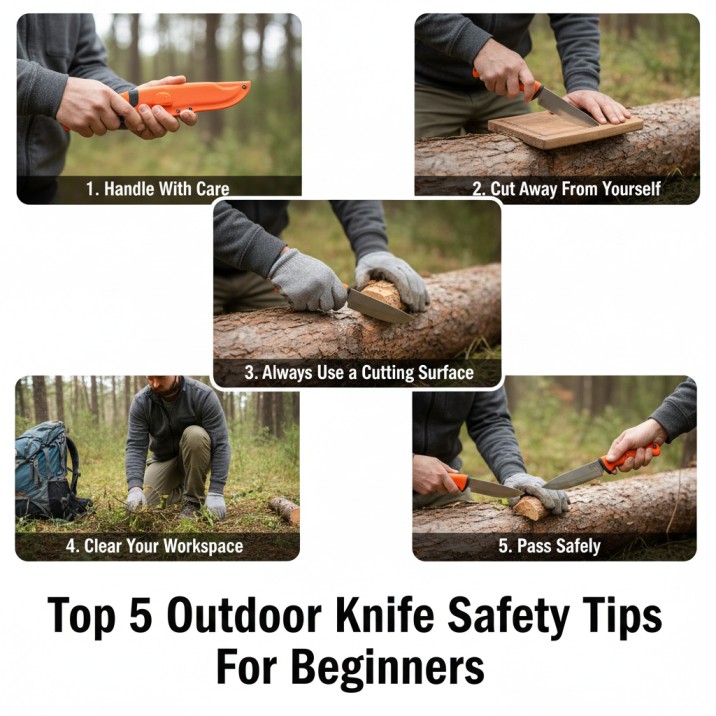
Outdoors, a knife is one of those tools you reach for without thinking.
It’s useful in a hundred small ways, which is exactly why beginners get caught out.
Most injuries don’t come from major mistakes; they come from little dumb moments: wet hands, dull edges, and not storing the knife properly.
This guide is here to keep you safer, more confident, and far more in control.
1. Match the Knife With the Job
When the knife doesn’t match the task, you compensate. You twist the blade. You apply pressure in weird directions. You take risks you wouldn’t need to take with the right tool in hand.
The right knife will make the job feel easy – the wrong one makes it feel like a constant struggle.
2. Keep The Blade Sharp
A sharp knife behaves. It enters the material cleanly and follows the line you set. You don’t need brute force. You don’t need to tense your shoulders. The work feels controlled and deliberate.
Sharpening isn’t some advanced skill reserved for experts. It’s basic maintenance. Learn your angle. Take your time. Touch up the edge before it gets frustrating to use.
3. Store It Properly
A knife left lying around camp is an accident waiting to happen.
On a log. On the picnic table. Half-buried in leaves next to your tent. It only takes one wrong move to turn that into a proper problem.
When you’re finished using your knife, put it away. Not later. Right then. If it’s a fixed blade, sheath it. If it’s a folder, close it fully and clip it securely.
This is where the benefits of a Kydex sheath really stand out. It locks the blade in place, resists moisture, and keeps its shape no matter what happens with the weather. No soft collapse, no guessing if the blade is fully covered.
Store it properly, and your knife stays ready without becoming a hazard.
4. Keep Your Hands Dry
Wet hands and sharp blades are a bad combination.
Sweat, rain, river water, and even fish slime if you’re cleaning a catch, all reduce your grip without you really noticing. And when your grip slips, control goes with it.
Before you start carving, prepping food, or splitting wood, take ten seconds and dry your hands. Wipe them on a towel, your pants, whatever works.
Good knife work is about control, not speed. Dry hands give you that control. They help the handle sit properly, your fingers lock in, and your movements stay deliberate.
5. Learn Basic First Aid
Let’s talk real life for a second. You can have great technique, a solid knife, and all the right intentions… and still end up with a cut.
That’s not you being reckless. That’s just a sharp steel blade doing what sharp steel does.
The difference between a bad story and a minor inconvenience is preparation. When you’re outdoors, you are the first responder. There’s no clinic around the corner.
So carry a small first aid kit like it’s standard gear, not an optional extra.
In Conclusion
A knife doesn’t need fear. It needs respect and good habits.
Build them early, and your knife becomes an asset outdoors, not a liability you have to manage.