The smartphone has long been the central hub of modern life. From communication to entertainment, banking to work productivity, nearly every aspect of daily living revolves around this compact device. Yet, the tech industry is already preparing for a world in which the smartphone is no longer the ultimate device. Tech giants envision future beyond smartphones as a seamless, immersive ecosystem where technology interacts with humans naturally, anticipates needs, and becomes almost invisible in its integration.
This vision is driven by several factors: the limitations of existing smartphone technology, the rise of new computing paradigms, and changing consumer expectations. As devices become smarter and environments more connected, companies like Apple, Google, Microsoft, and emerging innovators are investing in solutions that transform how humans perceive technology. The next era is poised to merge digital life with physical experience in unprecedented ways, fundamentally reshaping the way society interacts with information.
The Limitations of Smartphones in Modern Life
Despite their versatility, tech giants envision future beyond smartphones face inherent physical and functional limits. Screen sizes, battery life, and ergonomic constraints restrict innovation. As applications demand more processing power, the strain on compact hardware becomes evident, impacting performance and user experience. Furthermore, constant reliance on handheld devices has contributed to digital fatigue, eye strain, and a growing desire for less intrusive technology.
These limitations push tech giants to imagine alternatives. Wearable devices, voice-activated assistants, and AI-driven interfaces promise to deliver information and services without requiring users to stare at a screen or tap on small touch surfaces. The vision is not to replace smartphones abruptly but to gradually transition toward a more integrated, fluid technology ecosystem.
The Rise of AI and Intelligent Ecosystems

Artificial intelligence (AI) is central to the vision where tech giants envision future beyond smartphones. AI-driven systems can understand user behavior, predict needs, and interact contextually across multiple devices. This capability enables a move away from screen-based interactions toward more intuitive communication methods.
For instance, AI personal assistants could manage schedules, provide real-time information, or control smart home devices without requiring manual input. By analyzing patterns and learning preferences, AI creates a personalized experience that reduces the need for constant smartphone engagement. Tech giants foresee ecosystems in which AI becomes the connective tissue between devices, applications, and users, facilitating an effortless digital lifestyle.
Augmented and Virtual Reality Transforming Interaction
Augmented reality (AR) and virtual reality (VR) are at the forefront of this post-smartphone world. AR overlays digital content onto the real world, while VR immerses users in entirely virtual environments. Both technologies provide alternatives to traditional mobile interfaces.
Companies are developing AR glasses capable of displaying navigation cues, notifications, or interactive content directly in the user’s field of vision. VR platforms are extending into education, remote work, gaming, and social interaction. By integrating these technologies, tech giants envision a reality where smartphones become one of many interfaces, gradually giving way to devices that blend physical and digital experiences seamlessly.
Wearables and the Internet of Things (IoT)
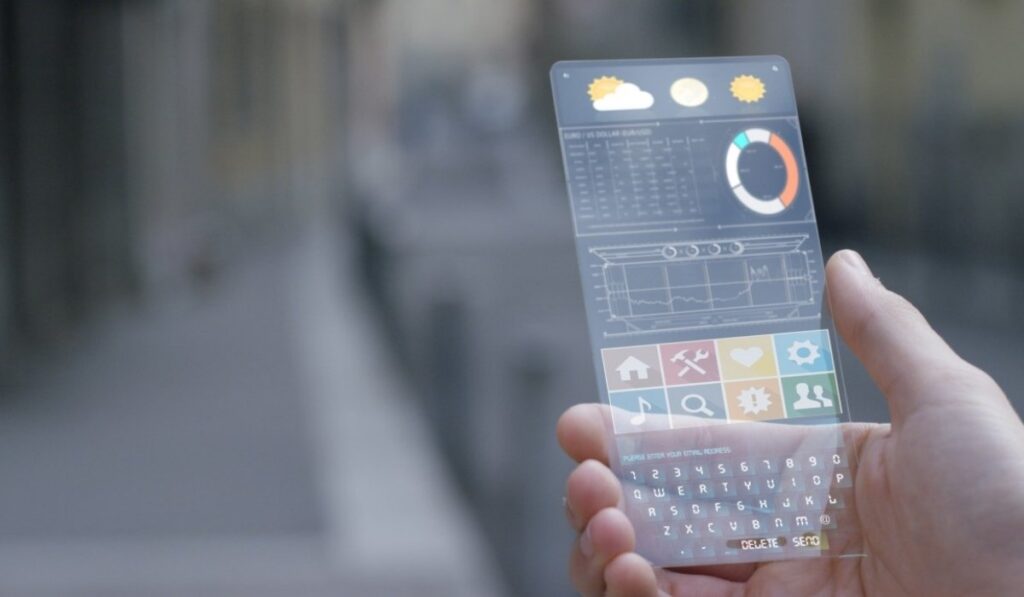
Wearable devices are another pillar of the future envisioned by tech leaders. Smart watches, fitness trackers, AR headsets, and other wearable tech are evolving into multifunctional devices capable of communication, payment, and health monitoring. These devices form part of the broader Internet of Things (IoT), where everyday objects—from refrigerators to cars—interact intelligently with users.
In this scenario, smartphones become less critical because interactions occur through multiple, context-aware devices. Tech giants are designing ecosystems where wearables communicate with each other and with the cloud, ensuring that users can access information and control their environments without constantly relying on a handheld device.
Cloud Computing and Edge Technologies
Another critical factor in the post-smartphone vision is the shift toward cloud computing and edge technologies. Cloud platforms allow data and applications to be accessed anywhere, while edge computing processes data closer to the user, reducing latency. This combination enables devices to be lighter, faster, and less reliant on onboard hardware.
Tech giants envision ecosystems where the heavy lifting is done in the cloud or at the network edge, allowing smaller, less obtrusive devices to deliver rich experiences. This paradigm supports the development of AR glasses, voice assistants, and IoT devices that function without the limitations of traditional smartphones, making technology more ambient and unobtrusive.
Redefining Human-Computer Interaction

The future beyond smartphones is as much about redefining human-computer interaction as it is about hardware innovation. Gesture recognition, voice commands, brain-computer interfaces, and context-aware sensors are being explored to create more natural communication methods.
Tech giants envision a world where interaction is seamless and nearly invisible. Imagine walking through a city where personalized information appears on smart glasses, environmental controls adjust automatically, and AI-driven assistants anticipate needs without ever picking up a smartphone. This approach emphasizes usability, accessibility, and integration, moving technology closer to human intuition.
The Role of Sustainability in Future Devices
Sustainability is increasingly influencing design decisions. As tech giants envision a future beyond smartphones, they are prioritizing devices that are energy-efficient, recyclable, and durable. Compact and wearable technologies reduce material consumption, while cloud-driven processing decreases energy demand on devices themselves.
Environmental considerations are critical as the proliferation of devices could otherwise increase electronic waste. Companies are exploring modular designs, biodegradable components, and efficient power systems to align innovation with ecological responsibility, ensuring that the next wave of technology supports sustainable growth.
Challenges and Barriers

Despite the promising vision, several challenges remain. Privacy and security are paramount, as pervasive AI, wearable devices, and connected environments collect massive amounts of personal data. Users must trust that these systems handle sensitive information responsibly.
Technical barriers also exist, including battery limitations for wearables, latency issues in AR/VR applications, and interoperability between devices. Consumer adoption depends on affordability, ease of use, and reliability. Tech giants must overcome these hurdles to create a post-smartphone ecosystem that is both desirable and practical for mass markets.
What This Means for Consumers and Society
The shift beyond smartphones represents a fundamental change in how technology shapes society. For consumers, it promises convenience, accessibility, and immersive experiences that extend beyond the limitations of a handheld screen. For businesses, it creates opportunities for innovation in healthcare, education, entertainment, and urban planning.
However, it also raises questions about data ownership, digital fatigue, and equitable access. As tech giants envision future beyond smartphones, society must balance technological potential with ethical considerations, ensuring that innovation benefits all and not just those who can afford the latest devices.
Final Thoughts
In conclusion, tech giants envision future beyond smartphones as an era defined by AI-driven ecosystems, immersive AR/VR experiences, and smart wearables integrated with cloud and edge computing. The smartphone will not disappear overnight, but its centrality is expected to diminish as technology becomes more intuitive, ambient, and seamlessly integrated into daily life.
This shift represents both an opportunity and a responsibility. Tech companies must deliver innovation while prioritizing security, privacy, and sustainability. Consumers, in turn, should remain informed and adaptable as the next generation of digital technology reshapes how we live, work, and interact. The 2025 shift marks not just a technological evolution but a transformation in the relationship between humans and the digital world.
Frequently Asked Questions (FAQs)
1. What does it mean that tech giants envision a future beyond smartphones?
- It means leading technology companies are developing new devices and ecosystems, such as wearables, AR/VR platforms, and AI-driven assistants, that reduce dependence on traditional smartphones.
2. Which technologies will replace smartphones?
- Key technologies include augmented reality (AR), virtual reality (VR), wearable devices, AI assistants, and cloud-driven IoT ecosystems.
3. When could smartphones lose their central role?
- Experts predict that by 2025–2030, smartphones may become one of several devices rather than the central hub of daily digital interaction.
4. Are there privacy concerns with post-smartphone technologies?
- Yes, pervasive AI, wearables, and connected ecosystems collect user data, requiring strict privacy protections and responsible data management.
5. How will this shift affect consumers?
- Consumers can expect more seamless, integrated, and immersive technology experiences, but they must also adapt to new devices, interaction methods, and privacy considerations.