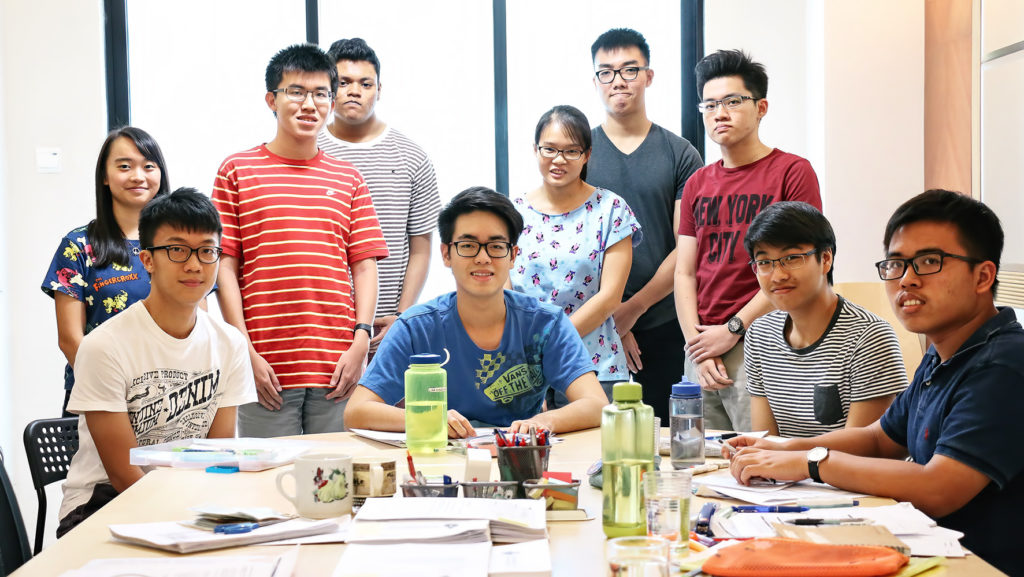
Physics at the secondary level often feels like entering a maze of ideas that twist and turn in unexpected ways. Students encounter everything from the basics of motion to the mysteries of electromagnetism, and it can be overwhelming. But with the right guidance, these concepts become clearer and more exciting. Secondary physics tuition plays a vital role in this process, helping students grasp difficult topics through personalized approaches. In this article, we’ll explore how tuition transforms complex physics into something manageable, why it’s beneficial, and tips for making the most of it.
Why Secondary Physics Can Be Challenging
Many students find secondary physics tough not because of a lack of intelligence, but due to the subject’s unique demands. The curriculum builds quickly, starting with simple laws like Newton’s principles and escalating to abstract ideas such as waves or circuits. Textbooks tend to focus on equations and diagrams, which can seem detached from real life. For example, understanding friction might involve calculating forces on an inclined plane, but without context, it feels like just another math problem.
Exams add to the pressure, as physics is often a prerequisite for STEM careers. Large class sizes in schools mean teachers can’t always address individual confusion, leading to gaps in knowledge. Parents frequently notice their children excelling in other subjects but struggling here, where visualization and application are key. This is where options like secondary physics tuition become essential, offering the extra support needed to bridge those gaps.
The Benefits of Secondary Physics Tuition
Tuition offers a targeted solution by providing one-on-one or small-group attention that schools often can’t match. It bridges the gap between theory and practice, making physics relatable. Tutors identify specific weak areas early on and tailor lessons accordingly, turning frustration into progress.
Unlike standard classes, tuition allows for a flexible pace. If a student is stuck on kinematics, sessions can dwell there until mastery is achieved, rather than rushing to meet a syllabus deadline. This personalized touch boosts retention and interest in the subject.
Simplifying Complex Concepts Through Practical Methods
One of the strongest aspects of tuition is its use of real-world examples to demystify ideas. Tutors often employ analogies that stick. For instance, explaining electrical resistance as water flowing through a narrow hose helps students visualize Ohm’s law without getting lost in formulas.
Hands-on activities are another game-changer. A tutor might use everyday items like springs or pendulums to demonstrate oscillations, showing how period and frequency work in action. Visual tools, such as simulations or videos, further aid comprehension, especially for topics like projectile motion where seeing trajectories helps.
Group discussions in tuition encourage peer learning, where students explain concepts to each other. This reinforces understanding and builds communication skills, making abstract physics feel concrete.
Building Confidence with Targeted Practice
Tuition doesn’t stop at explanation; it emphasizes practice to solidify knowledge. Tutors provide customized worksheets, past exam questions, and timed drills that mimic real test conditions. They analyze mistakes, like confusing velocity with speed, and offer strategies to avoid them.
Study techniques are also taught, such as using mind maps for thermodynamics or breaking down problems step by step. Over time, this builds exam confidence and reduces anxiety. Many students report jumping from average grades to top scores after consistent tuition, often developing a genuine passion for physics.
Choosing the Right Tuition Program
Selecting effective tuition requires careful consideration. Start with tutors who have strong credentials, like a physics degree or teaching experience. Reviews and trial sessions can reveal if their style suits the student—some prefer interactive methods, others structured ones.
Options vary: online platforms offer convenience with tools like virtual labs, while in-person sessions allow for physical experiments. Budget plays a role; group classes are affordable but less personalized than private tutoring. Involving the student in the choice ensures better engagement and results.
The Broader Impact on Life Skills
Beyond grades, physics tuition cultivates essential skills like critical thinking and problem-solving. These apply to everyday challenges, from fixing electronics to understanding environmental issues. In a world driven by technology, a solid physics foundation opens doors to innovative careers.
While some criticize tuition for widening educational gaps, free online resources like educational videos provide alternatives. However, for deep, customized learning, tuition remains invaluable.
Conclusion: Unlocking Potential in Physics
Secondary physics tuition acts as a catalyst, simplifying daunting concepts and fostering success. By blending explanation, practice, and encouragement, it empowers students to not only pass exams but also appreciate the science behind the world. If physics feels like a hurdle, tuition could be the key to leaping over it, sparking curiosity that lasts a lifetime. As one famous physicist noted, questioning is the heart of discovery—with the right support, every student can embrace that journey.