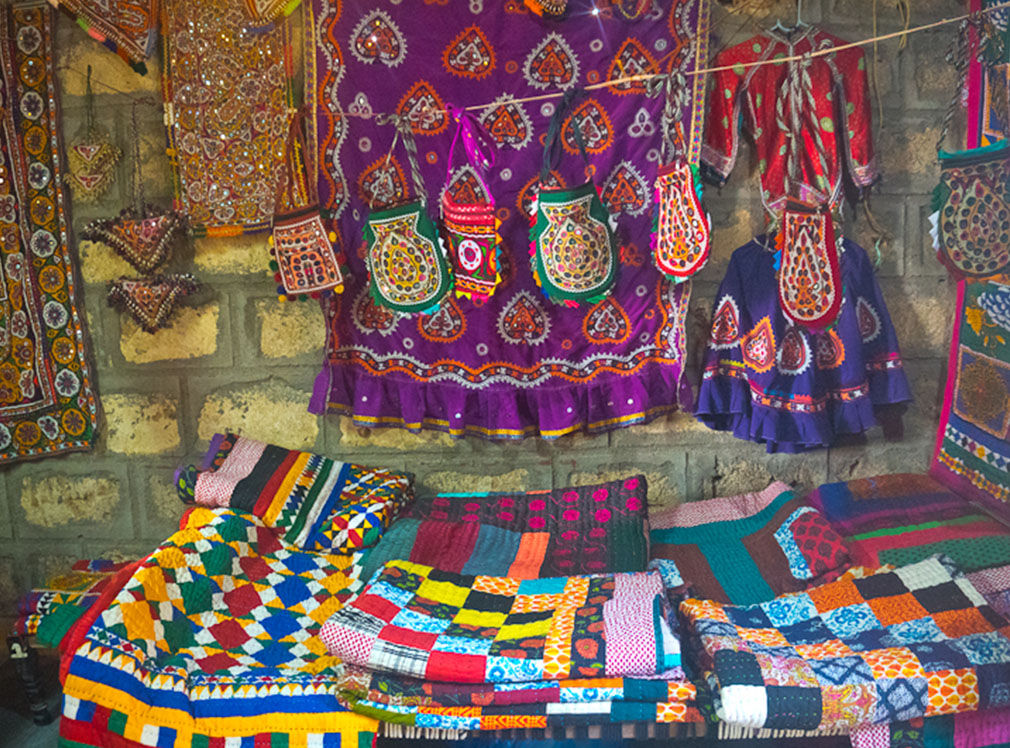
Gujarat’s Kutch region is different from other areas in India. Handicrafts here aren’t only souvenirs in shops waiting to be bought by tourists. Explore the traditions that are passed on through families for many generations. Every village in Kutch specialises in a particular craft. Pottery in one, block printing in another, embroidery somewhere else. The quantity of genuine workmanship in one area is a rare find. People who are passionate about handmade items typically plan whole trips to visit these villages and return with something special.
Khavda: Where Mud Becomes Magic
Around 75 kilometres to the north of Bhuj is Khavda, a peaceful village that is famous for its distinctive pottery. The artisans here use a specific clay known as Rann ki Mitti that is gathered from the nearby lake. The clay is shaped by men on spinning wheels to form various decorative items or pots, while women manage the decorations. They apply a red clay known as geru on the item and then paint stunning patterns in white and black with natural materials. It appears as though you’ve been whisked back in time. The products that are finished include bowls, waterpots plates, diyas, and dishes – each a testament to centuries of history.
Ajrakhpur: Fabric Dyed With History
Within 15 kilometres of Bhuj lies Ajrakhpur, where you can find traditional art forms like Ajrakh Block printing. This technique is over three thousand years old and employs only natural dyes made of indigo, henna and turmeric and even the mud. The geometric patterns are influenced by Islamic architecture, and take 16 steps of care to finish. Even after multiple washings, the hues remain bright. The village is unique due to the fact that it was built by families who were forced to flee after the catastrophic earthquake of 2001 which destroyed their home in Dhamadka.
Hodka: Colours at the Edge of the Desert
Just at the edges of the famed Rann, Hodka village looks like something straight from a book. The traditional mud homes called Bhungas are decorated with painted walls and mirrors that shine when lit up by sunlight. Women in this area create beautiful quilts and leather bags that are covered with fine embroidery. Visitors can purchase mirrors, jewellery, wall hangings and clothes, all made with passion and skill. Before traveling to Hodka, making a hotel booking in Bhuj is recommended, as the town is located just 65 kilometres away.
Bhujodi: The Weaver’s Paradise
For those who are obsessed with the textile industry, Bhujodi is basically heaven. Just 9 km from Bhuj, this is the home of the Vankar group of weavers. They create stunning block-printed and tie-dye fabrics in addition to handloom cloth. All through the season, handicraft fairs showcase everything from wooden crafts to pottery. A lot of artisan families invite guests to their homes for live demonstrations. The nearby Hiralaxmi Craft Park also displays the entire range of Kutch crafts in one convenient place.
Nirona: The Rare Art That Almost Disappeared
Around 40 kilometres from Bhuj, Nirona village keeps alive the remarkable 300-year-old practice that is Rogan painting. Only one family, known as the Khatris, practice this art in the present. They cook castor oil for hours until it catches fire, then mix it with colour and cold water, and then utilise a fine needle to draw delicate designs onto fabrics. Demonstrations are free and stunning finished items are available to purchase.
Plan Ahead and Take It Slow
The exploration of Kutch’s handicraft trail in a proper manner requires time and effort. Rushing through compromises the purpose of the experience. Booking your hotel in advance will ensure comfortable stays between village excursions. The true value of Kutch is in watching craftsmen work and learning the story behind each work.