Key Takeaways
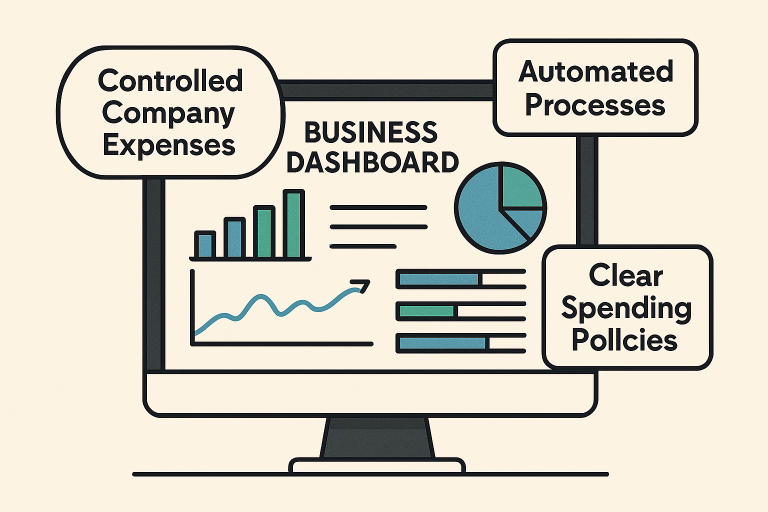
- Automating expense management processes reduces errors and saves time.
- Implementing clear spending policies ensures compliance and accountability.
- Regular monitoring and analysis of expenses help identify cost-saving opportunities.
Table of Contents
- Automate Expense Management
- Establish Clear Spending Policies
- Leverage Technology for Real-Time Monitoring
- Implement Structured Approval Workflows
- Conduct Regular Financial Reviews
- Train Employees on Cost-Consciousness
- Centralize Spending Data
- Utilize Data Analytics for Spending Insights
Gaining control over company spending is essential for long-term business health. Operating without clear spending limits and efficient processes can lead to unnecessary costs, financial leaks, and wasted resources. As organizations grow, the challenge of keeping all teams aligned around a shared financial strategy grows too. Companies that adopt expense management solutions can automate tasks, enforce financial discipline, and create transparency from the ground up.
The right strategies do not just cut costs; they empower teams to act with confidence, knowing that each transaction is accountable and in line with company objectives. Maintaining visibility and fostering a culture of cost-consciousness make it easier to adapt to market shifts and seize new opportunities as they arise. When smart controls are implemented, financial surprises become rare, and growth becomes much more predictable.
Automating processes and regularly reviewing expenses ensures accuracy and eliminates misplaced funds. With the help of digital tools, companies can minimize bureaucratic delays, ensuring purchases are approved quickly and based on real-time spend visibility. Setting clear policies, leveraging data, and keeping everyone informed prepare businesses to thrive in a competitive market.
Modern spend control also means integrating technology to manage compliance, track every dollar, and empower every manager. Ultimately, strengthening finance operations requires not only technical solutions but also training and transparency to keep all employees mindful of their impact on the company’s budget and goals.
Automate Expense Management
Manual expense reporting is time-consuming and is often the source of costly errors. It commonly takes about 20 minutes to complete each report, and nearly one in five reports contains mistakes that require additional correction time. Automating this process with AI-driven solutions can dramatically reduce turnaround times and costs. Automated tools leverage machine learning and Optical Character Recognition (OCR) to capture receipt data, categorize expenses, and prevent duplicate entries. Businesses that implement these systems see more accurate accounting, less paperwork, and a much clearer view of spending habits.
Establish Clear Spending Policies
Transparent, simple policies give employees confidence that their purchasing decisions are within the set guidelines. By defining budgets and thresholds for different departments or expense categories, companies create clear guardrails for daily operations. Automated systems perform checks to prevent unapproved expenses from being processed, improving accountability without slowing down approval for routine transactions. The absence of ambiguity means every team can operate independently while ensuring their purchases align with larger business objectives. Consistent policies also reduce the chance of policy violations or misunderstandings.
Leverage Technology for Real-Time Monitoring
Companies benefit from integration-rich platforms that capture and display spending activity across every department in real time. These platforms break down data silos, providing a unified dashboard that highlights spending patterns and cash flow trends throughout the organization. Procurement and finance teams no longer need to wait for monthly reports to identify budget variances or approve urgent requests. Instead, they can access instant insights, reallocate budgets, and adjust vendor contracts on the fly. This agility helps protect margins and allows businesses to respond quickly to both risks and opportunities.
Implement Structured Approval Workflows
Modern approval processes ensure every purchase is reviewed correctly and no request slips through without oversight. Digital, multi-level approval workflows clearly designate who is responsible for signing off at each stage of procurement. Automated routing moves requests along quickly while still enforcing systematic, auditable controls. Finance teams see procurement activity as it happens, rather than uncovering surprises after the fact. Employees gain confidence knowing each approval is part of a fair, consistent process. These frameworks help keep operations efficient while safeguarding against unauthorized or excessive spending.
Conduct Regular Financial Reviews
Consistent financial evaluations are crucial for keeping a business on track. A quarterly check-in allows managers and accountants to review performance, spot inefficiencies, and make proactive decisions. Key areas to evaluate include profit and loss statements, cash flow health, customer spending trends, and the alignment of current budgets with actual business needs. Addressing these areas helps fix minor issues before they become big problems and keeps teams aligned around financial goals year-round. These reviews are prime opportunities for strategic conversations that can lead to tax savings and smarter investment in business growth.
- Profit and loss reviews reveal what drives profits and where costs can be reduced.
- Cash flow analysis ensures bills are covered, and reserves are adequate for taxes or emergencies.
- Customer trends indicate where marketing and sales efforts are paying off.
- Comparing forecasts with actuals highlights where budgets may need adjustment.
Train Employees on Cost-Consciousness
Regular training on budgeting and financial discipline is the key to making cost management a shared responsibility. By educating employees about the impact their spending has on the organization’s health, leaders ensure that every purchase is intentional. Training should cover company expense policies, common cost-saving tactics, and the role of each team in budget management. Managers are encouraged to discuss spending performance regularly and reward smart spending. This combination of knowledge, transparency, and accountability helps create a culture where everyone works together to meet company-wide goals.
Transparency is essential. Sharing regular financial updates keeps teams aligned and aware of the bigger picture. Employees who understand the “why” behind cost controls are far more likely to participate actively in keeping the organization’s finances healthy. For additional practical advice on building a cost-conscious culture, Forbes offers tips for encouraging cost awareness at all levels.
Centralize Spending Data
Centralizing purchasing data eliminates confusion and streamlines reporting. When all transactions, receipts, and purchase orders are stored in a single platform, finance leaders have a single source of truth for tracking and analysis. This unified approach prevents critical expenses from being forgotten or double-counted. Manual data-gathering tasks are replaced with automated, up-to-date summaries that speed up reviews and make decision-making easier.
Utilize Data Analytics for Spending Insights
Data analytics tools provide powerful insights that guide smarter spending. With detailed tracking, companies can pinpoint trends, identify outliers, and surface opportunities to curtail costs. For example, consistently high travel expenses might reveal opportunities to negotiate better rates or pivot to virtual meetings. Regular analysis turns raw transactions into actionable intel, enabling strategic improvements and ensuring continuous spend optimization.
By integrating automation, policy clarity, and robust analytics, companies create an environment where smart spend controls come naturally. These best practices promote accountability, improve operational efficiency, and support long-term success.