That commercial refrigerator in your kitchen? It represents a serious capital investment. And unlike most equipment, it really hates being moved.
Restaurant owners, catering companies, and food service managers face this challenge regularly. Whether you’re expanding to a new location or renovating your current space, relocating heavy cooling equipment requires careful planning and execution. Get it wrong, and you’re looking at thousands in repairs. Get it right, and your cooling system arrives ready to work.
This guide covers everything industry professionals need to know about moving a commercial fridge safely. We’ll walk through preparation, equipment selection, transport methods, and post-move protocols. Your appliance is a serious investment. Let’s protect it.
Understanding Why Commercial Units Are Different
The Engineering Factor
- Commercial refrigerators contain industrial-grade compressors designed for continuous operation.
- The refrigerant system operates under higher pressures than residential models.
- Internal components are heavier and more sensitive to movement.
Your typical reach-in unit weighs between 400 and 900 pounds. Walk-in coolers? They can tip the scales at over a ton. This machine wasn’t built with relocation in mind.
The compressor is the heart of the operation. It circulates refrigerant through the cooling system continuously. Inside that compressor sits specialized oil that must remain settled in the proper chamber.
The Financial Stakes
- Compressor replacement can range from $1,500 to $4,500 depending on brand and capacity.
- Refrigerant leaks require EPA-certified technicians to repair legally.
- Damaged door seals increase energy costs by 15-25% annually.
According to Energy Star, refrigeration accounts for a significant portion of a restaurant’s electricity consumption. A damaged unit doesn’t just need repairs. It bleeds money every single day.
Here’s something worth considering that often gets overlooked. Insurance claims for improperly moved commercial equipment can be denied if carriers determine the move lacked proper documentation or professional handling. That’s a bitter pill when you’re staring at a dead fridge.
Essential Equipment for Safe Transport
Primary Tools You Can’t Skip
- Heavy-duty appliance dolly – A standard hand truck won’t cut it here. You need equipment rated for 800+ pounds with stair-climbing capability.
- Ratchet straps – At minimum, four industrial-grade straps rated for 1,000 pounds each.
- Moving blankets – Thick padding protects the exterior finish and absorbs vibration during transport.
- Floor protection materials – Cardboard, masonite boards, or commercial floor runners.
The dolly is your best friend during this process. Without a proper hand truck, you’re asking for back injuries and equipment damage. It handles the weight while you handle the steering.
Secondary Supplies Worth Having
- Furniture sliders for positioning in tight spaces.
- Packing tape to secure the power cord.
- Towels for water line disconnection and cleanup.
- A thermometer for post-move temperature verification.
Quality straps make the difference between a secure load and a disaster. Cheap straps stretch under pressure. When they fail, they fail completely. Invest in proper equipment.
Pre-Move Preparation: The 48-Hour Countdown
Day One: Assessment and Planning
- Measure the fridge’s height, width, and depth precisely.
- Map every doorway, hallway, and turn along your exit route.
- Identify potential obstacles like low ceilings and narrow corners.
The unit doesn’t shrink to fit through doorways. This seems obvious until you’re stuck sideways in a hallway. Measure twice, move once.
Check ceiling heights carefully. Commercial models often stand taller than standard doors. You may need to remove doors from hinges temporarily.
Day Two: Internal Preparation
- Remove all food items and store them in temporary coolers.
- Take out shelves, drawers, and any removable components.
- Wrap glass shelving in padding individually for separate transport.
Empty the appliance completely. Every pound removed makes the move safer. Those shelves aren’t secured for transport and will shift during movement.
Here’s a pro tip that saves headaches. Photograph the interior before disassembly. You’ll thank yourself when reinstalling components at the new location.
The Defrost Protocol
- Unplug the power cord 24-48 hours before the scheduled move.
- Leave doors open to accelerate the defrosting process.
- Place towels at the base to catch melting ice and condensation.
Industry best practices recommend complete defrosting before transporting any commercial refrigeration equipment. Ice creates water. Water creates slip hazards and potential electrical issues. The Occupational Safety and Health Administration emphasizes proper equipment handling and workplace safety protocols in commercial food service environments.
Disconnect the water line if your unit has an ice maker. Cap both ends to prevent dripping during transport. Small details prevent big problems.
The Moving Process: Step-by-Step Execution
Protecting Your Investment (and Your Floors)
- Lay protective materials along the entire path before moving anything.
- Position furniture sliders under each corner of the appliance.
- Wrap the entire unit in moving blankets secured with straps.
Commercial kitchen floors are expensive. One deep scratch from a sliding fridge can cost hundreds to repair. The padding serves double duty. It protects both the floors and the machine’s exterior finish.
Loading Onto the Dolly
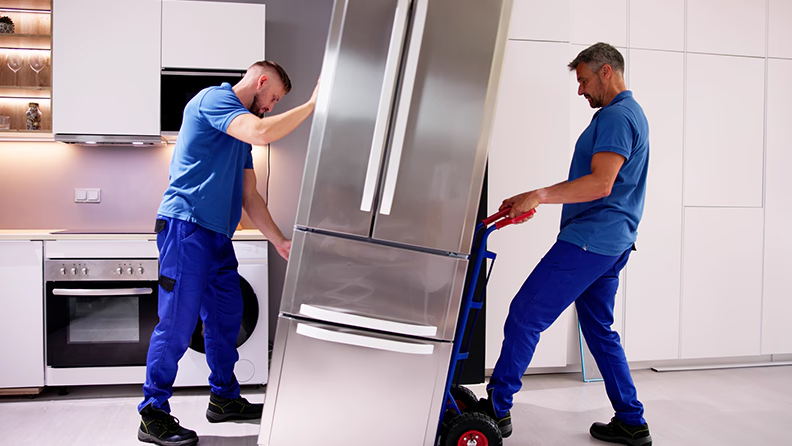
- Position the hand truck at the side of the unit, never the front.
- Tilt the appliance backward slightly while a partner slides the dolly underneath.
- Center the weight over the dolly’s wheels for optimal balance.
This is a two-person job minimum. Attempting it solo is how injuries happen. The fridge weighs as much as a motorcycle. Treat it with the same respect.
Secure the unit with straps before moving an inch. Wrap one strap around the upper third. Add another around the middle section. Tighten until snug but not crushing.
The Tilt Angle Rule
- Never exceed a 45-degree tilt angle during transport.
- Move slowly and deliberately, especially around corners.
- Communicate constantly with your moving partner.
The compressor contains oil that can migrate into refrigerant lines when tilted too far. This isn’t paranoia. It’s physics. Keeping the unit as upright as possible protects internal components.
Transport: Getting From A to B Safely
Vehicle Selection Matters
- Choose a moving truck with sufficient vertical clearance for upright transport.
- Position the unit against the vehicle wall with the compressor side protected.
- Secure with additional straps anchored to the truck’s tie-down points.
A pickup truck works for very short distances. But proper upright transport in an enclosed vehicle is always the safer choice. The equipment deserves protection from weather and road debris.
Understanding Wait Times by Position
Manufacturer guidelines typically recommend the following stabilization periods:
- Fully upright transport generally requires 2-4 hours before plugging in.
- Units tilted under 45 degrees typically need 4-8 hours to stabilize.
- Appliances laid on their side often demand 24+ hours minimum.
- Never lay a fridge on its back. The risk of permanent damage is too high.
Always consult your specific manufacturer’s documentation. Wait times can vary by model and brand.
The Vibration Factor Nobody Mentions
- Road vibration loosens internal connections over time.
- Shorter transport distances reduce cumulative stress on components.
- Smoother routes are worth the extra time.
Most guides completely ignore this angle. Every bump and pothole transfers energy through the frame into the compressor and cooling system. Choose your route wisely. Highway miles on smooth pavement beat shortcuts on rough roads.
Consider timing as well. Moving commercial refrigeration equipment during summer months means fighting ambient heat. The unit absorbs warmth during transport, extending the stabilization period required before operation. Winter moves have their own challenges with thermal shock. Spring and fall offer the most forgiving conditions.
Post-Move Protocol: The Critical Final Steps
The Waiting Period Isn’t Optional
- Position the appliance in its final location immediately upon arrival.
- Level it using adjustable feet before anything else.
- Wait the appropriate time based on transport position before reconnecting power.
Here’s the science behind the wait. Compressor oil needs time to drain back into the proper reservoir. Refrigerant pressure needs to equalize throughout the cooling system. Plugging in too early forces the compressor to work against improper fluid distribution. That’s how you kill a perfectly good machine.
Reconnection Checklist
- Inspect the power cord for any damage sustained during transport.
- Reconnect the water line and check for leaks at all connection points.
- Reinstall shelves and internal components according to your photos.
Take your time with reconnection. Rushing this stage wastes all the careful work that came before. Double-check every connection point.
Temperature Verification Protocol
- Power on the unit and set it to standard operating temperature.
- Allow 2-3 hours for the cooling system to stabilize.
- Verify internal temperature with an independent thermometer.
Commercial units should maintain 35-38°F for refrigerator sections. Freezer compartments need to be 0°F or below. Any variance beyond 2 degrees signals a potential problem requiring professional inspection.
When Professional Help Makes Sense
Signs You Need Expert Movers
- The unit weighs more than 800 pounds.
- Your path includes stairs or extremely tight spaces.
- The appliance contains specialty components or unusual configurations.
Professional movers carry liability insurance. They also bring experience with equipment you’ve never touched before. Sometimes the smart business decision is knowing when to delegate.
Document everything if you do hire professionals. Photograph the unit before they touch it. Note any existing damage. This protects everyone involved.
Final Thoughts
Moving commercial refrigeration equipment successfully comes down to preparation, proper equipment, and patience. Your compressor, refrigerant system, and internal components demand respect throughout the process.
The financial stakes are real. A damaged fridge means lost inventory, emergency repairs, and potential business interruption. Every step in this guide exists because someone learned the hard way what happens when you skip it.
Your appliance represents a significant capital investment. Protecting it during relocation isn’t just smart. It’s essential business practice.
Ready to move your commercial refrigeration? Gather your equipment, assemble your team, and follow this guide step by step. Plan thoroughly, execute carefully, and your cooling system will arrive at its new home ready to perform.