As organizations strive to remain competitive and agile, Human Resources (HR) technology has emerged as a catalyst for transformation. No longer confined to traditional HR practices, companies are leveraging advanced systems and intelligent tools to streamline every aspect of workforce management. The question of what is human capital management is now more relevant than ever, as businesses redefine the way they attract, engage, and retain employees with digital solutions at the forefront.
This digital evolution is driving a shift where smart automation, data-driven insights, and employee-centric platforms are the new norm. As technology reduces manual intervention, HR departments can invest their energy in strategic initiatives that directly contribute to organizational growth. The accessibility and scalability offered by modern HR technology are also bridging gaps for globally distributed teams, making collaboration seamless no matter where employees are located.
The ripple effect of this technological advancement extends to setting new standards in employee engagement, performance management, and overall workforce well-being. As businesses adapt to changing expectations from both employees and stakeholders, HR technology provides the backbone for future-ready organizations. Furthermore, these innovations are fostering a culture of resilience, enabling businesses to respond quickly to market demands and emerging workforce trends.
Expanding the technological footprint in HR also encourages continuous learning and growth. It equips HR leaders and employees alike with access to robust analytics, on-demand training opportunities, and communities built around shared interests and goals. By creating a more adaptive and inclusive environment, HR technology continues to set new benchmarks for operational excellence and employee empowerment.
AI in Recruitment and Talent Acquisition
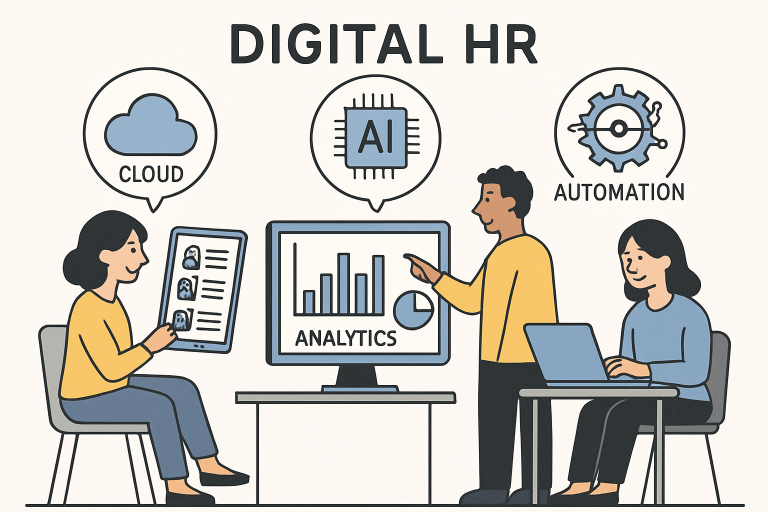
Artificial Intelligence is at the core of modern recruitment strategies. AI-driven solutions can parse resumes, match candidate profiles with job requirements, and conduct preliminary assessments, often outperforming traditional methods in speed and accuracy. By removing subjective biases and inconsistencies, AI ensures that hiring decisions are both fair and merit-based. This transformation allows HR personnel to focus on building relationships with candidates and crafting effective employer branding strategies.
Additionally, AI can predict future hiring needs by examining workforce data and business trends, supporting more proactive talent pipeline management. These capabilities give companies a competitive edge in attracting sought-after talent quickly and efficiently.
Automation in HR Processes
The automation of routine HR functions is revolutionizing organizational operations. Processes such as payroll, benefits administration, and compliance management, which were once manual and time-consuming, are now streamlined through robust HR automation platforms. Robotic Process Automation (RPA) performs repetitive tasks with high accuracy and minimal supervision, drastically reducing processing times and operational costs.
This shift enables organizations to allocate more resources toward strategic human capital initiatives and fosters a culture of continuous improvement. Automated systems help minimize errors and ensure compliance, ultimately reducing business risk and improving service delivery for both employees and management.
Enhancing Employee Engagement Through Technology
Employee engagement remains a crucial metric for business success, and technology is at the heart of modern engagement strategies. Digital platforms now offer channels for continuous feedback, customizable recognition systems, and a variety of e-learning tools tailored to individual development paths. These applications not only make employees feel valued but also foster a collaborative and dynamic culture where feedback and growth are constant.
Moreover, mobile apps and self-service portals provide employees with greater control over their work schedules, benefits, and career progression. Empowering the workforce with these resources helps boost morale, increase retention, and encourage a more inclusive company culture.
Data-Driven Decision-Making in HR
Analytics has become indispensable in the modern HR toolkit. With access to real-time dashboards and advanced reporting tools, HR leaders can monitor key performance indicators, including employee turnover, engagement scores, absenteeism, and more. Data-driven insights empower organizations to forecast workforce trends, identify skills gaps, and develop actionable strategies to mitigate potential risks before they impact business operations.
This reliance on analytics not only improves the quality of HR decisions but also strengthens accountability and transparency throughout the organization. As HR analytics matures, its role will expand even further, supporting personalized employee experiences and organizational growth.
To explore deeper trends in HR analytics, the Society for Human Resource Management provides excellent industry coverage.
The Role of Cloud-Based HR Systems
With the rise of distributed teams and remote work, cloud-based Human Capital Management (HCM) systems have become essential. These platforms grant HR professionals and employees instant access to crucial information from anywhere. Cloud solutions integrate easily with existing enterprise environments, enhancing collaboration and scalability while reducing IT overheads.
Cloud-based systems are also more resilient to disruptions, providing backup and recovery capabilities and robust security measures to protect sensitive employee data. As companies expand, these solutions can scale effortlessly, accommodating growth without sacrificing performance or security.
Addressing Employee Well-being with Technology
Employee well-being has shifted to the forefront of HR priorities. Companies are implementing technology-driven programs such as digital mental health applications, remote wellness activities, and tools for promoting work-life balance. These resources help reduce stress, combat burnout, and reinforce a culture that supports employees in their holistic health journeys.
Flexible work arrangements and access to virtual support networks foster adaptability and resilience. When employees see that their employers are committed to their well-being, engagement and productivity naturally increase.
Future Trends in HR Technology
The future of HR technology is defined by hyper-personalization, advanced people analytics, and secure data management through blockchain. Personalizing the employee experience means leveraging data to tailor everything from learning paths to engagement strategies. Advanced analytics will continue to drive predictive modeling, supporting both workforce planning and performance management.
Blockchain technology promises a new era of security and transparency, especially in credential verification and personal data management. As these trends develop, businesses that stay agile in adopting the latest HR technologies will stand out in the race for top talent and industry leadership.
Conclusion
Technology is setting the stage for a new era in workforce management, where efficiency, engagement, and resilience are seamlessly integrated into HR operations. By embracing these advancements, organizations empower both their workforce and their leadership to make smarter decisions, create more inclusive cultures, and adapt swiftly to the evolving demands of the marketplace.