Cool rooms are important in industries that place importance on temperature-controlled storage like the food service, hospitality, pharmaceutical and retail industries. These spaces rely heavily on systems to control the temperature and they determine the efficiency and reliability of these spaces. This is centered on commercial refrigeration, which determines the effectiveness of a cool room to retain the same conditions and assist in everyday activities.
When it comes to the design of a system up to its maintenance, how refrigeration is incorporated into the space can have a direct impact on performance, energy consumption, and the overall functionality over time. The study of the interaction of commercial refrigeration with the cool room systems could assist the businesses in making informed choices concerning their configuration and maintenance.
The Role of Refrigeration in Cool Room Functionality
A cool room is designed to maintain a controlled environment where temperature-sensitive products can be stored safely. The success of this environment is very much dependent on the refrigeration system there. The commercial refrigeration systems play the role of eliminating heat in the area and ensuring that the internal conditions are kept constant.
In the installation of the cool room, a choice of the refrigeration system should also be undertaken. The amount of space available in the room, the nature of products stored, and the frequency of door access will all be seen to affect the nature of the required system. An appropriately matched refrigeration system will help in ensuring that the cool room will be able to sustain constant temperatures without excessive work of the equipment.
Unless the refrigeration system is configured effectively to meet the needs of the room, it will not be able to achieve the desired parameters, and the temperatures will vary, and the efficiency is going to be low.
Temperature Consistency and Product Storage
Temperature consistency is one of the most significant aspects of performance of cool rooms. Several goods, particularly food and medical supplies, need to be kept in a stable condition. Commercial refrigeration systems are made so as to keep these constant temperatures by turning on and off in times of necessity.
Insulation, airflow, and refrigeration capacity during cool room installation should all collaborate to provide a consistent internal environment. Minor temperature variations can affect the quality of the products with time.
An efficient refrigeration system will provide equal distribution of cold air in the refrigerator so that there are no hot spots or untidy cooling. This helps in improved product preservation and improved storage conditions.
Energy Efficiency and System Performance
One of the key factors that businesses with cool rooms have to put into consideration is energy efficiency. Commercial refrigeration systems usually operate around the clock or repeat around a certain cycle; therefore, the consumption of energy plays a significant role in total operating expenses.
In cool room installation, energy-efficient refrigeration unit can be selected to reduce the long-term consumption of energy. The efficiency of the compressor, the quality of insulation, and the design of the system are all factors leading to the consumption of energy by the cool room.
Refrigeration systems are efficient and are meant to keep the temperature within minimum energy consumption. An appropriate system sizing and installation can assist in avoiding burden of equipment that may result in increased energy consumption.
Also, the routine servicing of commercial refrigeration in Christchurch is useful in ensuring that the parts of the refrigeration system, like compressors, fans, and coils, work effectively over time.
Airflow and Cooling Distribution
The cool room is cooled by airflow, which is a major factor that determines the effectiveness of a cool room. Refrigeration systems in commercial areas are dependent on the fact that air moves in the right direction to evenly circulate cold air in the room.
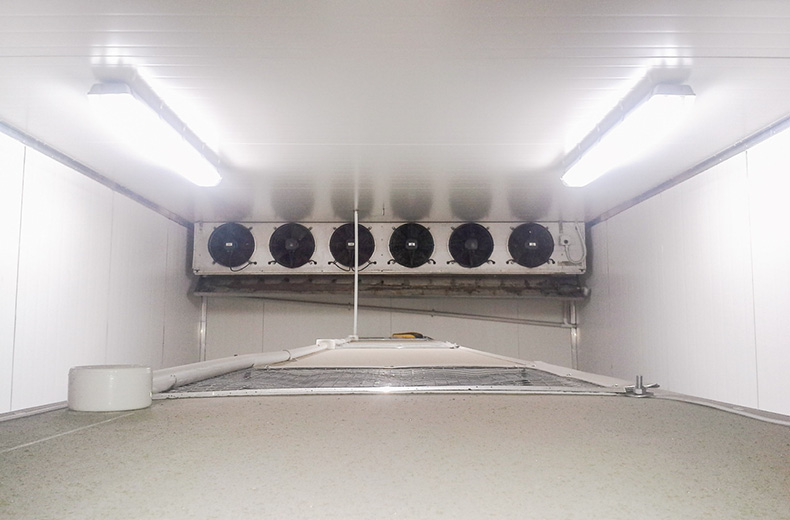
When the cool rooms are being installed, evaporators and fans are strategically positioned to encourage the circulation of air. Lack of proper airflow may result in uneven cooling, where part of the room may be more chilled than others.
Barriers to airflow may also be caused by poor storage of goods or large shelves. Ensuring unobstructed airflow is beneficial in ensuring the refrigeration system is more effective and that the temperatures are always maintained.
Proper airflow is another way businesses can help improve the overall performance of their business refrigeration systems and enhance the reliability of their cool rooms.
Impact of Door Usage and External Conditions
The performance of cool room also depends on the frequency of accessing the space. With each opening of the door, warm air gets into the room, which puts more strain on the commercial refrigeration system.
In cool room installation, the type of door, sealing, and location are taken into consideration so as to reduce loss of temperature. Such aspects as strip curtains or doors that close fast may be advantageous in environments with high rates of traffic flow to minimize the effect of high traffic.
The external conditions, the temperature and humidity, are also known to influence the amount of work required by the refrigeration system. Adequate insulation and sealing can be used to minimize the effects of the external environment, enabling the system to stabilize internal temperatures in a more efficient way.
Maintenance and Long-Term Performance
Commercial refrigeration systems also require regular maintenance to ensure that they are functioning well. Dust and debris-filled components may deteriorate over time, and thus performance may be compromised.
Regular check-ups and maintenance are used to detect the possible problems before they affect the cool room. This can involve monitoring the refrigerant levels, cleaning coils, and also ensuring that fans and compressors are in operation.
Adequate maintenance will help in maintaining a uniform performance and may increase the life cycle of the refrigeration system. It also assists in the provision of the continued efficiency of the cool room even after the original installation of the cool room.
System Integration and Design Considerations
Refrigeration alone is not a factor that defines the performance of a cool room. It is the outcome of the effectiveness of the collaboration of all the elements, such as insulation, layout, and structural design.
A successful cool room installation has a holistic approach; the refrigeration system is not isolated but rather will be incorporated into the general design of the space. This involves the choice of materials, layout of storage and ensuring that all systems are in line with how the room is actually intended to be used.
Commercial refrigeration becomes a stable and efficient cooling environment when it is incorporated correctly in the design. This results in high performance and high reliability in the long term.
Final thoughts
Refrigeration systems affect the effectiveness of a cool room operation in regard to ensuring temperature regularity, contributing to energy efficiency and airflow. Through effective cool room installation, system choice, and maintenance, a business will be able to design consistent temperature-regulated rooms that will facilitate its operations. Understanding the relationship between refrigeration and cool room performance allows for better planning, improved efficiency, and consistent storage conditions over time.