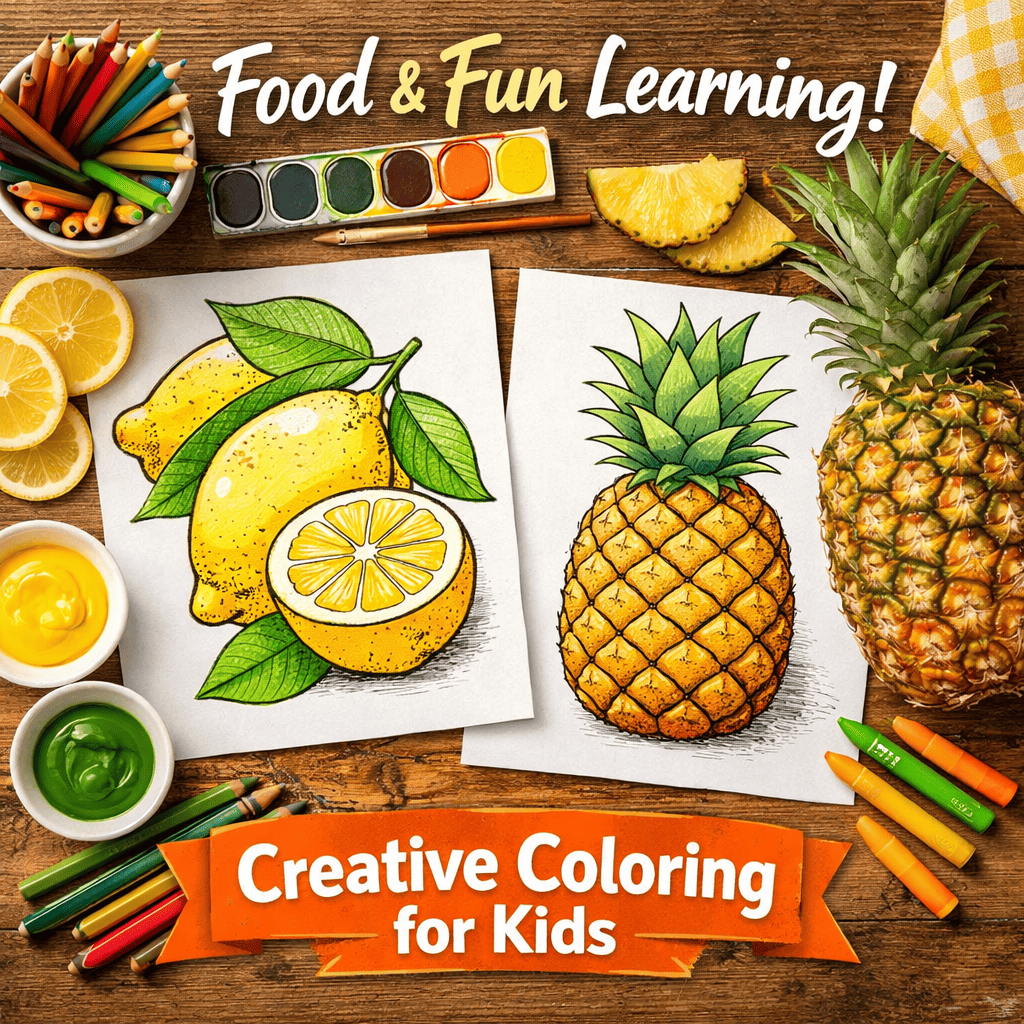
In recent years, food education has expanded beyond nutrition labels and classroom lectures to include more experiential, sensory-based learning approaches. Researchers and educators alike are increasingly recognizing that visual creativity – when thoughtfully applied – can play a meaningful role in how children and families understand food, taste, and healthy eating habits.
One emerging method involves the use of food-inspired creative activities, particularly those centered on familiar fruits. These activities combine art, cognition, and sensory awareness, helping learners form deeper connections with everyday foods long before they appear on a plate.
Visual Learning as a Foundation for Food Understanding
Educational psychology has long emphasized that visual engagement strengthens memory formation and conceptual understanding. According to Paivio’s Dual Coding Theory, information presented both visually and verbally is more easily processed and retained than information delivered through a single channel (Paivio, 1991).
When learners interact with illustrated food imagery – especially through hands-on creative tasks – they are not merely observing. They are actively constructing meaning by linking shape, color, and form to prior experiences with taste and smell. This multimodal process is particularly effective for young learners, whose cognitive development is deeply tied to sensory exploration.
For example, citrus-inspired illustration activities allow learners to recognize distinctive forms, anticipate sensory qualities, and associate visual cues with real-world culinary contexts. These associations later support discussions about acidity, flavor balance, and ingredient use in everyday cooking.
Building Early Food Literacy Through Creative Engagement
Food literacy extends beyond knowing which foods are “healthy.” It encompasses understanding food origins, cultural relevance, sensory properties, and preparation methods. Scholars define food literacy as a set of skills and knowledge that enable individuals to make informed food choices across their lifespan (Vidgen & Gallegos, 2014).
Research suggests that early, repeated exposure to visual representations of fruits and vegetables positively influences children’s willingness to try new foods and reduces food-related anxiety (Cooke, 2007). Creative visual tasks provide a low-pressure environment in which learners can become familiar with food items before tasting them.
Within this context, resources such as Lemon coloring pages serve as effective entry points for introducing discussions around citrus fruits, vitamin content, and culinary versatility – without overwhelming learners with abstract nutritional data.
Executive Function, Focus, and Fine Motor Development
Beyond food-specific knowledge, structured creative activities contribute to the development of executive function skills. Coloring tasks require sustained attention, decision-making, and fine motor coordination – abilities closely linked to academic success and self-regulation.
A study published in Art Therapy: Journal of the American Art Therapy Association found that structured coloring activities can reduce anxiety and promote focused attention by encouraging mindfulness and repetitive, goal-oriented movement (Curry & Kasser, 2005).
From a food education perspective, these skills translate well to real-life contexts. Tasks such as measuring ingredients, following recipes, or preparing simple meals all rely on similar forms of concentration and motor control. In this way, visual creativity indirectly supports culinary competence.
Cultural Meaning and Food Symbolism
Food imagery also offers opportunities to explore cultural narratives. Fruits carry symbolic meanings shaped by geography, history, and social traditions. Tropical produce, for instance, is often associated with hospitality, global trade, and seasonal abundance.
Visual materials featuring tropical fruits can prompt discussions about where foods come from, how they travel across continents, and why certain ingredients hold symbolic value in different cultures. This approach aligns with constructivist learning theory, which emphasizes that learners build understanding by connecting new information to cultural and personal contexts (Bruner, 1961).
Illustration-based resources – such as Pineapple coloring pages – can therefore function as gateways into broader conversations about food systems, sustainability, and cultural exchange.
Emotional Well-Being and Creative Expression
Creative engagement is also closely tied to emotional regulation. Art therapy research highlights that visual expression provides a nonverbal outlet for processing emotions, particularly for children who may struggle to articulate feelings verbally (Malchiodi, 2012).
In food-related learning environments, this emotional dimension is especially relevant. Attitudes toward food are often shaped by early experiences, family dynamics, and cultural expectations. Creative activities centered on food imagery can foster positive emotional associations, reducing stress and encouraging curiosity rather than resistance.
By combining calm, focused creativity with familiar food themes, educators and parents can support both emotional well-being and healthy food relationships.
Practical Applications in Food and Nutrition Education
To effectively integrate food-themed creative activities into learning environments, educators and caregivers can consider the following strategies:
Pair Visual Activities With Sensory Exploration
After completing an illustration task, learners can observe, smell, or taste the real fruit. Research on sensory integration suggests that combining visual and gustatory experiences enhances memory and concept retention (Breslin et al., 2004).
Encourage Descriptive Language
Creative tasks can be paired with vocabulary development. Learners might describe imagined flavors, textures, or uses of the illustrated food, supporting language acquisition alongside food knowledge.
Use Cross-Curricular Connections
Food imagery can be integrated into geography lessons (where fruits grow), science topics (plant life cycles), or cultural studies. This interdisciplinary approach reflects best practices in holistic education.
Support Family Engagement
At home, creative food activities can become shared experiences that encourage discussion about meals, traditions, and preferences – strengthening family connections around food.
Accessibility and Educational Equity
Equitable access to educational resources remains a key concern in contemporary education policy. UNESCO emphasizes that open-access learning materials play a critical role in reducing educational disparities and supporting lifelong learning (UNESCO, 2020).
Printable creative resources offer particular value in this context. They require minimal technology, are easily adaptable to different age groups, and can be used across classrooms, community programs, and home environments. Their flexibility makes them especially relevant in food education initiatives that aim to reach diverse populations.
Conclusion: Creativity as a Pathway to Food Awareness
Food-themed creative activities represent a compelling intersection of art, education, and nutrition. Grounded in research from cognitive psychology, sensory science, and educational theory, these approaches demonstrate that learning about food does not need to be confined to textbooks or kitchens.
By engaging learners visually and creatively, educators can foster foundational skills related to food literacy, emotional well-being, and cultural awareness. In an era where experiential learning is increasingly valued, such activities offer a meaningful and accessible way to connect creativity with everyday food knowledge.