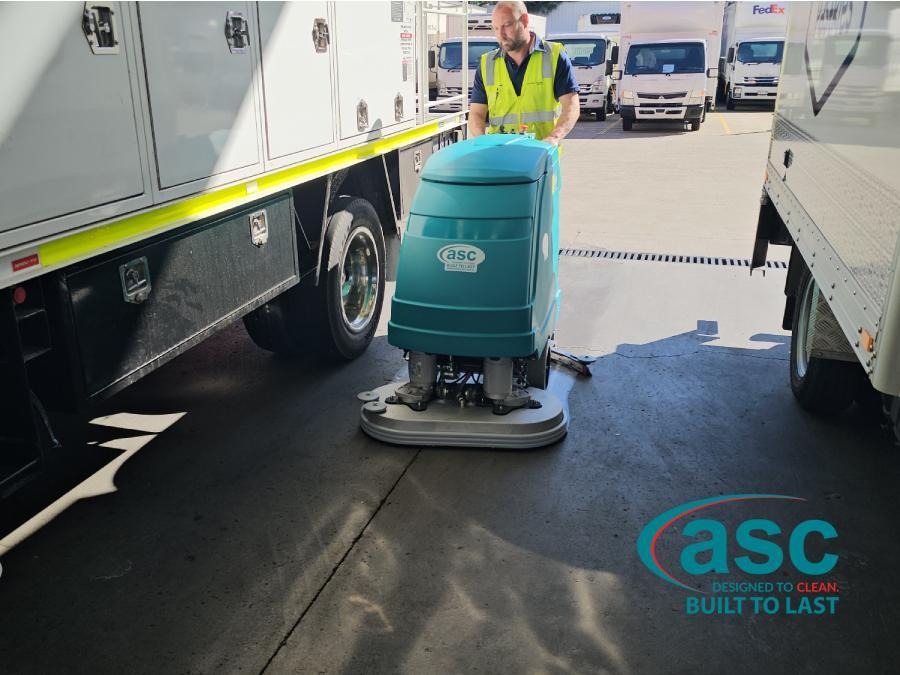
Cleaning efficiency in commercial facilities goes beyond simply having clean floors. True efficiency means achieving consistent cleaning results in less time, with fewer labour hours, and at lower operational cost. A floor scrubber delivers this efficiency by transforming how businesses approach daily floor maintenance across large operational spaces.
Manual cleaning methods persist in many warehouses, factories, and commercial facilities despite clear limitations. Mops and manual scrubbing deliver inconsistent results, require significant physical effort, and consume hours of labour. The floors get clean eventually, but the process itself wastes time and resources that could be directed toward core business activities.
Understanding how floor scrubber machines deliver cleaning efficiency, where that efficiency shows up in daily operations, and why these machines have become essential equipment helps facilities make informed decisions about improving their cleaning operations.
How Floor Scrubbers Deliver Efficient Cleaning?
#1 How Floor Scrubbers Combine Multiple Steps in One Pass
The fundamental efficiency advantage comes from combining what manual cleaning does in separate steps. Traditional mopping requires sweeping first, then applying cleaning solution, scrubbing, and finally removing dirty water. Each step takes time and labour.
A floor scrubber performs all these actions simultaneously. The machine dispenses cleaning solution, scrubs with rotating brushes or pads, and immediately recovers dirty water into a separate tank. This consolidated process eliminates back-and-forth manual work, cutting cleaning time substantially.
Facilities with large floor areas see this gain most clearly. What takes multiple operators three hours with mops gets completed in under an hour with equipment covering 800-1,200 square metres per hour, depending on machine size. Brisbane warehouses and Sydney distribution centres report cleaning time reductions of 60-70% after switching from manual methods.
#2 Consistent Pressure and Coverage
Manual scrubbing delivers inconsistent results because pressure, solution coverage, and intensity vary throughout the process. Operators fatigue after 30-40 minutes of continuous scrubbing, some areas get more attention than others, and quality depends heavily on individual effort and technique.
Floor scrubbers maintain uniform scrubbing action automatically across every square metre. High-traffic areas receive the same thorough cleaning as less-used sections. This consistency eliminates patchy results common near the end of manual cleaning shifts when operator fatigue sets in.
The automated consistency also means predictable schedules. Managers know a 5,000 square metre facility takes 90 minutes to clean rather than guessing whether it will take two hours or four depending on which staff member handles the task.
#3 Faster Drying Time and Safety
Manual mopping leaves floors wet for 30-60 minutes, creating slip hazards and restricting access to cleaned areas. This downtime disrupts operations and limits when cleaning can happen without affecting workflow.
A floor scrubber recovers dirty water immediately as it cleans, leaving floors only slightly damp. Surfaces dry within 5-10 minutes rather than an hour, allowing normal operations to resume quickly. Manufacturing facilities, food processing plants, and retail warehouses particularly benefit from this rapid floor turnover.
Cleaning can happen during brief operational pauses without extended downtime waiting for safe floor conditions. This flexibility allows facilities to maintain cleanliness standards without sacrificing productive operational hours.
#4 Thorough Cleaning Reduces Maintenance
Efficient cleaning means maintaining floor condition over time, not just addressing surface dirt. Manual mopping often pushes dirt around rather than removing it completely, allowing grime to build up in grout lines, textured surfaces, and high-traffic zones.
Floor scrubbers genuinely remove dirt and contamination through mechanical scrubbing action combined with immediate water recovery. This thorough cleaning extends time between deep cleaning requirements from every 3-4 months to every 6-8 months, reducing intensive sessions that disrupt operations for extended periods.
Over time, this shows up in better floor condition, reduced wear on epoxy and sealed concrete surfaces, and lower costs for refinishing or repairing floors damaged by accumulated grime and inadequate cleaning.
#5 Reduced Labour Requirements
Labour efficiency represents one of the most significant advantages these machines deliver. Manual cleaning requires multiple staff members or consumes substantial hours from individual operators. Equipment allows one person to clean areas that previously needed two or three people working simultaneously.
This labour reduction doesn’t just cut direct wage costs. It frees experienced staff to focus on production, quality control, inventory management, or customer service rather than spending hours on manual cleaning tasks. Distribution centres, logistics facilities, and manufacturing plants operating lean staffing models gain particular advantage.
One Melbourne distribution centre reduced cleaning from 4 hours with three staff to 90 minutes with one operator after implementing floor scrubber equipment. The labour savings alone recovered the equipment investment within 18 months.
The Bottom Line
Cleaning efficiency in commercial facilities means achieving consistently clean floors in less time, with fewer labour hours, and at lower total cost. A floor scrubber delivers this efficiency by combining multiple cleaning steps into one pass, maintaining consistent pressure, recovering water immediately, removing dirt thoroughly, reducing labour requirements, and controlling solution use.
These advantages translate directly to faster cleaning times, better floor condition, improved safety, reduced operational disruption, and measurably lower operating costs. For commercial facilities across Australia where cleaning efficiency impacts overall productivity, floor scrubber machines represent practical equipment that delivers genuine improvements in how cleaning gets done and what it costs to maintain proper standards.