Every hunter knows that a good knife is just as important as the rifle or bow you carry into the field. It’s the tool you rely on when the hunt is over and the real work begins. Field dressing, skinning, boning, and camp tasks all demand a blade that performs reliably without letting you down. If you’re searching for the best hunting knives 2026 has to offer, this guide covers everything you need to know before making a purchase, from blade types and steel quality to handle materials and maintenance. Whether you’re a whitetail hunter in the midwest or chasing elk through mountain terrain, the right knife makes every task easier and cleaner.
At Wildland Blades, the belief is simple: a hunting knife should be as functional as it is beautiful. Built from hand-forged Damascus steel in Colorado, their blades are crafted for hunters who demand performance, durability, and genuine craftsmanship in the field.
Why Your Hunting Knife Matters More Than You Think
Most hunters spend significant time choosing their firearms, ammunition, and gear, but the knife often gets picked up as an afterthought. That’s a mistake. A poorly made knife slows you down in the field, dulls quickly, and can even ruin a cape or hide you were hoping to save.
A quality hunting knife, on the other hand, becomes one of the most trusted tools in your kit. It processes game cleanly, handles camp chores without complaint, and lasts for decades when properly cared for. Hunters who make the investment once rarely regret it.
The best hunting knives 2026 brings to the table combine modern steel technology with time-tested blade designs. You don’t need a dozen specialized knives to hunt effectively. What you need is one or two well-chosen blades that match your actual hunting style and the game you pursue.
What Makes a Great Hunting Knife in 2026
Before diving into specific picks, it helps to understand what separates a great hunting knife from an average one. These are the qualities that consistently matter in the field.
Steel Quality
Steel is everything. The blade material determines how long your knife holds an edge, how easy it is to sharpen, and how well it handles tough use. In 2026, Damascus steel remains the gold standard for hunters who want the best combination of edge retention, toughness, and aesthetics.
Damascus steel is created by folding and welding multiple layers of steel together. This process creates a blade with superior hardness and flexibility compared to single-steel construction. The edge stays sharper longer, which means less frequent sharpening during a hunt. And when it does need touching up, Damascus steel responds beautifully to a whetstone.
High-carbon steel is another excellent choice. It takes an extremely sharp edge and is easy to resharpen in the field, though it requires more attention to prevent rust. Stainless steel handles moisture better but generally doesn’t hold an edge quite as long as carbon or Damascus options.
Blade Design
The shape of your blade determines what tasks it handles best. A drop point blade is the most versatile choice for general hunting use. The curved spine drops gently toward the tip, creating a strong point that resists breaking and a belly that works beautifully for skinning. Most hunters who carry one knife choose a drop point for good reason.
A clip point blade offers a thinner, more precise tip that excels at detail work and piercing. It’s a strong choice for hunters who do a lot of fine work during processing.
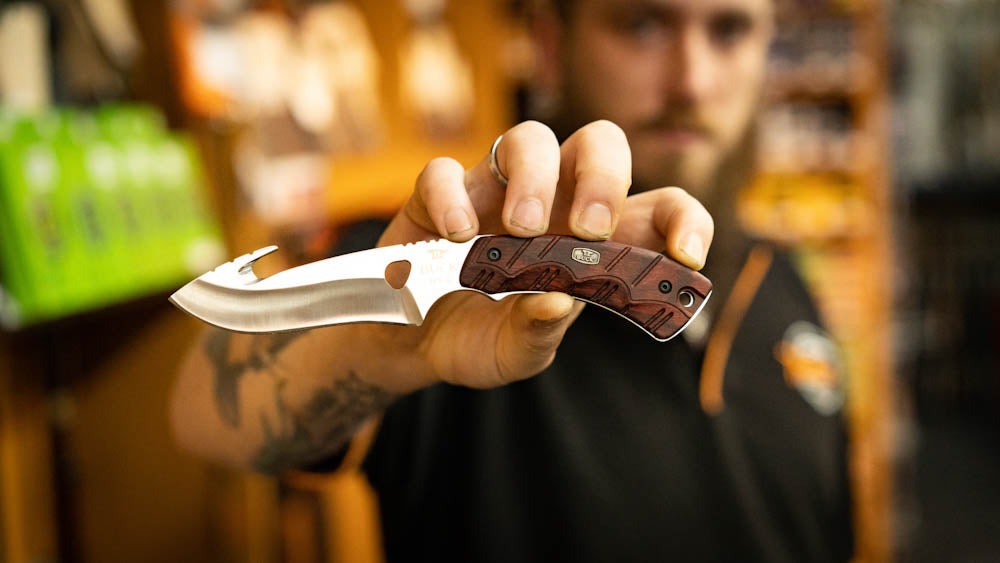
A gut hook design adds a specialized hook above the spine specifically for opening the body cavity during field dressing. If you field dress a lot of big game, this feature genuinely speeds up the process and keeps your cuts cleaner.
Skinning knives feature a broad, curved belly designed for the sweeping motions involved in removing hide. They’re not ideal for general tasks but excel specifically at skinning larger animals like deer, elk, and bear.
Blade Length
For most hunting tasks, a blade between 3.5 and 5 inches covers everything you need. Shorter blades in the 3 to 4 inch range offer better control for detail work and skinning. Longer blades from 4 to 6 inches handle heavier tasks like boning and camp chores more efficiently.
The right length depends on what game you hunt. Whitetail and small deer hunters do well with a 3.5 to 4.5 inch blade. Elk and moose hunters often appreciate something slightly longer for handling larger carcasses efficiently.
Handle Construction
Your grip on a hunting knife matters enormously, especially when your hands are wet, cold, or covered in blood. Handles need to provide secure grip without causing fatigue during extended processing sessions.
Full tang construction, where the blade steel extends completely through the handle, provides the best strength and balance. For hunting use, full tang is the smart choice.
Handle materials vary widely. Bone and exotic hardwood handles offer traditional beauty and comfortable grip. Micarta handles excel in wet conditions and require no maintenance. Each material has genuine merits, and the best choice depends on your priorities.
Top Hunting Knife Types for Every Hunter
For the All-Around Hunter: Drop Point Damascus Fixed Blade
If you’re picking one knife to handle every hunting task, a drop point fixed blade in Damascus steel is the answer. The blade geometry handles skinning, field dressing, and camp work without specializing too heavily in any one area. The Damascus steel construction ensures the edge stays sharp through extended processing work.
This is the knife that lives on your belt during every hunt. It’s there for the field dressing, the skinning, the campfire food prep, and any other task that comes up. Investing in quality here pays off every season for years to come.
For the Big Game Hunter: Gut Hook Knife
Elk, moose, and large deer hunters who frequently field dress big game benefit enormously from a gut hook design. Opening the body cavity cleanly is faster and safer with a dedicated gut hook, and the time saved adds up when you’re working alone in the backcountry miles from the truck.
Look for a gut hook knife with a blade length of 4.5 to 5 inches and full tang construction. The extra blade length helps with the size of big game, and full tang ensures the knife won’t fail under the stress of heavy use.
For the Waterfowl and Small Game Hunter: Compact Fixed Blade
Duck hunters and small game hunters work with smaller animals that require more precision than raw power. A compact fixed blade with a 3 to 3.5 inch blade gives you the control needed for cleaning birds and processing small game without the bulk of a larger knife.
The shorter blade is also easier to maneuver in tight spaces during field cleaning, and the lighter overall package adds less weight to your kit.
For the Backcountry Hunter: Multi-Purpose Survival Blade
Hunters who spend extended time in the backcountry need a knife that handles more than just game processing. A longer, heavier fixed blade in the 5 to 6 inch range works for batoning wood, preparing food, building shelter components, and all the camp tasks that come with multi-day wilderness hunts.
Damascus steel in this size offers excellent edge retention for extended trips where you can’t easily resharpen. The layered steel construction also provides the toughness needed for harder tasks without the brittleness of some high-hardness steels.
Why Wildland Blades Leads the Pack in 2026
When it comes to the best hunting knives 2026 has available, Wildland Blades’ hunting knife collection stands apart from the competition for several important reasons.
First, the Damascus steel construction. Every hunting knife they offer is hand-forged using layered Damascus steel that delivers genuine performance benefits, not just visual appeal. The distinctive patterns in the blade are the visible evidence of a construction process that creates superior edge retention, toughness, and durability compared to mass-produced alternatives.
Second, the full tang construction throughout their lineup. This isn’t a detail that gets skipped to save costs. Full tang blades provide better balance, more strength, and longer service life. When you’re applying real force during field dressing or boning, you want the confidence that comes from solid full tang construction.
Third, the handle options. Wildland Blades offers hunting knives with bone handles, exotic hardwood handles, and other premium materials that combine grip performance with genuine beauty. These are tools you’ll be proud to carry and happy to use for decades.
Their hunting knives are designed specifically for the demands hunters face in the field. The blade geometries suit real hunting tasks. The steel choices prioritize edge retention and toughness in equal measure. And the craftsmanship behind each piece reflects a genuine passion for the tradition of hunting and the tools that support it.
Whether you’re buying your first serious hunting knife or adding a premium piece to an established collection, their range covers the key hunting knife types at a level of quality that competes with anything available in 2026.
Caring for Your Hunting Knife
Even the best hunting knife needs proper care to perform year after year. Understanding basic maintenance keeps your blade sharp, prevents rust, and extends the life of the handle material.
For a complete breakdown of proper care practices, Wildland Blades has put together a detailed guide on how to care for hunting knives that covers everything from field cleaning to long-term storage. Following these practices consistently makes a real difference in how your knife performs and how long it lasts.
Here are the fundamentals worth knowing:
Clean your knife immediately after use. Blood, tissue, and moisture are hard on blade steel. Rinsing your knife with clean water and wiping it dry right after field dressing prevents corrosion from taking hold. Even stainless steel benefits from prompt cleaning.
Dry completely before storage. Moisture trapped against the blade is how rust starts. Make sure your knife is completely dry before it goes back in the sheath or storage.
Oil the blade regularly. A light application of mineral oil or food-safe blade oil creates a protective barrier against moisture and oxidation. Do this especially before storing your knife for extended periods between hunting seasons.
Sharpen with the right tools. A quality whetstone handles most sharpening needs for Damascus and high-carbon steel blades. Maintain consistent angle during sharpening, typically 15 to 20 degrees per side for hunting knives. Regular light honing between sharpenings keeps the edge performing at its best longer.
Store properly. Keep your knife in a dry location, ideally out of the sheath for long-term storage since some sheath materials trap moisture. A drawer with a blade guard or a dedicated knife roll works well for storage between seasons.
Inspect handles regularly. Wood handles benefit from occasional mineral oil treatment to prevent drying and cracking. Check that handle scales remain tight and that any fasteners are secure before each hunting season.
Building Your Hunting Knife Kit
Smart hunters don’t need a massive collection of knives. What you need is the right knife, or two, for how you actually hunt. Here’s a practical approach to building a kit that covers real hunting needs without unnecessary complexity.
Start with one quality all-purpose hunting knife. A drop point fixed blade in Damascus steel handles 90% of hunting tasks for most hunters. Get this right first, and you’re well equipped for most situations.
If you hunt big game regularly, add a dedicated skinning or gut hook knife. Having a specialized blade for this specific task genuinely makes the work faster and cleaner, especially when you’re processing multiple animals in a season.
If you spend extended time in backcountry settings, consider a larger camp knife as a third piece. This blade handles the heavier tasks that a hunting knife isn’t designed for, from camp food prep to light camp tasks that come with multi-day wilderness hunts.
Beyond these three categories, additional knives are more about collection building than practical need. Focus on quality over quantity, and invest in pieces that will actually see use in the field.
The Bottom Line
The best hunting knives 2026 offers combine quality steel, thoughtful blade design, and solid construction that performs in the real conditions hunters face. This isn’t a category where cutting corners pays off. A cheap knife costs you time in the field, dulls faster, and often fails at the worst possible moment.
Investing in hand-forged Damascus steel means investing in a blade that performs better, lasts longer, and becomes a trusted companion across many hunting seasons. Whether you choose a classic drop point for all-around use, a gut hook for big game work, or a full camp setup, the quality of the steel and construction behind it determines how much satisfaction you get from the investment.
Do your research, match the knife type to your actual hunting needs, and buy quality once rather than replacing cheap alternatives repeatedly. Your hunting knife might be the tool you reach for most at the end of every successful hunt. Make sure it’s worth reaching for.