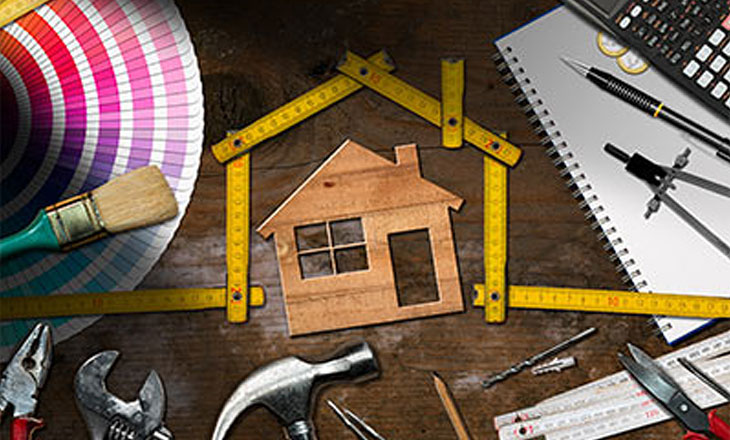
Are you planning to landscape your yard, renovate your bathroom or invest in a long-awaited update to your kitchen? Fixing problem areas and incorporating your design preferences into your home is exciting — and may even increase the value of your house.
At the same time, you might also be thinking about how to pay for these changes, especially if you’re on a tight budget. Figuring out the best way to afford your home improvement project really depends on how much work there is to do, the costs of labor and materials, how quickly it needs to get done and your financial situation. Here are some ways you could pay for changes, repairs and upgrades to your home.
Think about a home improvement loan
Borrowing money is one way to pay for improvements to your home. With a home improvement loan from a bank, credit union or online lender, you could get the money you need in one lump sum and pay it back in fixed monthly installments. A loan with a fixed rate is helpful because you’ll know exactly how much you owe each month and can budget for it ahead of time. And the annual percentage rate (APR) for personal loans is often lower than it is for credit cards, meaning you could potentially pay less interest over time.
Applying for any kind of credit can cause a small, temporary dip in your credit score. To minimize that, you could try prequalifying for several home improvement loans first. Prequalification helps you see what kind of loan terms you might be approved for and lets you compare potential offers between lenders without affecting your credit score. Just remember, a prequalified offer isn’t the final offer. That’s because the lender will need to know more about your financial situation, such as income and monthly expenses.
Use a credit card
If your home project is relatively inexpensive but time-sensitive, you might consider using a credit card. Most credit cards have high interest rates, which means it could cost you a lot more to pay off your balance over time.
One way to minimize this is to use a credit card offering a low or 0% APR for new purchases. A low introductory or promotional APR could give you a temporary break from high interest while you pay off your debt. Be sure to pay off the balance before the offer period ends, however, because the APR will jump up to the contractual rate after that.
Build up your savings
If you have time, putting aside savings for a home improvement project could be another solution. Paying with savings means you won’t take on any additional debt or need to pay interest, which could help you save money in the long run.
If you don’t have a budget already, start by writing down your expenses over the past few months so you see where your money has been going. See if there are non-essential expenses that you might trim, such as dining out, entertainment and shopping, so you can save more for your project.
There are a number of budgeting methods that can help you stay on track. One popular budgeting method is the 50-30-20 system, where you allocate 50% of your income toward “needs,” 30% toward “wants” and 20% toward savings. If you’re planning a big project, you might want to increase the amount of money you set aside each month.
You could even open a high-yield savings account (HYSA) dedicated to funding your home improvement project. A HYSA offers a higher interest rate than a traditional savings account, meaning you earn more on your money.
If you choose to put some of your existing savings toward your project, make sure you have enough left over for emergencies. You don’t want to face an urgent situation with an empty bank account.
Take on extra work
Taking on a side gig for a few hours every week or getting a part-time job could help you build up your home improvement fund. Food delivery, web design, content creation or administrative work could help put some extra cash in your savings account.
Think about what you have time to take on in addition to your other responsibilities. If you don’t have a lot of extra time, see if there is work you can do from the comfort of your couch, such as billing for a local business or doing graphic design work for a friend’s company.
Carefully weigh your options
Figuring out how to afford your next home improvement project depends on your financial situation, how much your project will cost, how much debt you’re willing to take on and whether you have time to save up or reallocate your own money.
Do your research to figure out how to best pay for your project, make a to-do list to tackle the work that needs to be done and enjoy the process of improving your home.
Notice: Information provided in this article is for information purposes only and does not necessarily reflect the views of mynextmag.com or its employees. Please be sure to consult your financial advisor about your financial circumstances and options. This site may receive compensation from advertisers for links to third-party websites.