Post Preview
Key Takeaways:
- Appropriate food service apparel enhances hygiene, safety, and brand identity.
- Comfortable and functional uniforms improve employee performance and satisfaction.
- Investing in quality uniforms can lead to better customer experiences and operational efficiency.
Table of Contents:
- Hygiene and Safety
- Brand Identity
- Employee Comfort and Performance
- Customer Experience
- Operational Efficiency
- Sustainability and Innovation
- Conclusion
The demands of the hospitality industry require consistent standards in both customer service and operational safety. One crucial aspect that influences these standards is the choice of food service uniforms, which play an essential role in establishing a safe, efficient, and professional workplace.
Whether in bustling restaurant kitchens or upscale dining rooms, proper food service apparel supports staff in fulfilling their responsibilities while maintaining vital hygiene requirements. Uniforms are more than just a dress code; they form the foundation for quality and cleanliness in environments where health regulations must be observed meticulously. These uniform solutions must balance functionality, comfort, and visual appeal to meet the high expectations of customers and regulators alike.
Proper apparel can be the difference between a seamless, safe operation and one that is riddled with compliance issues. Branding, staff comfort, customer perception, and operational workflows are all intertwined with the uniforms chosen for the team. The right garments help reinforce a company’s standards and values while supporting personal safety and performance.
Apparel providers now innovate with new materials, sustainability initiatives, and custom branding solutions. This evolution is driven by the need to improve not only aesthetics and safety, but also to enhance the entire guest experience. Industry trends reveal that businesses investing in high-quality uniforms often gain a lasting competitive edge. F
The food service apparel industry is experiencing rapid growth, driven by ongoing innovations in fabrics, manufacturing, and sustainability. From 2025 onward, the sector is expected to expand at a steady rate, reflecting increased demand for garments that are both durable and eco-friendly. As consumer expectations for sustainable businesses rise, many hospitality brands are investing in uniforms made with recycled materials or adopting closed-loop laundry solutions.
Advances in fabric technology now mean uniforms can be lighter, stronger, and more comfortable, supporting long shifts in hot kitchens or outdoor catering events. As noted by the market research firm Statista, the global chef apparel market is forecast to surpass USD 1 billion by 2030. The expansion reflects a broader commitment to safety standards, sustainability, and the functional requirements of modern hospitality operations.
Hygiene and Safety
In the food service industry, high standards of hygiene and safety are required at all times. Uniforms serve as a frontline defense to prevent contamination by ensuring personnel use clean, sanitized garments instead of street clothes, which often carry bacteria and outside contaminants into the workplace. Many establishments, including fast-casual chains and hospitals, require staff to change uniforms multiple times daily. These protocols are often tracked with management systems, reducing the risk of cross-contamination and improving health inspection compliance.
Uniforms with antimicrobial coatings and moisture-wicking properties are gaining popularity due to their added protection and comfort. An all-around uniform policy is a significant factor in achieving higher health ratings and safer environments, as confirmed by the standards set out by regulations like the U.S. Food and Drug Administration’s Food Code.
Brand Identity
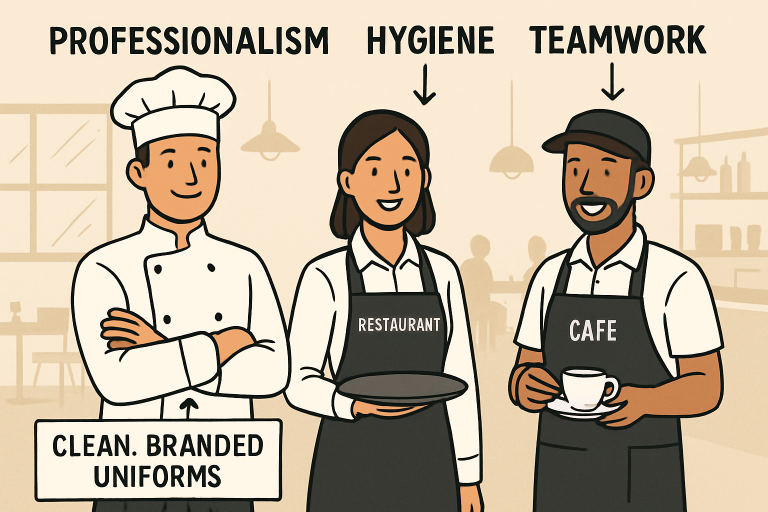
Uniforms play a vital role in establishing and reinforcing brand identity. Consistent logos, color schemes, and garment styles make employees instantly recognizable, even in busy environments. Strong branding boosts perceived professionalism and builds trust with customers, whether they walk into a neighborhood bakery or a global fast-food chain. For example, the instantly identifiable uniforms worn by multinational coffee shops or burger outlets go beyond fashion; they represent reliability and a commitment to service quality.
Customized features like embroidery, name tags, or signature colors ensure guests receive a cohesive and trustworthy impression. Research consistently shows that well-branded uniforms make staff appear more professional and approachable, thus increasing brand confidence and customer loyalty.
Employee Comfort and Performance
Uniform comfort and functionality are not just perks; they are essential to productivity and job satisfaction. Food service professionals spend hours standing, moving quickly, or working in steamy environments, so lightweight fabrics, breathable designs, and proper footwear are fundamental. Poorly designed uniforms can lead to fatigue, overheating, restricted movement, and even workplace injuries, all of which hinder job performance.
Modern work apparel is now geared toward maximizing flexibility, breathability, and safety. Features like adjustable waistbands, reinforced slip-resistant shoes, and strategic use of stretch fabrics help reduce physical strain and improve morale. Companies that match uniforms to specific job functions and environmental conditions see notable gains in efficiency and a decrease in turnover.
Furthermore, industry surveys highlight that employees who feel comfortable and confident in their appearance are likely to engage more positively with guests. This contributes directly to overall business performance and quality of service.
Customer Experience
Uniforms contribute significantly to the overall customer experience. Clean, presentable, and well-fitted apparel signals professionalism and care, making staff more approachable to guests. Upscale dining establishments, for example, often choose tailored uniforms to match the formality of their brands. This attention to detail can elevate perceived value and directly impact guest satisfaction.
In casual settings, the uniform can establish a friendly, informal atmosphere while still communicating the brand’s emphasis on cleanliness. Whatever the segment, well-chosen uniforms help foster an inviting environment that encourages repeat visits and positive reviews.
Operational Efficiency
Effective uniforms streamline daily routines and improve operational efficiency. Features such as multiple pockets, durable fasteners, and easy-care fabrics help staff keep essential tools close and maintain high performance during shifts. Uniform management, whether through in-house laundry services or outsourced providers, ensures that every team member has access to clean apparel, reducing time spent on logistics and preparation.
Consistency in uniforms across locations supports standardized training and reduces onboarding time for new hires. Larger organizations often implement systems that link uniform distribution with scheduling, further optimizing overall efficiency.
Sustainability and Innovation
The food service apparel industry is experiencing rapid growth, driven by ongoing innovations in fabrics, manufacturing, and sustainability. From 2025 onward, the sector is expected to expand at a steady rate, reflecting increased demand for garments that are both durable and eco-friendly. As consumer expectations for sustainable businesses rise, many hospitality brands are investing in uniforms made with recycled materials or adopting closed-loop laundry solutions.
Advances in fabric technology now mean uniforms can be lighter, stronger, and more comfortable, supporting long shifts in hot kitchens or outdoor catering events. As noted by the market research firm Statista, the global chef apparel market is forecast to surpass USD 1 billion by 2030. The expansion reflects a broader commitment to safety standards, sustainability, and the functional requirements of modern hospitality operations.
Conclusion
Consistently investing in the right food service uniforms is a key decision for hospitality leaders seeking to uphold hygiene, reinforce branding, ensure staff comfort, and drive operational efficiency. As the industry continues to evolve, sustainable and innovative apparel choices will remain central to business success and customer satisfaction.