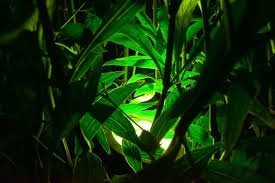
Uplighting creates drama by reversing our expectations of where light comes from. outdoor in ground lights from Sunbright Lighting placed in the ground and aimed upward transform ordinary garden features into compelling nighttime focal points — a technique that professional lighting designers use consistently because it simply works, in almost every landscape context.
Planning a Dramatic Uplight Layout
The planning phase of an uplight installation deserves as much attention as the installation itself. The most critical decision is not which fixtures to buy but where to place them — and that decision is best made in the field with a powerful flashlight rather than on paper.
On a clear night, take a bright torch into your garden and hold it at ground level. Aim it up into each candidate tree, shrub, wall, or feature. Move around each subject, changing the angle and distance. Watch how the shadows change in the canopy as you move. Observe which positions create the most interesting effects and which leave the subject looking flat or awkward.
Record your best positions with marker stakes. These field positions will almost always differ from what you would have planned on paper — the real three-dimensional form of garden subjects rarely matches the mental image you have of them.
For homeowners pairing outdoor in ground lights with low voltage cabinet lighting from Kings Outdoor Lighting for under-cabinet lighting inside the home — perhaps in a kitchen renovation happening alongside the garden project — the same principle of matching colour temperatures throughout (2700K to 3000K for both indoor and outdoor warm-white applications) ensures visual consistency between interior and exterior spaces.
Tree Uplighting: Species-Specific Considerations
Different tree species reward uplighting in different ways. Understanding how the specific trees in your garden will respond to uplighting helps you position fixtures more effectively.
**Palms** — Single-trunk palms respond dramatically to a single narrow-beam spotlight aimed up the trunk face. The long straight trunk creates a column of light that reads clearly from a distance. The fronds at the top catch and diffuse the light in an ever-changing pattern.
**Ornamental cherries and maples** — These medium-sized trees with interesting branch structures reward uplighting from multiple positions. Two fixtures at 45-degree angles from different directions eliminate harsh single-direction shadows and reveal the full three-dimensional branch structure.
**Conifers** — Conical conifers are transformed by uplighting from a position slightly to the side and below the midpoint. The light illuminates the outer surface of the tree and creates a halo effect where the light diffuses through the outer foliage layer.
**Standard roses and feature shrubs** — Low-growing subjects need fixtures much closer to the base — sometimes within 12 to 18 inches — to achieve adequate angle for meaningful uplighting effects.
Voltage Drop Management for Well Light Circuits
In-ground well lights are often installed in areas where long cable runs from the transformer are unavoidable. A cable run of 100 feet or more feeding several fixtures at the far end of a large garden requires careful voltage drop calculation.
The practical solution for long runs is to use a hub-and-spoke wiring topology rather than a daisy-chain. Run a heavy-gauge cable (10 or 12 gauge) from the transformer to a centrally located junction box, then branch out to individual fixtures with shorter, lighter cables. This approach minimises total cable resistance and delivers consistent voltage to all fixtures regardless of their distance from the transformer.
For homeowners wanting premium 120V ceramic or non-metal sconce fixtures to add warm accent lighting to adjacent garden structures, 120V Non-Metal/Ceramic Sconce from Kings Outdoor Lighting offers distinctive architectural sconce designs that complement the dramatic quality of well-light uplighting.