Key Takeaways
- Smart presentations deliver higher engagement through interactive features that turn passive listeners into participants.
- Multimedia tools and storytelling techniques make information easier to remember and relate to.
- Personalization using data analytics improves relevance and audience connection.
- AI-powered solutions help professionals create better presentations in less time.
Table of Contents
- Enhancing Engagement with Interactive Elements
- Improving Retention through Multimedia and Storytelling
- Leveraging Data Analytics for Personalized Content
- Streamlining Creation with AI Tools
- Adapting to Hybrid Work Environments
- Future Trends in Smart Presentations
In today’s digital era, the standards for effective communication are rapidly evolving. The conventional approach to presentations is no longer sufficient to engage, inform, or inspire modern audiences. Smart presentations, powered by advanced technology and interactive methods, are emerging as essential tools for anyone wishing to stand out. These innovative presentations offer diverse ways to hold attention, measure impact, and personalize messages. For professionals looking to streamline creation and captivate audiences, leveraging AI powerpoint generator presentation tools is rapidly becoming the norm.
As organizations shift toward more dynamic forms of information delivery, smart presentations integrate real-time feedback, rich media, and artificial intelligence to boost engagement and understanding. This evolution helps guarantee that presentations do more than deliver facts; they create memorable, interactive experiences that drive results. With the increasing demands of hybrid work and digital collaboration, mastering smart presentations is a critical skill for leaders, educators, and professionals across every industry. The shift to smart presentations is not just about technology but also about strategy. By combining data-driven insights, interactive elements, and storytelling, presenters can ensure their messages resonate strongly and leave a lasting impression. This article explores how smart presentations are revolutionizing modern communication and why adapting to these new methods can mean the difference between being heard and being overlooked. Understanding this transformation sets the stage for personal and organizational growth. From real-time polling to multimedia storytelling and AI integration, the possibilities are expanding rapidly. Adapting now means future-proofing communication efforts in a rapidly changing world.
Enhancing Engagement with Interactive Elements
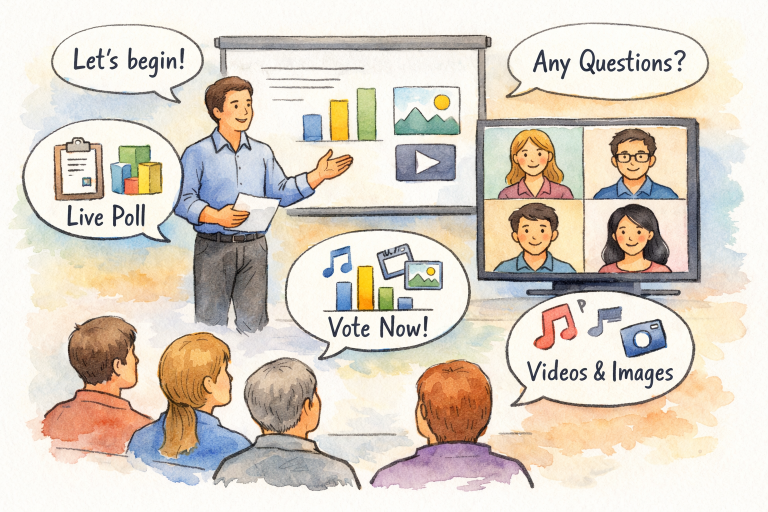
Modern audiences expect more than a static slideshow and a monologue. Incorporating interactive components such as live polls, Q&A sessions, quizzes, and collaborative digital whiteboards turns presentations into two-way conversations. These features actively involve the audience, increasing attention and participation. Real-time polling not only provides immediate feedback but also gives presenters the flexibility to address knowledge gaps and personalize the experience on-the-fly. For example, platforms that offer live feedback can make remote audiences feel as involved as those physically present, significantly narrowing the engagement gap. According to a recent Harvard Business Review article, interactivity is now a foundational part of business communication, promoting deeper learning and better outcomes.
Improving Retention through Multimedia and Storytelling
Smart presentations harness the power of multimedia, videos, infographics, animations, and sound- to make abstract information concrete and memorable. When combined with storytelling, these tools help transform data points into vivid narratives. Science has shown that storytelling helps people remember details by linking information to emotions and context, increasing recall substantially compared to presentations that rely solely on facts. Research published highlights that compelling stories move audiences to action and create more lasting impressions than statistics alone.
Leveraging Data Analytics for Personalized Content
Personalization enhances relevance and engagement. Using data analytics, presenters can measure which sections of the presentation audiences engage with most, which content elicits the strongest reactions, and where drop-off occurs. These metrics inform content adjustments, making each subsequent presentation sharper and more effective. Analytics might reveal, for example, that a particular case study resonates more with your target demographic than standard industry data. Applying this knowledge means adapting presentations to each group’s unique needs, fostering stronger connections and improved outcomes for all involved. This level of customization would be nearly impossible without the latest analytics tools, many of which are now seamlessly built into presentation software.
Streamlining Creation with AI Tools
Artificial intelligence is reshaping how presentations are crafted. AI tools automate design, generate slide content from basic outlines, suggest compelling visuals, and organize information for maximum clarity. These solutions save time, reduce repetitive work, and maintain a high level of polish that can be difficult to achieve on your own. For busy professionals, AI-driven platforms simplify updates, ensure consistency across multiple presentations, and allow more time for refining core messages. The integration of AI in communication tools is a game-changer, lowering barriers to entry and raising the quality of professional presentations everywhere.
Adapting to Hybrid Work Environments
The rise of hybrid and remote work has amplified the need for smart presentations that deliver value to both physical and virtual audiences. Robust cloud-based platforms allow teams to collaborate on slide decks in real time, regardless of geographic location. Features such as live co-editing, instant updates, and seamless integration with video conferencing tools make presentations more flexible and inclusive. This adaptability ensures ideas are communicated clearly between dispersed teams and stakeholders. Effective hybrid presentations also allow asynchronous participation, enabling members to review and interact with content at their convenience.
Future Trends in Smart Presentations
The next wave of innovation includes augmented reality (AR) and virtual reality (VR), which promise immersive, hands-on experiences for the audience. With AR, presenters can display 3D models or complex visualizations right in a meeting room, while VR opens doors to fully interactive environments for collaboration or training. Meanwhile, AI will continue to improve presentation creation and analytics, opening new opportunities for deeper understanding and engagement. The evolution of smart presentations is paving the way for richer, more interactive business and educational environments, equipping professionals to thrive in an increasingly digital world. Ultimately, smart presentations are more than just a trend. They mark a radical improvement in how we share ideas and drive action. Embracing interactivity, data, multimedia, and AI ensures presenters stay ahead and make every message resonate in an era defined by rapid change.