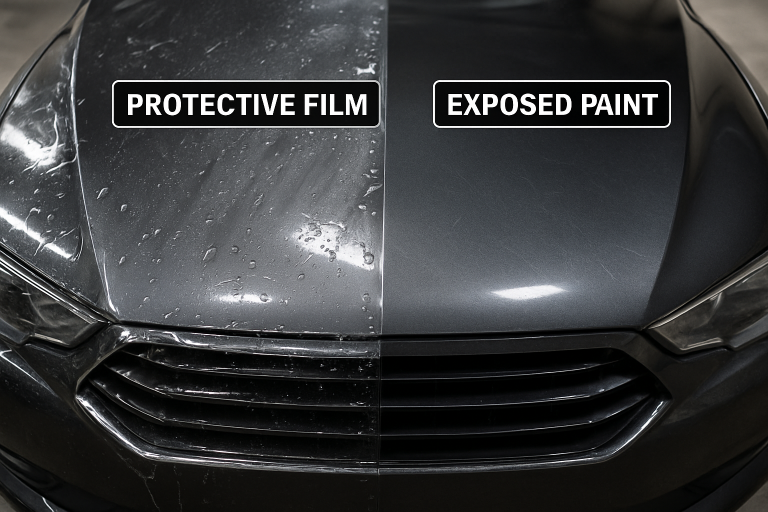
Key Takeaways
- Auto protective films (PPF) shield paint from scratches, gravel, UV rays, and road salts.
- PPF preserves resale value by keeping paint glossy and reducing damage.
- Advanced films may exhibit self-healing and hydrophobic properties, making maintenance easier.
- Combining PPF with professional ceramic coatings increases durability and protects against rust and chemical exposure.
- Professional installation ensures a seamless fit and long-lasting protection.
- Regular care with pH-neutral soap and prompt removal of contaminants keeps the film effective.
- PPF with automotive ceramic coating near me offers long-lasting protection, maintaining both appearance and value.
Understanding Auto Protective Films
Auto protective films, often referred to as paint protection films (PPF), are advanced solutions designed to protect a vehicle’s paintwork from daily hazards. Crafted from tough, transparent thermoplastic urethane, these films create a nearly invisible barrier on the car’s exterior. Their purpose is to shield automotive surfaces from common threats like gravel, minor abrasions, UV rays, and road salts. Many vehicle owners exploring ways to maintain a pristine finish also consider services like ceramic coating for cars in New Braunfels, TX, which further enhance a car’s resilience and appearance.
The popularity of protective films has grown as more drivers seek to increase their vehicles’ lifespan and retain higher resale values. By minimizing paint damage, these films contribute to a longer-lasting, aesthetically pleasing surface. The blend of advanced polymer technology and expert application helps vehicles withstand daily driving conditions, environmental pollutants, and unexpected incidents.
The advantages of auto protective films stem from their unique properties, including flexibility, clarity, and the ability to fit seamlessly onto complex surfaces and curves. With ongoing advances in material science, today’s films offer greater transparency and durability, blending performance with a barely-there look. Some leading options even feature hydrophobic and self-healing properties, further reducing visible blemishes and maintenance requirements.
In addition to these protective measures, drivers can complement or substitute films with related surface treatment technologies. Innovations like automotive ceramic coating near me provide another layer of defense, utilizing nanotechnology to repel water, soil, and contaminants from car exterior surfaces. The right combination of film and coating applications delivers superior overall protection that meets modern driving demands.
Benefits of Applying Protective Films
- Scratch and Chip Resistance: Paint protection films serve as a durable armor against everyday hazards, deflecting small stones, branches, and road grit before they can inflict paint scratches or chips. This protective function keeps surfaces smoother and helps preserve the original paintwork much longer.
- UV Protection: Modern PPFs are engineered to block a significant portion of the sun’s ultraviolet rays, which can degrade paint over time. By reducing UV exposure, the film helps the vehicle retain its color depth and vibrancy, even after years on the road.
- Self-Healing Properties: Some advanced films have thermally activated self-healing properties that allow minor scratches to vanish when the surface is exposed to gentle heat, a sunny day, or warm water, restoring a flawless finish and substantially simplifying exterior upkeep.
Enhancing Vehicle Longevity
Preserving the integrity of a car’s paintwork is more than just an aesthetic concern. Auto protective films serve as the first line of defense against conditions that can lead to costly structural issues, such as rust and corrosion. Minor chips often expose underlying metal, creating vulnerable zones for moisture infiltration. Over time, these weak spots can develop into more serious issues that compromise both the vehicle’s value and safety.
Many vehicle owners who search for automotive ceramic coating near me combine professional ceramic coatings with protective films to enhance paint durability and maintain a pristine finish.
With resilient paint protection, cars are less susceptible to weathering and chemical exposure from road salts or acid rain. This directly leads to an extended service life for both everyday rides and high-value automobiles.
Maintaining Aesthetic Appeal
First impressions matter, particularly in the automotive market. The ongoing protection provided by paint protection films keeps vehicles glossy, free of swirl marks, and attractive to future buyers. Preserved paintwork has a tangible impact on resale value, a crucial factor for anyone considering upgrading or selling their vehicle down the road.
PPF not only safeguards the underlying paint but also creates a smoother exterior surface that is more resistant to dirt and easier to wash. By preventing small imperfections and paint dulling, owners can enjoy a near-showroom finish with minimal effort. This blend of beauty and practicality appeals to those who want to showcase their cars in the best possible light both now and in the future.
Cost-Effectiveness Over Time
The upfront cost of a professional film application is often outweighed by the long-term savings it delivers. Since the need for paint repairs and touch-ups is greatly reduced, owners experience fewer body shop trips and less investment in cosmetic servicing. For vehicles operating in harsh driving environments or frequent highway travel, PPF is a proactive expense that can prevent costly, large-scale repainting projects.
Even beyond initial installation, the ease of cleaning and the lower risk of permanent scratches mean owners spend less on specialized detailing products and less time on maintenance. According to Forbes Wheels’ assessment of the top paint protection films, they are an excellent value proposition for car owners seeking durable, low-maintenance protection.
Installation Process
For optimal results, professional installation of auto protective films is recommended. The process starts with a meticulous washing and decontamination of the vehicle’s surface to remove any debris, oils, or existing contaminants. Precision-cut film pieces are then aligned and applied to the clean surface using specialized techniques to ensure a bubble-free, seamless finish. The installer carefully stretches and smooths the film, following the car’s curves and contours to achieve an invisible appearance and a long-lasting bond. Success in this process relies on both technical skill and high-quality materials, making the choice of installer an important one.
Maintenance Tips
- Regular Cleaning: Owners should clean their vehicles with pH-neutral soap and soft microfiber cloths to reduce the risk of leaving scratches or streaks.
- Avoid Harsh Chemicals: Skip harsh, acidic, or abrasive cleaning products, as they can dull or degrade the film over time. Sticking to gentle, film-safe car wash products will help maintain clarity and performance.
- Promptly Address Contaminants: Remove bugs, bird droppings, tree sap, and other contaminants as quickly as possible, as letting them sit can result in staining or etched marks that compromise both the film and the underlying paint.
Final Thoughts
Auto protective films play a vital role in reducing long-term wear and tear. By providing a durable, nearly invisible barrier, these films help vehicles stay newer for longer, reduce repair costs, and ensure enduring resale appeal. Whether combined with other technologies or used on their own, paint protection films make a smart, effective investment in the life and value of any car.