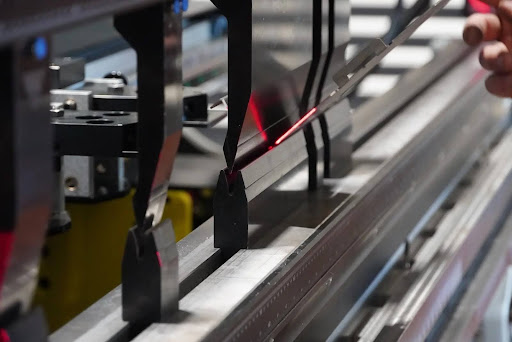
If you work with sheet metal, you know a press brake is a key machine for bending parts accurately. But not all press brakes are the same. There are four main types: hydraulic, mechanical, electric, and CNC. Each type has its own way of working, strengths, and weak points. Picking the right one depends on your shop size, the parts you make, your budget, and how much precision you need.
In this article, we will compare these four types side by side. We will look at how they work, their pros and cons, speed, accuracy, energy use, maintenance, and best uses. This will help you decide which press brake fits your needs best.
How Each Type Works
First, let’s explain what makes each type different.
Hydraulic Press Brakes
Hydraulic press brakes use oil pressure in cylinders to move the ram up and down. Two big cylinders on each side push the ram. A pump keeps the oil moving, and valves control the speed and force. This setup gives smooth and adjustable power.
Mechanical Press Brakes
Mechanical press brakes use a flywheel and clutch system. The motor spins a big flywheel that stores energy. When you step on the pedal or hit the control, the clutch connects the flywheel to a crank that moves the ram down fast. These machines are older but still used in some shops.
Electric Press Brakes
Electric press brakes use servo motors and ball screws or belts to move the ram. No oil or flywheel is needed. The motors turn precisely, which pushes the ram down and back up. This makes them very accurate and quick to respond.
CNC Press Brakes
CNC stands for Computer Numerical Control. A CNC press brake can be hydraulic, electric, or even hybrid. The big difference is the controller. It uses a computer screen and software to program bends, angles, backgauge positions, and sequences. You can store jobs and repeat them exactly.
Most modern press brakes are CNC now, but the power source (hydraulic, electric, etc.) is still important.
For high-quality machines that offer these different types, check out https://miharmle-cnc.com/.
Pros and Cons of Each Type
Here is a clear breakdown.
Hydraulic Press Brakes
Pros:
- Handles thick and hard materials well (high tonnage up to 1000+ tons)
- Smooth force and good control over speed
- Can do long bends without much deflection
- Works well for many different jobs
- Safer than mechanical types because you can stop mid-stroke
Cons:
- Uses more energy (pump runs all the time)
- Needs regular oil changes and checks for leaks
- Slower setup and cycle times than electric
- Can be noisy
- Higher maintenance costs over time
Mechanical Press Brakes
Pros:
- Very fast for high-volume simple bends
- Lower upfront cost in some cases
- High speed for repetitive work
Cons:
- Hard to control stroke depth and speed
- Not good for air bending or complex parts
- Dangerous if not used carefully (hard to stop once started)
- Loud and high vibration
- Less accurate
- Mostly outdated now; hard to find new ones
Electric Press Brakes
Pros:
- Very high precision (down to 0.01 mm or better)
- Fast cycle times and quick acceleration
- Low energy use (only uses power when moving)
- Quiet operation
- Low maintenance (no oil, fewer parts to wear)
- Easy to program and repeat
- Good for small to medium parts
Cons:
- Lower tonnage (usually up to 100-300 tons max)
- Not ideal for very thick or long materials
- Higher initial cost
- Limited stroke depth in some models
CNC Press Brakes
Pros:
- Excellent accuracy and repeatability
- Fast setup with programming
- Reduces errors and scrap
- Can handle complex multi-bend parts
- Stores hundreds of programs
- Works with backgauge automation
- Improves productivity a lot
Cons:
- Most expensive upfront
- Needs trained operators
- Software updates or issues possible
- Still depends on the base type (hydraulic or electric)
Speed and Accuracy Comparison
Speed matters in busy shops.
Mechanical press brakes are fastest for simple, high-volume runs but lack flexibility.
Electric press brakes win for cycle time in most modern shops. They move quick and stop precisely.
Hydraulic press brakes have good approach and return speeds but slower in the actual bend phase.
CNC adds speed by cutting setup time. You program once and run many parts without adjustments.
For accuracy:
Electric and CNC electric press brakes lead with micron-level control.
Hydraulic CNC press brakes are very good too, especially with good crowning systems.
Mechanical types fall behind in precision.
Energy Use and Maintenance
Energy costs add up.
Electric press brakes use the least power. They only draw current when the ram moves. You can turn them off between jobs.
Hydraulic press brakes use more because the pump runs constantly to keep pressure.
Mechanical press brakes use moderate power but are inefficient overall.
Maintenance:
Electric: Low – mostly check belts or screws.
Hydraulic: Medium to high – oil, filters, seals, leaks.
Mechanical: High – clutches, brakes, flywheel parts wear out.
CNC adds software and electronics checks, but it saves time overall.
Which One Should You Choose?
Your choice depends on your work.
If you bend thick plates (over 10 mm) or long parts, go with a hydraulic CNC press brake. It handles heavy jobs reliably.
If you make small to medium parts, need high precision, and want to save on energy, choose an electric CNC press brake. These are popular in modern shops for fast, clean work.
If you have very high-volume simple bends and a tight budget, an older mechanical might work, but they are rare now.
If you do complex parts or change jobs often, any CNC version will help a lot.
Many shops start with hydraulic CNC for versatility, then add electric for precision jobs later.
To learn more about top manufacturers and options in the market, you can learn more.
Final Thoughts
Hydraulic press brakes are still the most common because they are strong and flexible. Electric press brakes are growing fast thanks to better accuracy and lower running costs. Mechanical types are mostly history now. CNC control makes any type much better for today’s production.
Think about your material thickness, part complexity, daily volume, power costs, and budget. Test machines if possible or talk to suppliers.
The right press brake will give you consistent bends, less waste, and faster work for years.