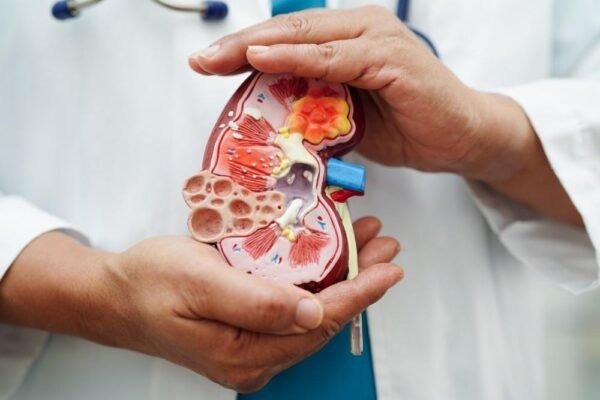
Kidney transporter assays in renal tissue behave like customs officers at a busy port. They pick molecules up from blood then either escort them back into circulation or load them into urine. You will find that transporter activity shapes drug clearance, drug drug interactions and vulnerability to nephrotoxicity. If you miss a transporter effect early you might be surprised by clinical exposure that is higher than predicted.
Key Renal Transporter Families And Their Roles
There are a handful of transporter families you will see mentioned repeatedly. Organic anion transporting polypeptides and organic anion transporters move negatively charged compounds. Organic cation transporters carry positively charged ones. Multidrug resistance proteins and breast cancer resistance protein often export drugs into urine. Peptide transporters handle small peptides and certain prodrugs. Each family sits in a location that matters for function. Some work at the basolateral membrane to take compounds from blood. Others sit at the apical membrane to push compounds into tubular fluid. Knowing which is where lets you predict net secretion or reabsorption.
Transporter expression can change with kidney disease, inflammation and co administered drugs. You will see that a drug which looks safe in healthy volunteer studies may behave differently in elderly patients with reduced transporter expression.
Consequences Of Transporter Activity
Transporters alter both clearance and distribution. A high clearance via transporter mediated secretion can make a drug require frequent dosing. When two drugs share the same transporter there is risk of a drug drug interaction that raises exposure of one of them. That risk can translate to toxicity. You should treat transporter mediated interactions like metabolic interactions: they can have equal clinical impact.
Transporters also influence active reabsorption. If a transporter reclaims a drug from tubular fluid your predicted renal clearance will be lower. Conversely when transporters actively secrete a compound you will see clearance exceed glomerular filtration rate. Those patterns appear in simple plots of clearance versus creatinine clearance and they hint at transporter involvement.
Types Of Kidney Transporter Assays
There is no single perfect assay. Each approach gives you a different window into transporter function. You will choose based on throughput needs, the transporter of interest and the question you want answered.
Cell Based Uptake And Efflux Assays
These assays use living cells that express the transporter of interest. You will find they mimic physiological membrane orientation so uptake and efflux behave more naturally. Common formats include transiently transfected cell lines and stable cell lines that overexpress a single transporter. With these you can measure uptake into cells or efflux out of cells. You can also use polarised cell monolayers to separate basolateral and apical transport.
Cell based systems handle complex substrates well. But they can show background activity from endogenous transporters. You will want proper controls such as vector only cells and chemical inhibitors to attribute flux to a single protein.
Membrane Vesicle And Proteoliposome Assays
Membrane vesicles and proteoliposomes isolate transporter activity from cellular context. These assays use inverted vesicles or reconstituted proteins in artificial membranes so you measure direct transport without confounding metabolism. They are highly specific and allow measurement of transporter kinetics with minimal interference.
Because they lack cellular complexity you will not capture influences such as cytosolic binding or intracellular metabolism. Yet when you need clean kinetic constants or to confirm substrate translocation across a membrane these assays are powerful.
High Throughput And In Silico Screening Approaches
If you need to screen hundreds or thousands of compounds you will use rapid cell based screens or computational models. High throughput screens can flag inhibitors and substrates fast. In silico methods use molecular properties and machine learning to predict transporter interactions. They will save time and cost and help prioritise compounds for experimental follow up.
Screening approaches can generate false positives and false negatives. Use them as prioritisation tools rather than definitive proof of interaction. In the case that a hit passes filters you should confirm with targeted cell based or vesicle assays.
Assay Design And Key Considerations
Start with the question. Are you after substrate identification, inhibitor potency, or kinetic parameters such as Km and Vmax? Your question will determine cell type, controls and sampling schedule.
Choose expression systems carefully. Overexpression can change transporter localisation and create artificial kinetics. Endogenous transporters in host cells will complicate interpretation. You will need proper negative controls and ideally complementary systems. Include transporter specific inhibitors and use concentration ranges that reveal both low affinity and high affinity interactions.
Consider protein binding and nonspecific adsorption. Many compounds stick to plastic or bind tightly to serum proteins. Those effects will mask true transporter activity. You can reduce artefacts by minimising protein in assay buffer and by assessing recovery from vessel walls.
Time and concentration ranges matter. Transport can shift from linear uptake to saturable transport quickly. You will set incubation times inside the linear range to measure initial rates. For inhibitory assays include enough inhibitor concentrations to define an IC50 with confidence.
Temperature and buffer composition also affect transport. Maintain conditions that reflect physiological transport when possible. But recognise that some assays require modifications to stabilise the protein or to allow inward facing orientation for vesicle assays.
Data Interpretation And Common Metrics
You will meet a handful of metrics repeatedly. Km describes affinity for a substrate. Vmax gives maximum transport rate. Clearance by transporter looks like Vmax over Km when you scale to physiological expression. IC50 and Ki express inhibitor potency. Choose Ki when you want a true affinity estimate because IC50 varies with substrate concentration.
Look for consistent units and normalisation. Express rates per milligram of protein or per million cells so numbers compare between labs. When comparing in vitro to clinical you will need to scale using transporter expression data and kidney physiology.
Be cautious with permeability limited compounds. A low apparent uptake might reflect slow membrane crossing rather than absent transporter recognition. Use complementary assays such as passive permeability measures to separate those effects. Statistical handling matters. Report confidence intervals not just p values. You will want to see dose response curves with error bars and replicates that reveal variability.
Applications In Drug Discovery And Safety Assessment
In lead optimisation transporter assays guide chemical modification to reduce clearance or avoid interactions. You will screen early to eliminate compounds that are potent inhibitors of important renal transporters. That reduces the chance of late stage surprises.
Regulatory guidance increasingly expects transporter assessment for drugs with renal clearance or narrow therapeutic windows. You will design studies that address regulators questions about drug drug interaction risk and renal safety. Transporter data can feed physiologically based pharmacokinetic models to predict clinical exposure under co medication scenarios.
Transporter assays also inform safety when a drug concentrates in kidney cells. Active uptake into renal cells can create local high exposure and nephrotoxicity. You will use transporter data together with cytotoxicity assays to assess that risk.
Departing Points
Kidney transporter assays explained should leave you better able to choose methods and read the numbers that follow. You will use cell based assays for physiological context, vesicles for clean kinetics and screening plus modelling for throughput and prediction. Expect to combine techniques. In practice a layered approach reduces risk and sharpens decision making.
If you take one practical tip away it is this. Design assays to answer a single clear question and then validate that answer with a second, different method. That habit will save time and protect your project from late stage surprises.