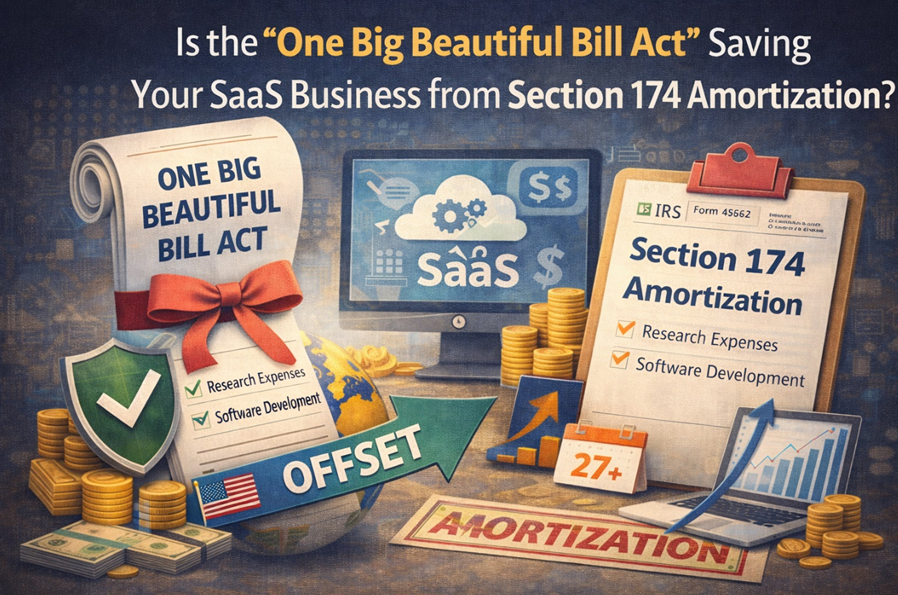
The past couple of years have been a fever dream for SaaS founders due to the tax cuts. As of 2022, software companies have been compelled under the Tax Cuts and Jobs Act (TCJA) to capitalize and amortize domestic development spending over five years to generate huge, fictitious profits and consume vital cash flow.
The 2026 environment is, however, taken to a new dimension. By enacting the One Big Beautiful Bill Act (OBBBA), the tax code is finally receiving a Great Restoration, which has given a lifeline to the innovation-driven companies.
How does the OBBBA reverse the “Amortization Trap”?
The story of the year 2026 is that of Section 174A. This new offer works well in abolishing the five-year mandatory amortization of domestic research and experimental (R&E) expenditures.
Effective as of tax years commencing after December 31, 2024, the SaaS businesses can again deduct 100 percent of their expenses of software development in the U.S. immediately. Experienced IRS tax experts (a former IRS tax agent, a former auditor, and experienced tax attorneys, Riverside) can help avoid the amortization trap.
This reinstatement of the concept of expensing implies that any amount that you paid in salary or development environments to your engineering team can be used to deduct your income this year, reducing your effective tax rate.
Can small SaaS startups reclaim taxes paid in 2022-2024?
Yes, and this is the prettiest part of the Act for the qualified small businesses. When the average gross receipts of your company are 31 million or less each year, the OBBBA will permit you to retroactively impose the immediate expensing provisions in regard to the tax years 2022, 2023, and 2024.
Startups that had been compelled to pay taxes on claimed capitalized labor can generate a large tax refund by filing amended returns. This capital injection can come in to distinguish between a down-round and a self-funded growth explosion in 2026.
What happens to your “Unamortized” costs from previous years?
In case you are not eligible for the retroactive small business exception, OBBBA has a Catch-Up mechanism. On the domestic costs you had to capitalize between 2022 and 2024, you have the opportunity to accelerate the remaining deductions.
The remaining deduction is open to your full deduction in the filing of 2025/ 2026, or you can decide to divide the deduction into 2 years. This brings about the ability of SaaS CFOs to plan their taxable revenue in order to realize the maximum value of Net Operating Losses (NOLs).
Does this apply to your offshore development teams?
Unfortunately, no. The OBBBA is a pure Buy American tax policy. Whereas the deductibility of domestic R&D is now 100% under Section 174A, capitalization and amortization of foreign R&E expenditures remain in the original Section 174, such as payment to offshore dev shops in India, Eastern Europe, or South America. Experienced IRS tax experts (a former IRS tax agent, a former auditor, and experienced tax attorneys from Newport Beach) can help to subset offshore taxes.
This poses a big Tax Penalty to the offshore workforce, and now U.S. based engineering teams are economical in the first ten years after tax on an after-tax basis.
Conclusion
The largest limitation of the TCJA to the tech sector has been correctly remedied by the One Big Beautiful Bill Act. The OBBBA will enable SaaS companies to use the revenue that they have so hard earned in their product, as opposed to funneling it to the IRS as a result of the restoration of immediate domestic expensing and the provision of retroactive relief.