Food service establishments generate large volumes of fats, oils, and grease during daily operations. These materials, commonly referred to as FOG, flow down drains and settle inside plumbing systems, causing buildup over time. If left unmanaged, this accumulation can restrict water flow and strain the drainage infrastructure, eventually leading to system failure.
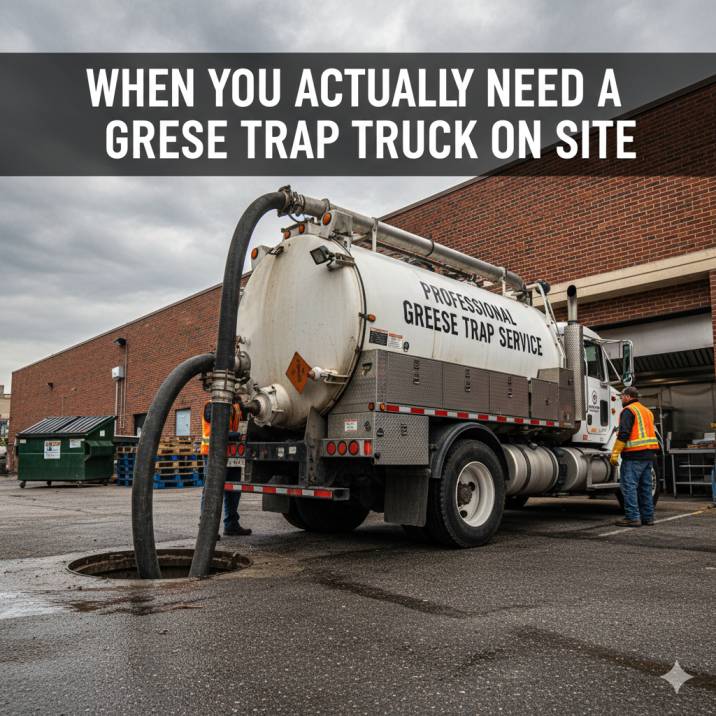
Grease Trap Trucks are used when traps have reached their limit or need deeper cleaning beyond routine maintenance. These trucks use industrial vacuum systems to extract hardened grease, food solids, and liquids from trap compartments, helping maintain proper function. Below are the most common situations where having a grease trap truck on site becomes necessary.
Drainage Slows in Kitchen Fixtures
Consistently slow-moving sinks or floor drains are among the first signs of trouble. When water lingers longer than expected or drains unevenly, it’s usually due to an overloaded grease trap. This indicates that grease and food waste have reduced the available flow space inside the system.
Ignoring these early signs can cause more significant interruptions across the kitchen. Instead, scheduling service with a grease trap truck ensures full removal of solids and fats before they harden further. With the system cleared and flow restored, operations return to normal without requiring pipe repairs or prolonged closures.
Trap Capacity Reaches Its Maximum Limit
Grease traps vary in size, but even the largest units reach capacity. When that limit is met, the trap can no longer hold FOG effectively, and waste starts slipping into the sewer system. This sometimes results in unpleasant odors, poor drainage, or water discoloration around fixtures.
Once the trap is full, manual cleaning methods fall short of complete removal. These trucks are designed to handle the volume and density of this waste, ensuring the entire chamber is emptied thoroughly. Periodic servicing before maximum capacity is reached keeps the system functioning safely and reliably.
Foul Odors Appear Near Work Areas
Strong, persistent odors sometimes indicate decomposing grease within the trap. As FOG breaks down, it emits sulfuric gases that permeate through drains and surrounding spaces. These smells are not only distracting but may also raise concerns about sanitation standards.
If surface cleaning does not resolve the smell, the source is likely deeper in the trap. A grease trap truck eliminates all settled grease, removing the cause of the odor at its core. After the system is cleared, ventilation improves, and the kitchen returns to a more acceptable working environment.
Inspections Are Scheduled for Compliance
Food establishments must follow strict regulations regarding waste and grease control. During health inspections or routine compliance checks, inspectors sometimes review grease traps for signs of overflow or poor maintenance. A neglected trap can result in warnings or penalties.
Ahead of these inspections, facilities sometimes arrange for service to ensure readiness. A visit from a grease trap truck guarantees the system is fully emptied and meets required standards. This proactive step reduces the risk of violations and supports a clean inspection report.
Emergencies Disrupt Daily Operations
Unexpected blockages or backflows can force staff to stop work immediately. These issues usually stem from an overloaded or neglected grease trap and pose safety and hygiene risks across food prep areas. Emergency response becomes critical to resume operations.
Their primary benefits include:
- Managing severe blockages without damaging plumbing systems
- Handling high waste volumes in a single service
- Helping staff recover from disruption without lasting effects
Choosing a dependable Grease Trap Trucks provider is vital for any food service facility that wants to maintain smooth, uninterrupted operations. A skilled provider ensures timely waste removal, thorough cleaning, and quick response to emergencies, all of which help prevent backups, foul odors, and potential health violations. With a dependable partner, kitchen teams stay focused on service while their systems stay clean, safe, and fully functional.