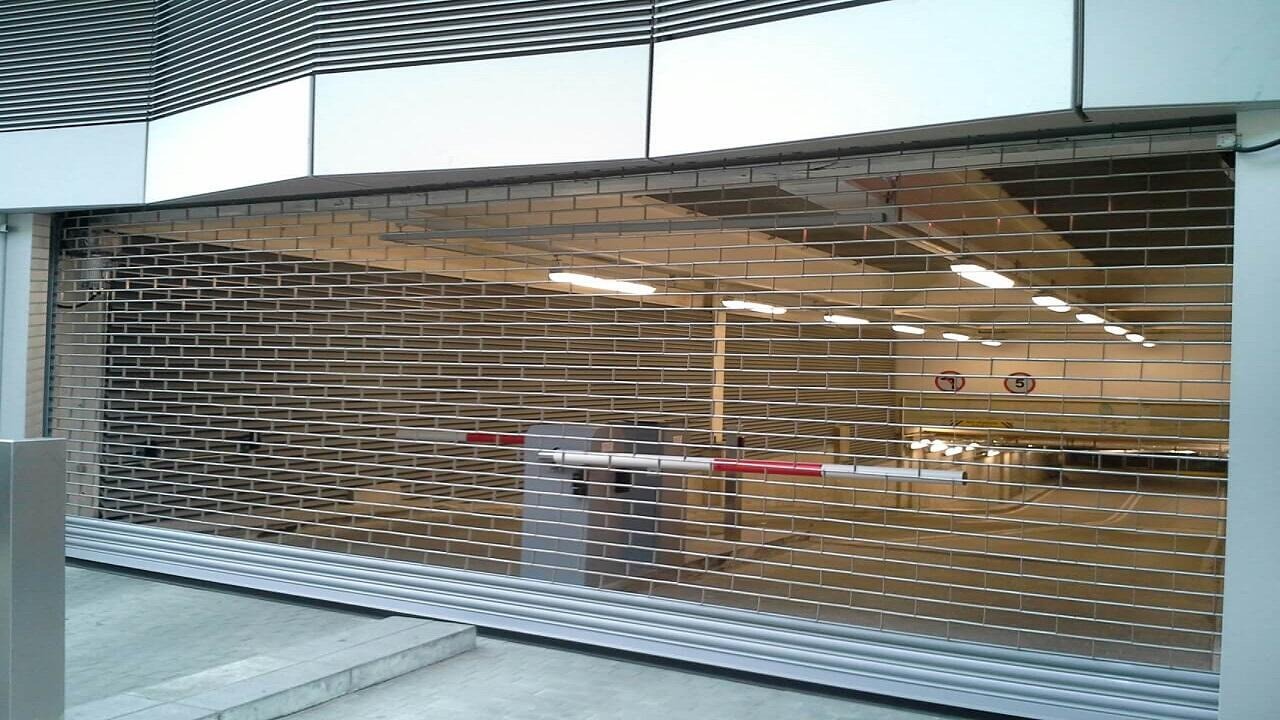
The thing that must not be overlooked is that the motor should be matched properly with the curtain track or rod system. With these elements in harmony, it means easy operation, less noise, increased service life, and minimal after-sales problems. Even a good tubular motor for roller shutter may not perform well when it is not matched. Manufacturers, installers, and B2B purchasers of motorized curtain and shading projects must understand the interaction between tubular motors, tracks, and rods.
Tubular Motors in a Roller Shutter System
Roller shutters motors are made to be installed within the roller tube and offer rotational power to either raise or lower the curtain, blind, or shutter. The effectiveness of the motor is not only the performance of that motor given its internal specification, but also the effectiveness with which that force is passed through the mechanical system. The rod systems and curtain tracks serve as the guiding track that determines motion, weight, and balance.
Motor Torque, Curtain Weight, and Track Load: Correlation
Torque is one of the most important factors to be considered when matching tubular motors with curtain tracks and rods. The motor should be powerful enough to meet the overall load, including the fabric weight, accessories, bottom rails, and friction due to the track or rod system. The large shutters or thick curtain fabrics used in combination with the low-torque motors tend to slow down or strain the motor. Conversely, the very powerful motor employed on a lightweight system may lower the control precision and the operational noise.
The design of tracks has a significant contribution to load behavior. Resistance is increased by long tracks, curved rails, or multi-panel curtain systems, despite the fabric being light. Torque calculations in choosing a tubular motor must always take into consideration track length, bends, and mounting angles.
Checking the Compatibility
The tubular motors are produced in various diameters to suit certain roller tubes. These tube sizes are used as the basis of the design of the curtain tracks and rod system, including roller shutter and roller blinds. Unless the size of the motor matches the size of the tube applied to the track or rod assembly, installation will be hard or unreliable.
A motor that is not large enough may need adapters, which can add play or imbalance. An excessively large motor might not even fit into the tube at all, or start to deform the latter and create alignment problems. Proper alignment of the motor diameter, roller tube size, and the supporting track system will guarantee stable rotation and minimize the mechanical wear in the long term.
Correlation of Motor Speed with Track and Rod Design
Another consideration that will need to conform to the curtain track or rod system is the motor speed: lightweight roller shutters or short tracks. Faster motors can be used when smooth acceleration and deceleration can be controlled. Slow motors can be used in heavy curtains, long tracks, or where a quiet operation is required.
Rod construction and the materials used during track construction affect the perception of speed. When high-speed motors are used, the damping of metal tracks is poor, and this increases vibration. Movable tracks that are well designed, whether they’re aluminum or reinforced, can better absorb the movement. Corresponding motor velocity with track quality assists in achieving a smooth, high-quality user experience and minimizing noise complaints in residential and hospitality developments.
Structural Support and Mounting Methods
The curtain tracks and rod systems may be mounted on the ceiling, mounted on the wall, and the method of mounting impacts the motor performance. Roller shutters have tubular motors to be supported in a manner that ensures the roller tube is aligned with the track. Minor misalignment would result in unequal distribution of load, and this would result in jagged movement or a higher resistance of the motor.
The tracks and rods should be robust to support both the dynamic and the static loads caused by the motor. Weak brackets or unfixed spacing of supports may bend during operation, giving the stress back to the motor. Motor design and the track mounting design can be matched in the planning process, and once that has been done, installing it becomes simpler, and the system will become very reliable.

Electrical and Control System Compatibility
The advanced tubular-type motors come in DC, AC, battery-operated, and smart-operated versions. The rod system and curtain tracks should be made to fit the adopted power and control process. In the case of wired motors, tracks and rods must permit the crawling of discrete cables without interfering with moving parts. In the case of battery-powered motors, there should be enough areas to access and maintain the battery.
There is also compatibility influenced by smart control integration. An inappropriately tracked track may cause resistance, disrupting the calibration, the limit settings, or the obstacle detection capabilities. Electronic integration is thus not much less important than mechanical compatibility.
Noise and Vibration Control
One of the issues with a motorized curtain and roller shutter system is noise. Noise can even occur with low-noise motors when using inappropriate tracks or rods. When operating, thin-walled tracks can resonate, as well as loose fittings or incompatible material. The appropriate matching requires the choice of tracks of adequate thickness, smooth internal surfaces, and fine tolerances that are in harmony with the operating characteristics of the motor.
The vibration is reduced, and the levels of noise are low when the motor, roller tube, and track system are made to work in harmony. This is more so in the hotel, office, and residential settings, where comfort and quality, as perceived, are among the determining factors of the decision.
Conclusion
When rolling the shutters are matched with the roller tubular motors, matching the curtain tracks and rod systems is a process that should be handled with a lot of care in regard to the mechanical, electrical, and structural aspects. Torque, motor size, speed, track design, mounting methods, and compatibility of control all contribute to the establishment of a balanced and reliable system. Once these factors are put together in the right manner, what is achieved is a smooth functioning, silent running and high durability.