In the modern world of web design, delivering a seamless user experience across multiple devices Pxless has become an essential aspect of development. Traditional web design methods relied heavily on fixed pixel-based layouts, which limited flexibility and often created issues with responsiveness. As screens of varying sizes became the norm, designers needed a solution that could adapt effortlessly to different resolutions without compromising aesthetics or functionality. This is where design comes into play. represents a new approach that emphasizes fluidity, scalability, and a truly responsive design model. It removes the constraints of fixed pixels and instead focuses on relative units, flexible grids, and adaptable components, paving the way for a more dynamic web experience.
What Pxless Design Really Means
At its core, Pxless design is about abandoning the reliance on pixel-perfect layouts and embracing a system where design elements scale and adapt based on the user’s environment. Instead of defining widths, heights, or margins in pixels, uses relative units such as percentages, ems, rems, and viewport-based measurements. This allows designers to create interfaces that automatically adjust to the device’s screen size, resolution, and even user settings such as text scaling. The philosophy behind is simple: design should be flexible, not rigid, to accommodate the diversity of devices and user preferences in the modern digital landscape.
The Benefits of Pxless Design
The advantages of adopting a Pxless approach are numerous. Firstly, it enhances accessibility. Users with visual impairments or those who adjust browser zoom settings benefit from layouts that scale naturally. Secondly, improves performance and maintainability. With fewer fixed elements, designers can reduce CSS complexity and create reusable components that work across multiple platforms. Thirdly, it supports true responsiveness, allowing websites to perform optimally on desktops, tablets, and mobile devices without additional media queries or complex adjustments. In essence, provides a future-proof approach to web design that aligns with the growing demand for seamless user experiences.
How Pxless Changes the Workflow for Designers
Implementing Pxless design requires a shift in the traditional workflow. Designers accustomed to pixel-perfect mockups must now think in terms of ratios, proportions, and fluid grids. Tools like responsive design frameworks, flexible CSS units, and relative typography are essential. Moreover, collaboration between designers and developers becomes more critical, as the code must accurately reflect the adaptive principles of . This collaborative approach ensures that the final product maintains visual integrity while being fully responsive. The transition to might initially seem challenging, but it ultimately results in more resilient and future-ready designs.
Pxless and Responsive Typography

One of the most significant aspects of Pxless is its impact on typography. Traditional typography often relies on fixed pixel sizes, which can appear too small or too large depending on the device. design uses scalable units like rem and em, allowing text to adjust naturally to different screen sizes and user preferences. This approach not only enhances readability but also contributes to a more cohesive visual hierarchy across devices. Designers can also implement fluid typography techniques, where text scales proportionally with the viewport, ensuring consistency and balance in the design without manual adjustments.
Pxless and Grid Systems
Grids form the backbone of web layouts, and Pxless takes a flexible approach to grids as well. Instead of relying on fixed-width columns, uses percentage-based or fractional grid systems that automatically adjust to the container size. This ensures that elements remain aligned and proportionate across different screen sizes. Modern CSS features such as CSS Grid and Flexbox complement design perfectly, enabling designers to create complex layouts that are both adaptive and easy to maintain. By combining with advanced grid systems, designers can achieve a level of flexibility that was previously difficult to accomplish with traditional pixel-based methods.
Enhancing User Experience with Pxless
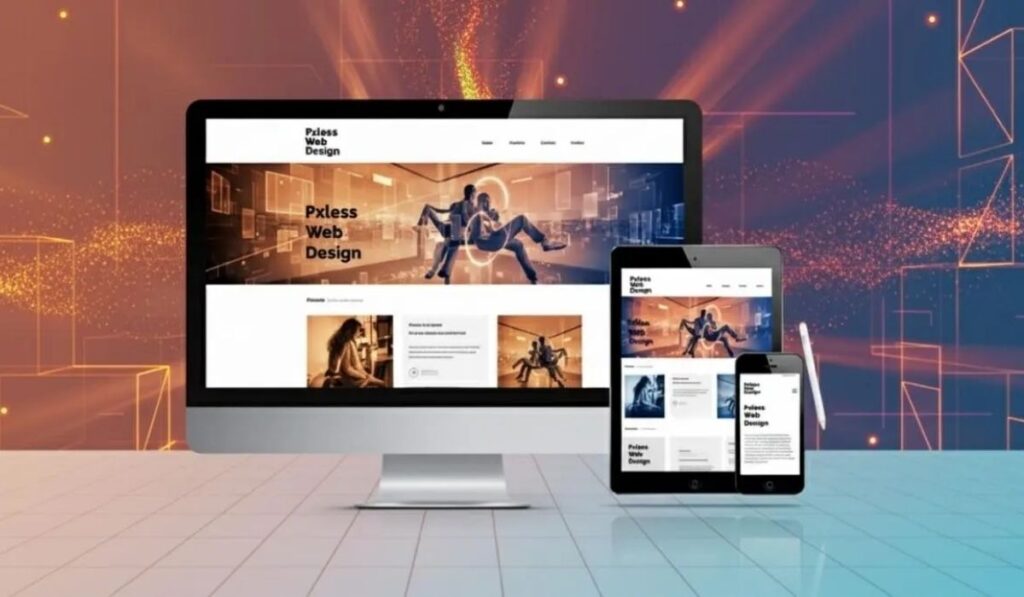
User experience is central to the Pxless philosophy. When layouts, typography, and components scale fluidly, users experience a consistent and intuitive interface, regardless of the device they are using. Websites designed with Pxl ess principles reduce the likelihood of horizontal scrolling, clipped content, or misaligned elements, which are common issues in fixed-pixel designs. Moreover, Pxle ss supports accessibility features by allowing users to customize their experience without breaking the layout. This user-centered approach not only improves engagement but also strengthens brand perception and user satisfaction.
Pxless in Mobile-First Design
Mobile-first design has been a popular strategy for several years, emphasizing the importance of designing for smaller screens first and then scaling up for larger devices. Pxless complements this methodology perfectly. By using relative units and flexible layouts, mobile-first designs become easier to implement and maintain. Designers no longer need to create multiple fixed versions of a site for different screen sizes; instead, ensures that the layout adapts naturally as the screen grows. This results in a more efficient development process and a consistent user experience across devices of all sizes.
Tools and Techniques for Implementing Pxless
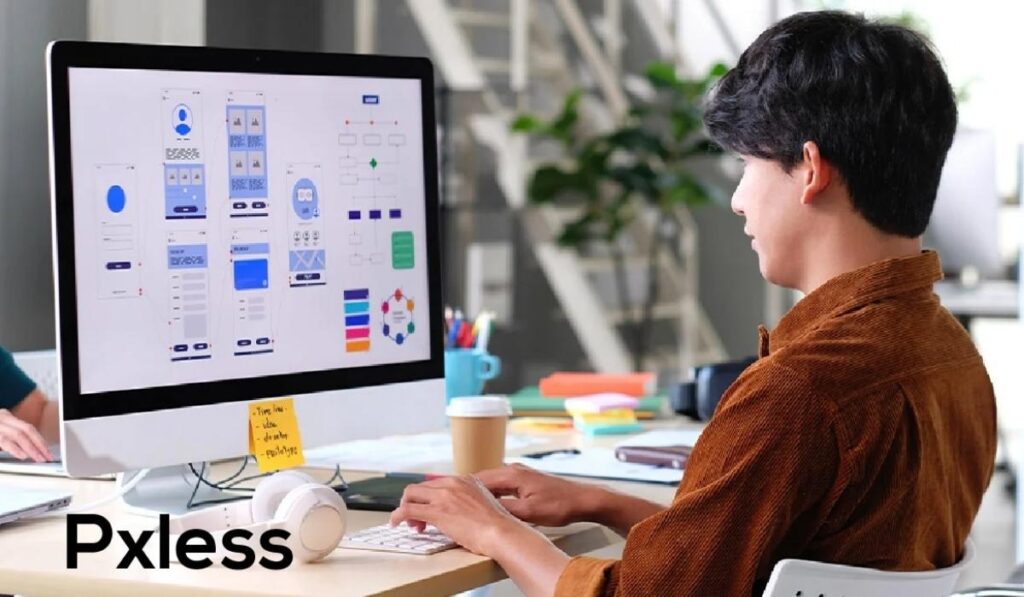
Implementing Pxless design effectively requires the use of modern tools and techniques. CSS Grid and Flexbox are essential for creating flexible layouts, while relative units like em, rem, and percentages provide the necessary scalability. Additionally, modern design software and prototyping tools now support principles, allowing designers to create mockups that reflect fluid layouts. Responsive testing tools and browser developer tools also play a crucial role in ensuring that designs function correctly across devices. By leveraging these tools, designers can fully realize the benefits of and create websites that are both adaptable and visually appealing.
The Future of Web Design with Pxless
The adoption of Pxless represents a significant shift in the philosophy of web design. As devices continue to diversify in size, resolution, and capability, designers need methodologies that can keep pace. Pxles s offers a scalable, flexible, and user-focused approach that addresses these challenges head-on. Its principles align with modern web standards and best practices, ensuring that websites are accessible, responsive, and future-proof. As more designers and developers embrace Pxle ss, we can expect the web to become more fluid, user-centric, and adaptable, providing better experiences for all users.
Conclusion
Pxless design is more than just a technical approach; it is a philosophical shift in how we think about web design. By moving away from rigid pixel-based layouts and embracing flexibility, scalability, and responsiveness, Pxles s enables designers to create websites that truly adapt to users’ needs. From enhanced accessibility to seamless responsiveness, the benefits of Pxles s are clear, making it an essential methodology for modern web development. As the digital landscape continues to evolve, Pxles s is poised to play a central role in shaping the future of web design, ensuring that user experience remains at the forefront of every decision.
Frequently Asked Questions About Pxless
1. What is Pxless design?
- Pxless design is a web design methodology that avoids fixed pixel-based layouts, using relative units and flexible grids to create responsive, scalable, and adaptable websites.
2. How does Pxless improve user experience?
- Pxless enhances user experience by ensuring that layouts, typography, and components scale fluidly across all devices, reducing issues like horizontal scrolling and misaligned content.
3. What tools are used for Pxless design?
- Key tools include CSS Grid, Flexbox, responsive testing tools, and design software that supports scalable units like em, rem, and percentages.
4. Is Pxless suitable for mobile-first design?
- Yes, Pxless complements mobile-first design perfectly because it allows layouts to adapt naturally to smaller screens and scale up efficiently for larger devices.
5. Why is Pxless considered the future of web design?
- Pxless provides a flexible, scalable, and user-centered approach that aligns with modern web standards, making websites more accessible, responsive, and future-proof.